











Fiber laser cutting machine questions often start with laser power. Some buyers ask for a 1500W fiber laser cutting machine. Some ask about 3000W. Many buyers now start from 6000W or even 12000W fiber laser because the number is easy to compare. It feels simple. More wattage sounds like a stronger machine.
In real workshop use, it is not always that simple. The right fiber laser cutting power depends on the material you cut most often, the sheet thickness, the edge finish you need, the assist gas, and the parts you need to finish every day. A high-power machine can cut faster on the right job, but it may also waste money if most of your orders are thin sheet metal.
This guide is for buyers who want a practical power range, not just the biggest machine on a quotation sheet.
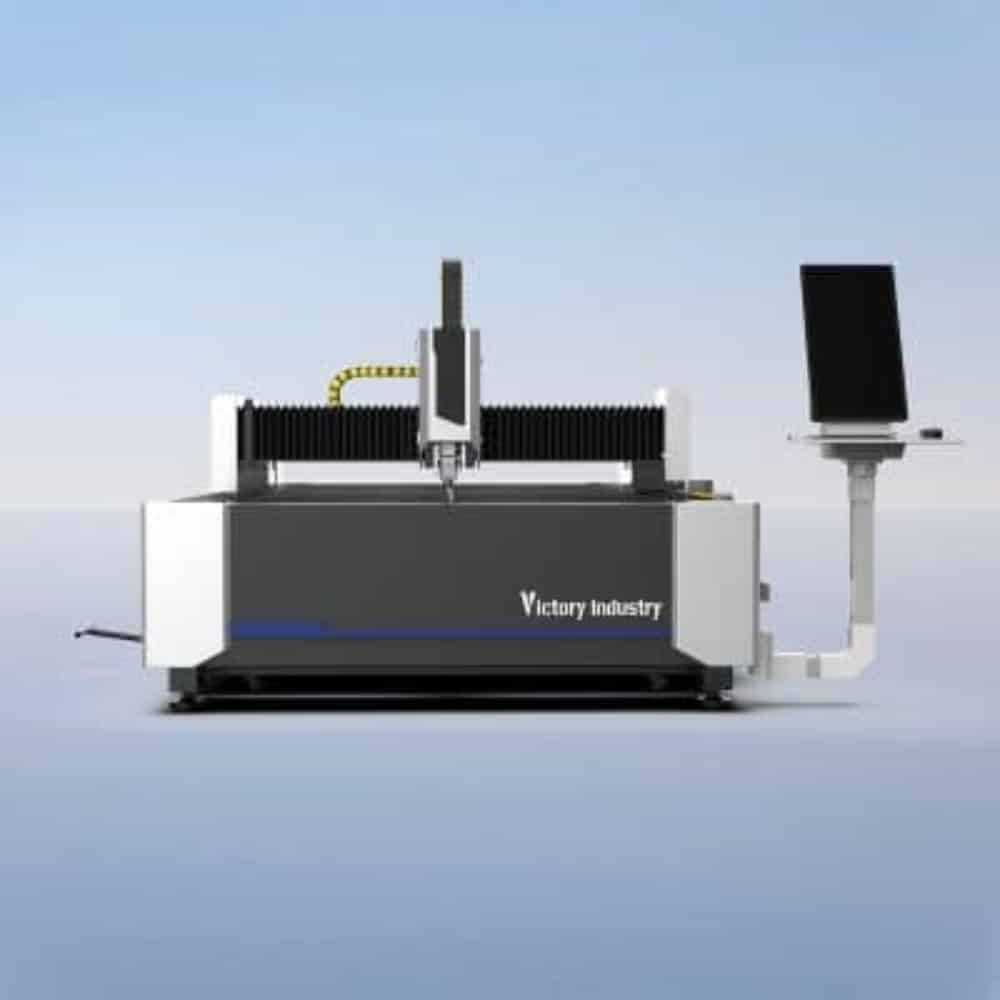
Start From Daily Material, Not Maximum Thickness
Match Power to Daily Cutting Work
One common mistake is choosing laser power only by maximum cutting thickness. A supplier may say a fiber laser cutter can cut a certain thick plate, but one test sample is not the same as stable daily production.
If your workshop mainly cuts thin stainless steel, electrical cabinet parts, small metal signs, light carbon steel, and general sheet metal, 1500W to 3000W may already be enough. If your order list includes stainless steel, carbon steel, and aluminum in medium thickness, 3000W to 6000W is usually more flexible. If your factory cuts thick plates every day or runs two shifts, 6000W, 12000W, or higher power may be more suitable.
Ask the Right Buying Question
The first question should not be “How powerful is this machine?” It should be “What do we cut most often?”
Fiber Laser Cutting Power and Thickness Reference
Use the Table as a Buying Reference
The table below is only a buying reference. Real cutting results depend on the laser source, cutting head, gas pressure, focus position, nozzle condition, material quality, machine setting, and operator skill. Before placing an order, it is still better to test your own material.
| Fiber Laser Power | Carbon Steel | Stainless Steel | Aluminum | Typical Buyer |
| 1500W | Thin to medium-thin sheet | Thin sheet | Thin aluminum | Small shops, light sheet metal, signage |
| 3000W | Medium sheet | Medium sheet | Medium sheet | General sheet metal fabrication, cabinets, enclosures |
| 6000W | Medium to thicker sheet | Thicker sheet or faster thin-sheet cutting | Thicker aluminum with the right setup | Mixed orders, higher daily output |
| 12000W and above | Thick plate and faster production | Thick stainless steel or high-speed cutting | Higher-end aluminum cutting | Heavy fabrication, batch production, multi-shift lines |
Compare Cost, Speed, and Edge Stability
Many buyers only look at the thickest cutting capacity. In daily work, better questions are usually more practical. How fast can the machine cut your common thickness? Is the edge stable? How much does each finished part cost after gas, power, labor, and possible polishing?
1500W, 3000W, 6000W, and 12000W in Real Use
1500W Fiber Laser Cutter
A 1500W fiber laser cutter can work well for thin sheet cutting. It is suitable for small workshops, light stainless steel parts, advertising metal parts, thin carbon steel, and custom sheet metal jobs. It is not the highest power on the market, but it can be easier to run when the job is simple and the budget is limited.
3000W Fiber Laser Cutting Machine
A 3000W fiber laser cutting machine is often a more flexible choice for small and medium workshops. It can handle more stainless steel, carbon steel, and aluminum jobs than a lower-power machine. For equipment covers, cabinets, panels, brackets, and general sheet metal parts, 3kW is often a practical starting point.
6000W Fiber Laser Cutter
A 6000W fiber laser cutter is better for buyers who need more cutting speed and wider thickness coverage. It works well for mixed materials, repeat jobs, and delivery pressure. But 6kW also asks more from the whole system. Gas supply, cooling, dust extraction, cutting head, machine bed, and control software all need to match the power. If these parts are weak, higher wattage will not automatically give clean cuts.
12000W or Higher Fiber Laser Machine
A 12000W or higher machine is usually used for thick plate cutting, heavy fabrication, or high-volume production. It can be a good investment when the factory has enough work to support it. For a small shop cutting thin sheets most of the time, it may be too much.
Stainless Steel, Carbon Steel, Aluminum, Brass, and Copper Are Different
Stainless Steel Cutting
Stainless steel buyers usually care a lot about the edge. When stainless steel parts are used for kitchen equipment, cabinets, covers, decoration, or visible panels, a rough edge means extra polishing. Nitrogen is often used for stainless steel cutting because it gives a cleaner edge with less oxidation. But nitrogen cost also needs to be counted. A higher-power machine may cut faster, but if gas cost is not controlled, the real saving may not be obvious.
Carbon Steel Cutting
Carbon steel is different. Oxygen is often used for thicker carbon steel because it helps the cutting reaction. The edge may become oxidized, but this is often acceptable for structural parts that will be painted. If the parts are visible, another gas or post-processing may be needed. When choosing laser power for carbon steel, buyers should look at thickness, gas pressure, focus, nozzle, and cutting speed together.
Aluminum Cutting
Aluminum needs more care because it reflects more energy than carbon steel. The laser source, cutting head protection, servo drive, guide system, and control system all affect the result. When cutting aluminum parts with small holes, curves, or detailed shapes, smooth motion matters as much as wattage.
Brass and Copper Cutting
Brass and copper are also highly reflective metals. A fiber laser can cut them with the right setup, but buyers should not guess. If brass or copper is part of your regular work, sample cutting should be done before choosing the final machine.
Assist Gas Changes Cost and Edge Quality
Compare Assist Gas by Material and Cost
Most buyers compare 3kW and 6kW fiber laser machines by machine price. That is only part of the story. Assist gas can change both cutting quality and long-term cost.
| Assist Gas | Common Use | Main Benefit | Possible Issue |
| Oxygen | Carbon steel | Helps cut thicker plates | Oxidized edge |
| Nitrogen | Stainless steel and aluminum | Cleaner edge, less oxidation | Higher gas cost |
| Air | Some thin sheet cutting | Lower running cost | Edge quality may be lower |
Discuss Gas Together With Laser Power
Laser power should be discussed together with gas type, gas pressure, gas quality, nozzle size, and cutting speed. A machine that looks cheaper at first may not be cheaper after one year of daily work.
Wattage Is Important, But It Is Not the Whole Machine
Cutting Quality Depends on the Whole System
A fiber laser cutting machine is more than a laser source. Focus position affects kerf width and dross. Cutting speed affects heat input and edge quality. A dirty protective lens can make the beam unstable. A damaged nozzle can ruin the cut. Bed vibration may cause inconsistent edges. A poor servo and guide system can make small holes and sharp corners look bad.
Choose a Machine That Uses Power Well
So power should not be chosen by wattage alone. A good machine must use the power well. Bed structure, cutting head, control system, cooling, gas system, dust extraction, and after-sales service all matter.
When Lower Power Is the Better Choice
Lower Power Can Fit Thin Sheet Work
Lower power does not mean poor performance. If the daily work is thin stainless steel, light carbon steel, cabinet parts, advertising metal work, or custom sheet metal, lower or medium power may be the better choice. Clean edges, easy operation, and lower running cost may matter more than maximum cutting thickness.
Spend Budget Where It Improves Daily Use
If the ideal high-power model is beyond the budget, it may be smarter to choose a practical power range and spend the remaining budget on better gas supply, spare parts, operator training, a pallet changer, or future bending and welding equipment. A machine needs to work well in your shop, not only look strong on paper.
When Higher Power Is Worth Paying For
Use Higher Power for Regular Thick Plate Cutting
Higher power is useful when thick plate cutting is regular, not occasional. It also makes sense when delivery time is short, repeat orders are increasing, or the current cutting speed is already limiting production.
Match High Power With a Strong Machine System
High-power fiber laser cutting can help if you often outsource thick material, lose orders because cutting is too slow, or plan to expand into larger parts. But higher power also needs a solid machine base, suitable cutting head, reliable cooling, clean optics, and correct cutting parameters.
Where the VIF-A Laser Cutting Machine Fits
Match Machine Configuration to Daily Cutting Needs
For light to medium sheet metal work, Victory Industry’s VIF-A Laser Cutting Machine can be a practical option. A machine is not just a laser source on a frame. The laser generator, cutting head, tube welded bed, aviation aluminum beam, servo motor, linear guide system, reducer, and control system all need to work together.
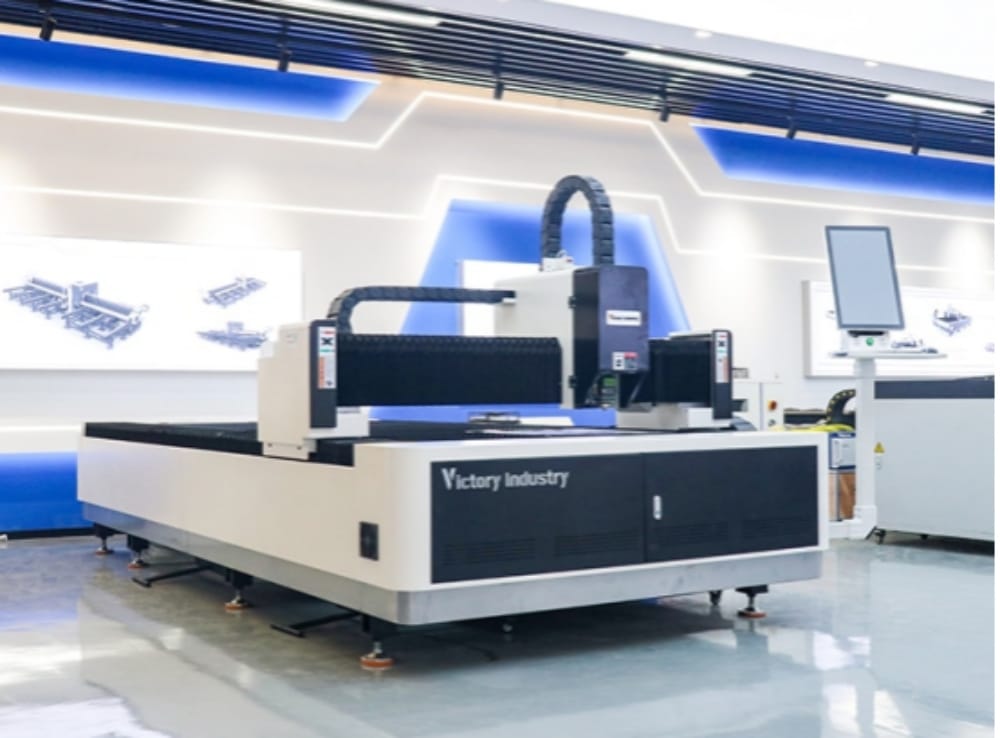
Use Power With a Stable Machine Structure
For buyers comparing fiber laser cutting power, this matters. If the machine cannot move smoothly, keep focus stable, or control gas well, the power number will not help much. The fiber laser cutting machine configuration should match real material type, thickness range, output target, and daily cutting habits.
Reduce Daily Cutting Errors
The machine also supports auto-focus, cutting expert databases, automatic gas pressure adjustment, anti-collision protection, temperature monitoring, maintenance reminders, and cloud service. These functions help reduce daily errors, especially when the workshop changes jobs often.
Consider the Full Sheet Metal Workflow
Victory Industry also works with CNC press brake machines, laser welding, laser cleaning, laser marking, robotic cutting, and automatic loading and unloading systems. If a buyer plans a fuller sheet metal workflow, cutting can be considered together with bending, welding, cleaning, marking, or automation.
What Information Should You Send Before Asking for a Quote?
Send Real Material and Production Details
If you want a useful fiber laser power recommendation, do not only say, “I need a fiber laser cutting machine.” That is not enough.
Send your material type, normal sheet thickness, maximum sheet thickness, drawings, required output, edge quality, preferred cutting gas, and automation needs. DXF, DWG, STEP, PDF, or even a sample photo can help the supplier understand the job better.
Use This Information for a Better Recommendation
Victory Industry can use this information to suggest a suitable fiber laser power range, machine configuration, and sample cutting plan. For buyers who need installation, training, maintenance, or later production upgrade support, the company’s service support can also be considered before the final order.
Conclusion
Choose Power From Real Work
Fiber laser cutting power should be selected from real work. 1500W is suitable for many thin sheet jobs. 3000W is practical for many general fabrication shops. 6000W fits mixed materials and higher output. 12000W and above is more suitable for thick plate cutting and production lines.
Focus on Clean Cuts, Cost Control, and Future Orders
The largest wattage is not always the best option. The better goal is a fiber laser cutting machine that cuts daily materials cleanly, controls cost, and leaves enough room for future orders. If you are unsure which power fits your workshop, you can send your material list, thickness range, drawings, and expected output to the Victory Industry contact team for a more detailed recommendation.
FAQ
Q1: What is the appropriate laser power for fiber laser cutting?
A1: It depends on material type, thickness, edge quality, and average output. 1500W to 3000W is often enough for thin sheet metal. 3000W to 6000W is better for mixed sheet metal. More than 6000W is used for thick plates or high-output work.
Q2: Is 1500W enough for stainless steel cutting?
A2: For thin stainless steel parts, 1500W is enough for many applications. Nitrogen quality, focus position, cutting speed, nozzle condition, and required edge quality affect the final result.
Q3: How thick can a 3000W fiber laser cut?
A3: A 3000W fiber laser cutter is usually used for medium sheet metal work. Exact thickness depends on carbon steel, stainless steel, aluminum, gas type, cutting head, focus setting, and machine condition.
Q4: Should I choose 3kW or 6kW for mixed metal fabrication?
A4: Choose 3kW for thin to medium sheet metal and cost-sensitive work. Choose 6kW if you need higher output, faster cutting, and wider material coverage, including stainless steel, carbon steel, and aluminum.
Q5: Is higher laser power always better?
A5: No. High power helps with thick plates and faster cutting, but it also increases machine price, gas consumption, cooling needs, and setup difficulty. For thin sheet work, high power may not bring much extra value.
Q6: What assist gas should I use for stainless steel cutting?
A6: Nitrogen is often used when stainless steel needs a cleaner edge with less oxidation. Oxygen or air may be used in some cases, but edge effect, cost, and post-processing needs will be different.
Q7: What affects laser cutting quality aside from wattage?
A7: Laser cutting quality is affected by focus position, gas quality, nozzle condition, protective lens cleanliness, cutting speed, machine design, servo control, cooling, and job settings.
Q8: How do I get the right fiber laser power recommendation?
A8: Send material type, common thickness, maximum thickness, drawing file, edge requirement, expected daily output, and automation needs. Victory Industry can then recommend a suitable power range and machine configuration.