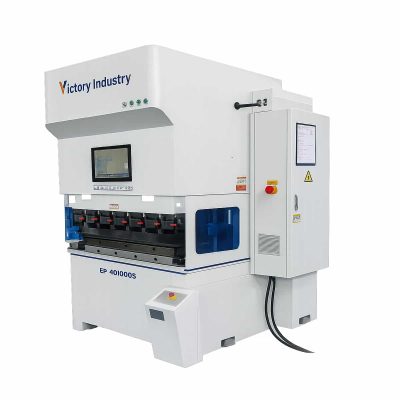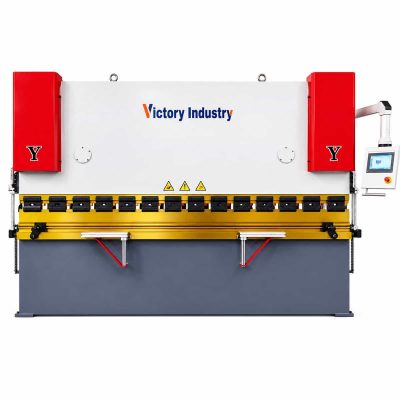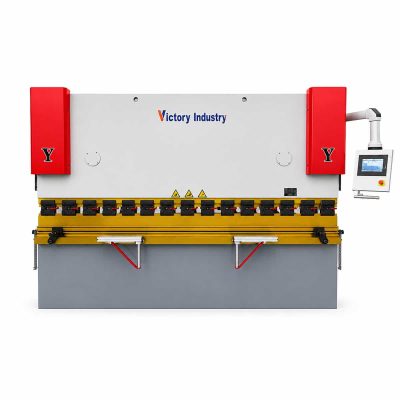
CNC Press Brakes

Our CNC press brakes combine precision engineering, intelligent controls, and durable construction to provide efficient, high-quality sheet metal bending for manufacturers worldwide.

Introduction

The CNC press brake is an advanced metal-forming machine used to bend and shape sheet metal with high precision and repeatability. Controlled by Computer Numerical Control (CNC) technology, these machines automate the bending process, allowing manufacturers to produce complex parts accurately while reducing setup time and human error. CNC press brakes are widely used across industries such as automotive, aerospace, construction, electronics, appliance manufacturing, and metal fabrication. Unlike conventional press brakes, CNC models utilize programmable controllers that manage key parameters, including bending angle, backgauge position, ram stroke, and forming sequence. Operators can store and recall production programs, enabling consistent results even for intricate or high-volume manufacturing tasks. Modern CNC press brakes often feature user-friendly touchscreen interfaces, offline programming capabilities, automatic tool setup, and advanced safety systems, further enhancing productivity and operational efficiency.
The growing demand for customized metal components and tighter production tolerances has made CNC press brakes an essential part of modern fabrication facilities. Their ability to perform precise bends on a wide range of materials and thicknesses helps manufacturers improve product quality while minimizing material waste. By combining flexibility, accuracy, and automation, CNC press brakes provide a cost-effective solution for producing high-quality sheet metal components in today’s competitive manufacturing environment.

CNC Press Brakes

Discover the power of precision metal forming with our advanced CNC press brakes, engineered to meet the demanding requirements of modern sheet metal fabrication. Whether you are producing simple bends, complex profiles, or high-volume production parts, our CNC press brakes deliver exceptional accuracy, repeatability, and efficiency. Designed for manufacturers across industries such as automotive, aerospace, construction, appliance manufacturing, and metal fabrication, these machines provide reliable performance for a wide range of bending applications. Our product lineup includes electric servo CNC press brakes, electro-hydraulic CNC press brakes, and hybrid servo CNC press brakes, allowing customers to choose the ideal solution based on their production needs, material types, and energy-efficiency goals. Equipped with intelligent CNC control systems, precision backgauges, and advanced servo technology, our machines ensure accurate angle control, reduced setup times, and consistent bending quality from the first part to the last. Advanced safety systems and automated functions further enhance productivity while reducing operator workload. Whether you require maximum speed, superior accuracy, or lower operating costs, our CNC press brakes are designed to help you increase production efficiency, minimize material waste, and achieve outstanding fabrication results. Explore our range of models to find the perfect bending solution for your business.

Applications

CNC press brakes are widely used in industries that require precise and efficient sheet metal bending. In the automotive industry, they manufacture body panels, chassis components, brackets, and structural parts. Aerospace manufacturers rely on CNC press brakes to produce high-precision components that meet strict quality and safety standards. In construction and architecture, they are used to fabricate metal frames, roofing panels, doors, windows, and curtain wall systems.
These machines also play a vital role in appliance manufacturing, electrical enclosures, HVAC systems, agricultural equipment, and metal furniture production. Their ability to handle a wide range of materials, thicknesses, and complex bending operations makes them ideal for both custom fabrication and mass production. With advanced CNC controls, press brakes ensure consistent quality, improved productivity, and reduced material waste across diverse manufacturing applications.
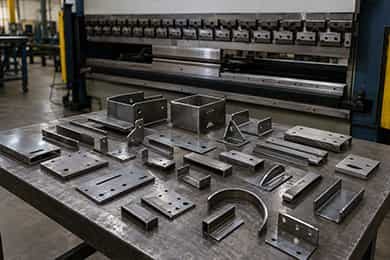
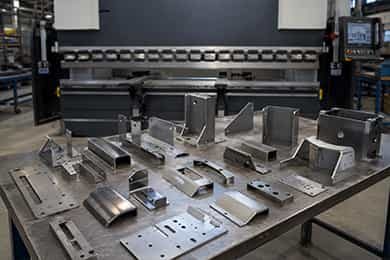
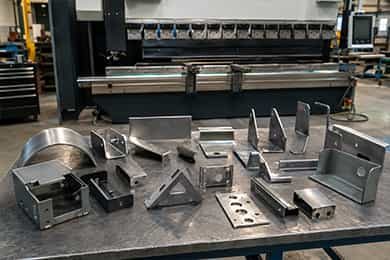
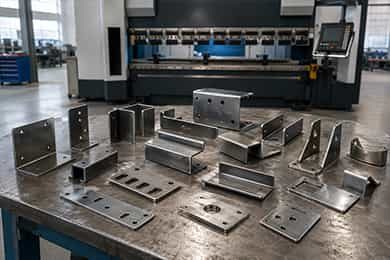
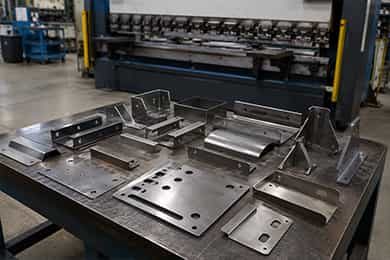
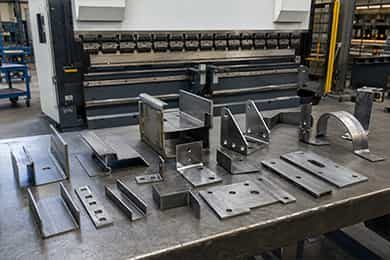
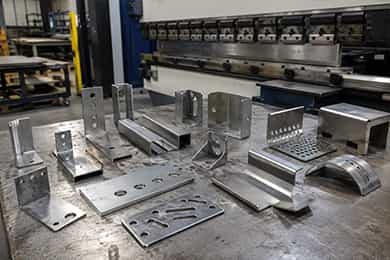
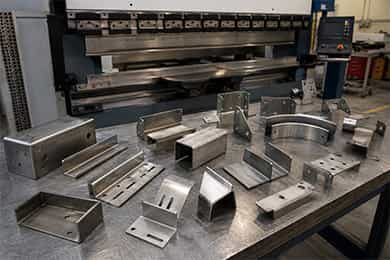
CNC Press Brake Samples

Advantages of CNC Press Braking

Exceptional Bending Accuracy

CNC press brakes utilize advanced control systems, precision backgauges, and programmable parameters to achieve highly accurate bending results. This ensures consistent angles and dimensions across every workpiece, reducing errors, minimizing rework, and helping manufacturers maintain strict quality standards.

Increased Production Efficiency

Automated programming and rapid setup capabilities significantly reduce production time compared to conventional press brakes. Operators can store and recall bending programs instantly, enabling faster job changeovers, improved workflow efficiency, and higher output in both small and large production runs.

Superior Repeatability

Once a bending program is created, the machine can repeatedly produce identical parts with minimal variation. This high level of repeatability is especially valuable for mass production applications where consistent quality and precise dimensions are critical to customer satisfaction.

Greater Material Versatility

CNC press brakes can process a wide variety of materials, including carbon steel, stainless steel, aluminum, copper, and other alloys. They can also accommodate different sheet thicknesses, making them suitable for diverse manufacturing and fabrication requirements.

Reduced Material Waste

Precise control over bending angles, positions, and forming sequences helps minimize production mistakes and scrap. By reducing material waste and improving first-pass yield, CNC press brakes contribute to lower manufacturing costs and more sustainable production practices.

User-Friendly Operation

Modern CNC press brakes feature intuitive touchscreen interfaces, graphical programming, and automated functions that simplify machine operation. These features reduce operator workload, shorten training time, and enable manufacturers to achieve high productivity with greater ease and confidence.

Comparison With Other Bending Type

Comparison Item CNC Press Brake Pan Brake Folder Tube/Pipe Bending Machine Plate Bending Rolls
Primary Function Bends sheet metal into precise angles and complex profiles. Folds sheet metal along straight lines. Bends tubes, pipes, and hollow sections. Rolls metal plates into cylinders, cones, and curved shapes.
Material Type Sheet metal, steel, stainless steel, aluminum, copper, and alloys. Thin to medium-gauge sheet metal. Round, square, rectangular tubes and pipes. Thick metal plates and sheets.
Bending Complexity Excellent for simple to highly complex multi-bend parts. Best for simple folds and box-shaped components. Designed specifically for curved tube and pipe geometries. Primarily used for continuous curved bending.
Precision & Accuracy Very high precision with CNC-controlled positioning and angle correction. Moderate precision, depending on operator skill. High precision for tube and pipe applications. Good for rolling operations but less suitable for tight-angle bends.
Production Efficiency High productivity with automated programming and repeatability. Suitable for low- to medium-volume production. Efficient for specialized tube fabrication. Efficient for large curved structures and cylindrical components.
Typical Applications Metal fabrication, automotive, aerospace, electrical enclosures, machinery parts. HVAC ducts, cabinets, boxes, panels, and roofing products. Exhaust systems, handrails, frames, furniture, and pipelines. Pressure vessels, storage tanks, wind towers, and large cylinders.
Flexibility Handles a wide range of materials, thicknesses, and part designs. Limited to sheet folding operations. Limited to tube and pipe bending tasks. Limited to curved plate-forming applications.
Best Choice For Manufacturers requiring versatile, precise, and repeatable sheet metal bending. Fabricators producing folded panels and box-shaped parts. Companies specializing in tube and pipe fabrication. Industries producing large rolled or cylindrical metal structures.

Customer Reviews

Michael
Production Manager
We've been using this CNC press brake for over a year, and it has improved our bending accuracy significantly. The machine is easy to program, runs smoothly, and helps us complete jobs faster with fewer errors.
Sarah
Fabrication Supervisor
The bending quality is very consistent, even on complex parts. Setup time is much shorter than our previous machine, and the control system is simple for operators to learn and use effectively every day.
David
Workshop Owner
This press brake has been a great investment for our shop. It delivers precise bends, handles different material thicknesses well, and has helped us increase production capacity without adding extra labor costs.
Jessica
Manufacturing Engineer
We process a wide range of sheet metal components, and this machine performs reliably across all applications. The repeatability is excellent, which has reduced rework and improved overall product quality for our customers.
Robert
Operations Director
The machine offers a strong combination of speed, accuracy, and reliability. We have seen a noticeable improvement in production efficiency, and the energy consumption is lower than that of many comparable machines we evaluated.

Frequently Asked Questions

What Is The Working Principle Of CNC Press Brakes?
CNC press brakes operate by applying controlled force to a sheet metal workpiece, bending it into a desired shape using a punch and die set. The entire process is managed by a Computer Numerical Control (CNC) system, which ensures high precision, repeatability, and efficiency. Here is how the process works:

  • Program Input and Setup: The operator enters bending parameters into the CNC controller, including material type, thickness, bend angle, bend sequence, and dimensions. Modern CNC systems can automatically calculate bending positions and compensation values to achieve accurate results.
  • Backgauge Positioning: Before bending begins, the CNC-controlled backgauge moves to the programmed position. The backgauge serves as a reference point, ensuring the sheet metal is accurately aligned for each bend.
  • Material Placement: The operator places the sheet metal on the machine bed and positions it against the backgauge. This ensures the workpiece is correctly located before the bending cycle starts.
  • Ram Movement and Force Application: The upper beam, known as the ram, moves downward under hydraulic, electric servo, or hybrid servo power. The punch attached to the ram presses the sheet metal into the die mounted on the lower bed, creating the desired bend.
  • Precision Angle Control: Throughout the bending process, sensors and CNC controls monitor ram position, bending depth, and applied force. This allows the machine to maintain precise bending angles and compensate for material springback, improving part accuracy.
  • Multi-Step Bending Operations: For complex parts, the CNC system automatically controls multiple bending sequences. The backgauge repositions the workpiece between bends, enabling the production of intricate components with minimal operator intervention.
  • Return and Completion: Once the bend is completed, the ram returns to its starting position. The operator can then remove the finished part or continue with the next programmed bending operation.

By combining programmable controls, precision positioning, and automated force management, CNC press brakes deliver consistent, high-quality bends across a wide range of sheet metal fabrication applications. Their ability to produce accurate parts with minimal waste makes them an essential tool in modern manufacturing.
CNC press brakes are highly versatile metal-forming machines capable of bending a wide range of materials. The specific material, thickness, and hardness that can be processed depend on the machine’s tonnage, tooling, and bending method. Here are the most common materials CNC press brakes can effectively bend:

  • Carbon Steel: Carbon steel is one of the most frequently processed materials in CNC press brake applications. It offers excellent formability, strength, and cost-effectiveness, making it ideal for structural components, machinery parts, brackets, enclosures, and general fabrication projects.
  • Stainless Steel: CNC press brakes can accurately bend stainless steel sheets used in food processing equipment, medical devices, architectural products, and industrial machinery. Because stainless steel has higher strength and springback than carbon steel, proper tooling and bending force are required.
  • Aluminum: Aluminum is lightweight, corrosion-resistant, and relatively easy to form. CNC press brakes are widely used to bend aluminum sheets for aerospace components, automotive parts, electronics enclosures, signage, and decorative applications. Special care is needed to prevent surface marking.
  • Copper: Copper can be bent efficiently using CNC press brakes and is commonly used in electrical equipment, busbars, roofing systems, and decorative metalwork. Due to its softness, appropriate tooling helps maintain surface quality during bending.
  • Brass: Brass sheets are often bent for architectural, decorative, electrical, and industrial applications. CNC press brakes provide the precision needed to form brass components while minimizing deformation and maintaining an attractive surface finish.
  • Galvanized Steel: Galvanized steel combines the strength of steel with a protective zinc coating. CNC press brakes can bend galvanized sheets used in HVAC systems, ductwork, cabinets, and construction components while preserving coating integrity when proper tooling is used.
  • High-Strength Steel: Advanced high-strength steels and wear-resistant steels can also be bent with CNC press brakes designed for higher tonnage applications. These materials are commonly used in automotive, construction, transportation, and heavy equipment manufacturing.
  • Titanium and Specialty Alloys: Certain CNC press brakes can process titanium, nickel alloys, and other specialty metals used in aerospace, defense, medical, and high-performance industrial applications. These materials often require specialized tooling and carefully controlled bending parameters.

CNC press brakes are suitable for most sheet metal bending applications, from soft non-ferrous metals to high-strength alloys. Selecting the correct tooling, tonnage, and bending settings is essential to achieving accurate bends, minimizing material damage, and ensuring consistent production quality.
Yes, CNC press brakes can significantly reduce labor costs by automating many aspects of the sheet metal bending process. Compared with conventional press brakes, CNC models require less manual intervention, improve production efficiency, and help manufacturers achieve more output with fewer labor resources. Here are the main ways CNC press brakes reduce labor expenses:

  • Automated Programming: CNC press brakes use computerized controls to manage bending angles, ram positions, backgauge movements, and bending sequences. Once a program is created, operators can repeatedly produce parts without manually adjusting machine settings, reducing both labor time and operator workload.
  • Faster Setup Times: Traditional bending operations often require lengthy manual measurements and adjustments. CNC systems automatically position the backgauge and store production programs, allowing operators to switch between jobs quickly and minimize machine downtime.
  • Reduced Operator Skill Requirements: Modern CNC controllers feature intuitive touchscreen interfaces, graphical programming, and automated calculations. These features make machine operation easier to learn, reducing training costs and allowing less experienced operators to perform complex bending tasks efficiently.
  • Higher Productivity Per Operator: A single operator can often manage production that previously required multiple workers. Automated positioning, programmable bending sequences, and precision controls enable operators to focus on loading and unloading materials rather than constantly adjusting machine settings.
  • Lower Rework and Scrap Rates: CNC press brakes deliver highly accurate and repeatable bends. By minimizing production errors, manufacturers spend less labor time correcting defective parts, reworking components, or handling material waste caused by inaccurate bending.
  • Consistent Production Quality: Automated control systems ensure that every part is produced according to programmed specifications. Consistent quality reduces inspection requirements and lowers the labor associated with quality control and corrective actions.
  • Improved Workflow Efficiency: CNC press brakes integrate easily into modern manufacturing environments. Digital program storage, automated calculations, and repeatable production processes help streamline operations and reduce time spent on administrative and setup tasks.
  • Support for Lights-Out and Semi-Automated Production: Advanced CNC press brakes can be paired with robotic loading and unloading systems. This further reduces labor requirements by automating material handling and enabling longer production runs with minimal operator supervision.

While the initial investment in CNC press brakes may be higher than that of a conventional machine, the long-term savings from reduced labor requirements, improved productivity, lower scrap rates, and increased production efficiency often result in a strong return on investment for manufacturers.
CNC press brakes help manufacturers reduce material waste by improving bending accuracy, minimizing production errors, and optimizing the entire sheet metal forming process. Compared with manual or conventional bending equipment, CNC-controlled machines deliver consistent results that reduce scrap, rework, and unnecessary material consumption. Here are the key ways CNC press brakes help minimize waste:

  • Precise Bending Accuracy: CNC press brakes use advanced control systems to accurately position the ram and backgauge during every bending operation. This precision ensures that parts are produced according to exact specifications, reducing the likelihood of incorrect bends that result in scrapped materials.
  • Consistent Repeatability: Once a bending program is established, the machine can repeatedly produce identical parts with minimal variation. Consistent results prevent material loss caused by dimensional inconsistencies and reduce the need to discard defective components.
  • Automatic Springback Compensation: Different materials respond differently during bending and may spring back after force is removed. Modern CNC press brakes automatically compensate for springback, helping operators achieve the desired angle on the first attempt and avoiding wasted material from incorrect bends.
  • Reduced Setup Errors: CNC systems store bending programs and automatically position critical machine components. This eliminates many manual adjustments and measurement mistakes that can lead to damaged workpieces during setup and production.
  • Improved First-Pass Yield: Accurate programming and automated control increase the percentage of parts that meet specifications on the first production run. Higher first-pass yield means fewer rejected parts and lower material consumption throughout the manufacturing process.
  • Optimized Bend Sequences: CNC software can calculate efficient bending sequences and tool movements. Proper sequencing reduces handling errors, prevents part collisions, and minimizes deformation that could otherwise make parts unusable.
  • Better Tooling Control: CNC press brakes work with precision tooling systems designed for specific materials and bend requirements. Correct tool selection and positioning help prevent surface damage, cracking, and distortion that may lead to material waste.
  • Enhanced Quality Control: Real-time monitoring and advanced control technologies help maintain consistent bending performance throughout production. Operators can quickly identify and correct issues before large quantities of material are affected.
  • Support for Digital Manufacturing: Many CNC press brakes integrate with CAD/CAM software and production management systems. This allows manufacturers to simulate bending operations before production begins, reducing trial-and-error testing and conserving valuable material.

By combining precision automation, repeatable performance, and intelligent process control, CNC press brakes significantly reduce scrap rates and improve material utilization. The result is lower production costs, higher profitability, and a more sustainable manufacturing operation.
The operating costs of CNC press brakes are generally lower than many manufacturers expect, especially when compared to the productivity, accuracy, and labor savings they provide. While the exact cost depends on machine type, production volume, and usage conditions, several key factors contribute to the overall operating expenses. Here are the main cost components to consider:

  • Electricity Consumption: CNC press brakes require electrical power to operate the control system, motors, hydraulic pumps, and auxiliary equipment. Electric servo press brakes typically consume less energy than traditional hydraulic models because power is only used when movement is required, reducing long-term energy costs.
  • Labor Costs: One of the largest operating expenses in metal fabrication is labor. CNC press brakes help reduce labor costs through automation, faster setup times, and simplified operation. A single operator can often manage production efficiently, lowering staffing requirements.
  • Tooling Costs: Punches, dies, and specialized tooling are essential for different bending applications. While tooling represents an ongoing expense, high-quality tools offer long service life and contribute to consistent bending accuracy, reducing replacement frequency and production errors.
  • Maintenance Expenses: Regular maintenance is necessary to ensure reliable performance. Typical maintenance tasks include lubrication, machine inspection, cleaning, calibration, and replacement of wear components. Proper preventive maintenance helps avoid costly repairs and extends machine lifespan.
  • Hydraulic System Costs: For electro-hydraulic press brakes, hydraulic oil replacement, filter changes, and system inspections are part of routine operating expenses. Electric servo press brakes generally have lower hydraulic-related costs due to their simplified mechanical design.
  • Material Waste and Scrap: Material costs can significantly impact overall operating expenses. CNC press brakes reduce waste through precise bending control, repeatable accuracy, and automated positioning, helping manufacturers lower scrap rates and improve material utilization.
  • Training and Programming: Initial operator training and program development require time and resources. However, modern CNC controllers feature user-friendly interfaces that reduce training requirements and improve operational efficiency over the long term.
  • Downtime and Repairs: Unexpected machine downtime can increase operating costs by reducing productivity. Investing in quality equipment, preventive maintenance, and timely servicing helps minimize disruptions and maintain efficient production schedules.
  • Software and Automation Upgrades: Some manufacturers choose to invest in offline programming software, robotic automation, or advanced CNC features. While these upgrades involve additional costs, they often generate substantial savings through increased productivity and reduced labor requirements.

CNC press brakes offer cost-effective operation by combining energy efficiency, reduced labor needs, lower scrap rates, and high production productivity. When properly maintained, they provide excellent long-term value and a strong return on investment for metal fabrication businesses.
CNC press brakes generate significant force during operation, making safety a critical consideration for both operators and nearby personnel. Modern CNC press brakes are equipped with various safety systems designed to prevent accidents, reduce operator risk, and ensure compliance with industry regulations. Here are the most important safety features a CNC press brake should have:

  • Laser Safety Protection Systems: Advanced laser-based safety devices monitor the area around the punch and die during operation. If a hand, finger, or object enters the danger zone, the system immediately stops machine movement to help prevent injuries while maintaining productivity.
  • Light Curtains: Safety light curtains create an invisible protective barrier in front of the machine. When the light beam is interrupted, the press brake automatically stops or prevents operation, reducing the risk of accidental contact with moving components.
  • Emergency Stop Buttons: Easily accessible emergency stop buttons allow operators to immediately halt machine operation in the event of a malfunction, unsafe condition, or emergency. Multiple emergency stop locations provide additional protection.
  • Safety Guards and Protective Covers: Physical guards help prevent access to hazardous moving parts, pinch points, and mechanical components. Protective covers also shield operators from accidental contact with electrical and hydraulic systems.
  • Two-Hand Control Systems: Some CNC press brakes use two-hand control devices that require both hands to activate the machine cycle. This helps keep the operator’s hands away from the bending area during operation.
  • Automatic Ram Monitoring: Modern CNC systems continuously monitor ram position, speed, and movement. If abnormal conditions are detected, the machine can stop automatically to prevent equipment damage or operator injury.
  • Overload Protection: Overload protection systems prevent the machine from operating beyond its rated capacity. This protects critical components from excessive stress and helps avoid dangerous mechanical failures.
  • Safety Interlock Systems: Interlocks ensure that safety guards, access doors, and protective devices are properly positioned before the machine can operate. If a guard is opened or removed, the machine automatically stops.
  • Foot Pedal Safety Features: Many CNC press brakes use foot pedals with protective covers to prevent accidental activation. Some systems also include multiple-stage controls for improved operator safety and machine control.
  • User-Friendly CNC Controls: Modern control systems provide clear operating instructions, error messages, and safety warnings. These features help operators identify potential issues quickly and reduce the likelihood of human error.

Well-equipped CNC press brakes should combine laser protection, light curtains, emergency stops, safety guards, overload protection, and intelligent monitoring systems. Together, these features create a safer working environment, improve operational reliability, and help manufacturers meet workplace safety standards while maintaining high productivity.
CNC press brakes are highly accurate and efficient machines, but improper operation can lead to production errors, material waste, equipment damage, and safety risks. Understanding common operator mistakes can help manufacturers improve productivity and maintain consistent bending quality. Here are some of the most frequent mistakes made when operating CNC press brakes:

  • Using Incorrect Tooling: Selecting the wrong punch or die for the material type, thickness, or bend radius can result in inaccurate bends, excessive tool wear, and even damage to the workpiece. Proper tooling selection is essential for achieving quality results.
  • Entering Incorrect Material Data: CNC controllers rely on accurate information such as material type, thickness, and bend angle. Incorrect data entry can cause bending errors, poor part quality, and increased scrap rates during production.
  • Ignoring Material Springback: Different materials react differently after bending. Failing to account for springback can result in bend angles that do not meet specifications. Modern CNC systems often include compensation features, but operators must use them correctly.
  • Improper Backgauge Positioning: The backgauge controls workpiece positioning during bending. Incorrect settings can lead to dimensional inaccuracies and inconsistent results, especially when producing parts with multiple bends.
  • Overloading the Machine: Attempting to bend material that exceeds the machine’s tonnage capacity can damage tooling, hydraulic components, and structural elements. Operators should always verify that the required bending force is within machine limits.
  • Neglecting Routine Maintenance: Failing to perform regular maintenance can reduce machine performance and reliability. Dirty components, insufficient lubrication, worn tooling, and uncalibrated systems can all negatively affect bending accuracy.
  • Poor Workpiece Alignment: Improperly positioning the sheet metal before bending can result in uneven bends, dimensional errors, and rejected parts. Careful alignment is particularly important for long or complex workpieces.
  • Skipping Test Bends: Some operators begin full production without performing a test bend. Testing a sample part first helps verify programming, tooling selection, and bend accuracy, reducing the risk of producing large quantities of defective components.
  • Ignoring Safety Procedures: Bypassing safety devices, removing guards, or operating the machine without proper training can lead to serious injuries. Safety systems should always remain active, and operators should follow established safety protocols.
  • Failing to Optimize Bend Sequences: Incorrect bend sequencing can cause part interference, handling difficulties, and production inefficiencies. Proper planning of the bending order helps improve accuracy and reduce cycle times.

By avoiding these common mistakes and following proper operating procedures, manufacturers can improve product quality, reduce downtime, minimize waste, and maximize the performance and lifespan of their CNC press brakes.
Proper maintenance is essential for keeping CNC press brakes operating efficiently, accurately, and safely. Regular maintenance not only extends machine lifespan but also helps prevent costly downtime, production errors, and unexpected repairs. Here are the key maintenance practices that should be followed:

  • Daily Cleaning: Dust, metal shavings, oil residue, and debris can accumulate on machine surfaces and moving components. Cleaning the worktable, tooling, backgauge, and surrounding areas daily helps maintain smooth operation and prevents contamination of critical parts.
  • Lubricate Moving Components: Guide rails, ball screws, bearings, and other moving parts require regular lubrication to reduce friction and wear. Following the manufacturer’s lubrication schedule helps maintain positioning accuracy and extends component life.
  • Inspect Tooling Regularly: Punches and dies should be checked for wear, cracks, chips, or deformation. Damaged tooling can reduce bending accuracy, increase material waste, and place unnecessary stress on the machine structure.
  • Monitor Hydraulic Systems: For hydraulic and electro-hydraulic press brakes, operators should regularly inspect hydraulic oil levels, hoses, fittings, and cylinders for leaks or damage. Hydraulic oil and filters should be replaced according to the manufacturer’s recommended maintenance intervals.
  • Check Electrical Components: Electrical cabinets, wiring connections, sensors, and control systems should be inspected periodically. Loose connections, damaged cables, or faulty sensors can affect machine performance and lead to unexpected failures.
  • Verify Backgauge Accuracy: The backgauge is critical for accurate workpiece positioning. Regular calibration and inspection ensure that positioning remains precise, helping maintain consistent bending quality and dimensional accuracy.
  • Calibrate the CNC System: Over time, machine components may experience slight deviations due to wear. Periodic calibration of ram positioning, angle measurement systems, and CNC controls helps ensure optimal bending precision and repeatability.
  • Inspect Safety Devices: Safety features such as light curtains, laser protection systems, emergency stop buttons, and safety guards should be tested regularly. Properly functioning safety equipment helps protect operators and ensures compliance with workplace safety standards.
  • Check Fasteners and Mechanical Components: Vibration during operation can loosen bolts, nuts, and mounting hardware. Routine inspection and tightening of critical components help maintain machine stability and prevent mechanical issues.
  • Follow Preventive Maintenance Schedules: Establishing a structured preventive maintenance program helps identify potential problems before they become major failures. Keeping detailed maintenance records can also improve machine reliability and support long-term operational efficiency.

By combining regular cleaning, lubrication, inspection, calibration, and preventive maintenance, manufacturers can maximize the performance, accuracy, and service life of their CNC press brakes while minimizing downtime and operating costs.

Related Resources

Handheld Laser Welding Machine Features, Advantages and Buying Guide

Handheld Laser Welding Machine Features, Advantages and Buying Guide

Modern workshops are not interested in buying a handheld laser welding machine just because it looks good. Handheld laser welding machines are often considered when ...
CO2 Laser Cutting Machine Guide How to Choose the Right Model

CO2 Laser Cutting Machine Guide: How to Choose the Right Model

Buying a CO2 laser cutting machine is not as simple as checking the highest power or the biggest working area. I have seen many buyers ...
How Laser Cleaning Supports Cleaner, Greener Industrial Production With a Laser Cleaning Machine - 副本

How Laser Cleaning Supports Sustainable Industrial Manufacturing

Still using messy chemical or abrasive cleaning? Switch to laser cleaning for precise rust, paint, and oxide removal with less waste and better surface control
VIC-F Laser Cutting Machine

Top 6 CO2 Laser Cutting Machines for Advertising in 2026

Struggling with rough acrylic edges or slow sign production? Discover top CO2 laser machines, real cutting tips, and how to choose the right model fast.

Contact Us

Improve your sheet metal fabrication efficiency and bending precision with Victory Industry, a professional CNC press brake manufacturer. We are committed to providing high-quality CNC press brake solutions designed to meet different production requirements and industrial applications.
Whether you need electric servo, electro-hydraulic, or hybrid servo CNC press brakes, our experienced team can help you choose the right machine for your manufacturing needs. We provide professional technical support, customized solutions, and reliable after-sales service to help improve your production efficiency and product quality.
Are you ready to upgrade your metal-bending capabilities?
Please leave your contact information below, and our professional team will contact you as soon as possible. Discover how Victory Industry’s advanced technology, manufacturing experience, and reliable CNC press brake solutions can support your business growth and production goals.

Contact Information Form:

By submitting your information, you’re taking the first step towards a partnership that redefines what’s possible in laser cleaning. Our team will promptly reach out to discuss your unique requirements and guide you through the journey of enhancing your manufacturing capabilities with Victory Industry’s laser cleaning solutions.