









When producing high volumes of sheet-metal parts, fiber laser cutting is generally the preferred method. With high cutting speeds, narrow cutting kerf and easy automation, the process is highly efficient. However, thick sections, heat sensitive and non-metallic materials, as well as parts that cannot possess a conventional heat-affected zone, are best cut using abrasive waterjet cutting. Material, thickness, tolerance, part edge finish, production volume and cost per part all play a significant role in determining which process is best.
The comparison below is a practical starting point. Final settings and costs should be confirmed with the same part drawing and a test cut on the proposed machine.
Laser Cutting vs Waterjet Cutting at a Glance
| Фактор | Волоконный лазер | Abrasive Waterjet |
| Typical fit | Thin and medium metal sheets, repeat production | Very thick plate, heat-sensitive or nonmetal materials |
| Speed and throughput | Usually faster when power, thickness, contour and quality are comparable | Often slower, especially on long contours and thick stock |
| Kerf and detail | Narrow kerf, efficient nesting, strong small-hole performance when tuned | Wider kerf; stream lag and taper need control on thick parts |
| Heat effect | Creates a small HAZ that depends on settings and material | No significant thermal heat input; no conventional HAZ |
| Edge and follow-up | May go directly to bending or welding; gas choice affects oxidation | No thermal oxidation, but striations may require a slower quality setting |
| Running cost | Electricity, assist gas, consumables, maintenance and extraction | Water, abrasive, pump/nozzle wear, sludge handling and maintenance |
What Is the Main Difference Between Laser Cutting and Waterjet Cutting?
The two machines remove material in different ways, so their speed, edge condition, maintenance work, and material range are different too.
Laser Cutting Uses Concentrated Thermal Energy
Laser cutting puts a focused beam on the cutting line. The material melts or vaporizes, and assist gas clears the kerf. A fiber laser cutter suits carbon steel, stainless steel, aluminum, brass and copper. Oxygen, nitrogen or compressed air may be selected according to material, thickness, edge quality and gas cost.
There is no contact blade to sharpen, but consumables still matter. Nozzles, protective lenses, ceramic parts, filters and gas-delivery components can wear, become dirty or lose performance. Power, focus, pressure, calibration and motion all affect the result.
Waterjet Cutting Uses High-Pressure Mechanical Erosion
Waterjet cutting uses high-pressure water, often mixed with abrasive, to erode the material. It introduces no significant thermal heat input and does not create a conventional HAZ. That helps with special alloys, composites, glass, stone and ceramics, as well as metal parts whose properties must stay unchanged.
Different Cutting Methods Give Different Results
Laser is commonly quicker on sheet metal and uses a narrow kerf, while waterjet covers a wider material range. Waterjet edges can show striations, stream lag and taper; these change with thickness, nozzle condition, pressure, abrasive flow, speed and the selected quality level.
Which Process Handles Your Material and Thickness Better?
Choose Laser Cutting for Thin and Medium Metal Sheets
Cabinets, brackets, covers, panels, frames, electrical enclosures, furniture parts and machine components are typical laser work. A fiber laser is useful when many parts share one sheet: nesting is quick, paths can change between jobs, and the same setup can run repeat orders. For high-volume sheet metal, confirm the proposed power and working area with real drawings rather than maximum marketing thickness.
Choose Waterjet Cutting for Very Thick or Heat-Sensitive Materials
Waterjet makes more sense when thick stock is a regular workload, not a once-a-month exception, or when heat could affect hardness, coating, bonding or later welding. “Very thick” has no universal cutoff; it depends on the laser power, required cycle time, contour, tolerance and edge grade being compared.
Match the Machine to the Jobs You Actually Run
List common materials, normal and maximum thickness, sheet size, monthly volume, tolerance, edge requirement and the next process. If blanks go straight to a press brake or welding cell, cycle time and repeatability may outweigh a rare thick-plate order.
Which Is Better for Cutting Speed, Precision, and Edge Quality?
Laser Cutting Is Usually Faster for Sheet Metal Production
Laser cutting of thin to medium thickness material is often faster than machining when power, contour complexity, piercing count and edge-quality targets are comparable. However, consider all the aspects of a job: piercing, small holes, corners, nesting, loading and unloading, and operator stops.
Precision Depends on Setup as Much as the Machine Type
Accuracy depends on focus, nozzle condition, calibration, flatness, servo motion, assist gas and cutting parameters. Waterjet accuracy also depends on nozzle wear, abrasive flow, pressure, speed, thickness and taper compensation. For production, repeatability across a shift is more useful than a perfect first sample.
Edge Quality Should Be Judged by the Next Process
Nitrogen can reduce oxidation on stainless steel and aluminum; oxygen is common for carbon steel, while compressed air can suit selected thinner jobs. Waterjet avoids a thermal edge but may leave striations. Compare the required grinding, deburring, machining, surface finish and verticality before choosing a quality setting.
How Does the Heat-Affected Zone Change Your Choice?
Waterjet Avoids a Thermal Heat-Affected Zone
Because waterjet is a cold-cutting process, it does not create a conventional thermal HAZ. That can protect material properties and reduce concerns about heat-related distortion, coating damage or changes before welding and finishing.
Laser Cutting Keeps the Heated Area Small
Laser cutting does create heat, but correct power, speed, focus, gas and piercing settings can keep the affected area small. Too much heat may increase dross or distortion; too little energy can leave an incomplete cut. More power is not always the answer.
Check Whether HAZ Causes a Real Production Problem
Ask whether the edge will be bent, welded, painted or machined, and whether a small HAZ changes the final part. If it does, waterjet may be worth its slower cycle. If it does not, throughput and cost per part may matter more.
Which Costs Less in Real Metal Fabrication?
Compare Consumables, Waste and Maintenance
For laser, include machine time, electricity, assist gas, nozzles, lenses, filters, cooling, extraction and planned maintenance. For waterjet, include water, abrasive, pump seals, orifices, mixing tubes, abrasive handling, noise control and wet sludge disposal. Both processes also have scrap, labor, downtime and post-processing costs.
Cost per Finished Part Is More Useful Than Purchase Price
Use this simple check for the same drawing and acceptance criteria:
Cost per part = machine time + utilities + consumables + labor + maintenance + downtime + waste disposal + post-processing + scrap
A faster laser job that goes straight to bending can beat a lower purchase price even when gas or electricity costs more.
Вывод
When Should You Choose Laser Cutting or Waterjet Cutting?
Choose laser when most orders are sheet metal, repeat parts, tight schedules, mixed shapes, automated loading, bending lines or welding cells. Choose waterjet when thick stock, nonmetal materials, fragile laminates or zero thermal input controls the job. For either process, use a test cut to check tolerance, kerf width, taper, surface finish, burr or dross, cycle time and actual cost per finished part.
Fiber Laser Cutting Solutions from Victory Industry
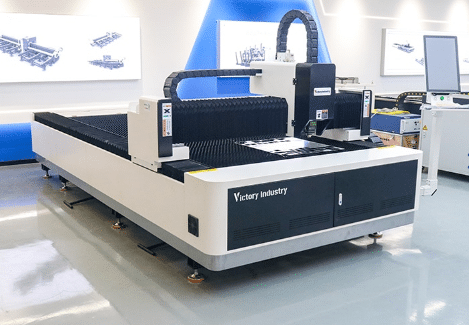
В Машина для лазерной резки VIF-A is intended for regular sheet-metal production. Configuration should follow material, thickness, sheet size, daily output, gas supply and automation needs.
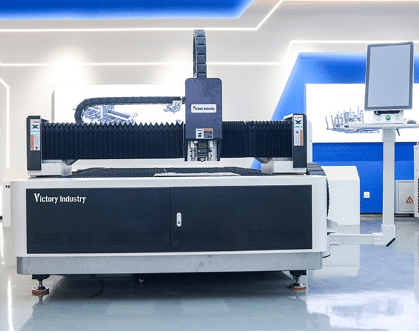
img.VIF-A Laser Cutting Machine.webp
Промышленность Победы also supports laser cutting, welding, cleaning, marking, CNC forming and robotic systems so the cut blank can fit the rest of the line. Learn more about the company on the О нас page.
Send drawings and a representative material list before selecting power. When a waterjet or outsourced cold-cutting process is the better fit, that should be clear from the test-cut and cost comparison.
For a configuration review, свяжитесь с технической командой with material grade, normal and maximum thickness, sheet size, tolerance, edge requirement, output, available gas, factory voltage and automation plan. Related process notes are available on the Блог Victory Industry.
The Practical Decision
There is no universal winner in laser cutting vs waterjet cutting. Fiber laser is usually the practical choice for high-volume carbon steel, stainless steel and aluminum sheet because it combines speed, narrow kerf and automation. Waterjet earns its place when thickness, heat sensitivity, nonmetal materials, taper control or material properties are the main concern. Compare the same part, the same quality target and the full cost per finished part, then confirm the decision with a test cut.
Часто задаваемые вопросы
Is Laser Cutting Cheaper Than Waterjet Cutting?
Laser cutting can cost less for thin and medium sheet because it often finishes the job faster and does not use abrasive. Electricity, assist gas, labor, maintenance, downtime, waste and production volume can change the result.
Is Laser Cutting More Accurate Than Waterjet Cutting?
Both can make accurate parts. Laser performance depends on focus, calibration, motion and settings; waterjet performance changes with thickness, nozzle condition, abrasive flow, speed, taper and quality level.
Which Is Faster, Laser Cutting or Waterjet Cutting?
Laser is usually faster on thin and medium metal when power, contour, piercing count and edge grade are comparable. Waterjet may be the only workable choice for some thick, heat-sensitive or nonmetal parts.
Which Is Better for Thick Metal, Laser or Waterjet?
Waterjet often has an advantage when thick metal is routine production. The correct choice still depends on material, laser power, required speed, taper, edge quality and running cost.
Does Laser Cutting Create a Heat-Affected Zone?
Yes. Laser cutting uses heat, so a small HAZ can occur. Correct power, speed, focus, gas and piercing settings can limit it; waterjet does not create a conventional thermal HAZ.