











To optimize fiber laser cutting parameters for carbon steel, start with material thickness and a proven machine recipe. Balance laser power with cutting speed first, then adjust assist gas, pressure, focus position, nozzle, piercing settings, and cut height. Change one thing at a time. Check both sides of the test piece and keep the settings that stay stable across repeated cuts.
A single “best” value is rarely useful for every machine. A clean 1 mm sheet and a 20 mm plate need very different heat input, gas flow, focus, and piercing control. The useful target is a stable parameter window that gives full separation, manageable dross, acceptable edge quality, and repeatable production.
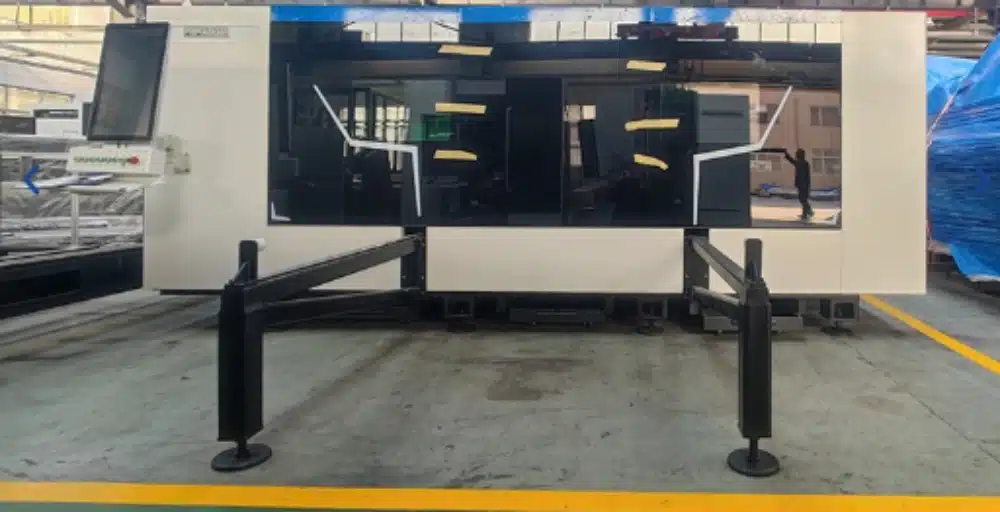
Why Does Carbon Steel Laser Cutting Produce Rough Edges or Dross?
A rough edge usually means the heat entering the plate and the molten metal leaving the kerf are out of balance. Enough laser power may be available, but that alone does not guarantee a clean cut.
Balance Laser Power with Cutting Speed
Laser power provides the energy. Cutting speed decides how long that energy stays on each part of the plate.
If speed is too high, the beam may lose penetration near the bottom of the kerf. Heavy bottom dross or partly connected sections can appear. If speed is too low, extra heat stays around the cut. The kerf may become wider and the upper edge can overheat.
This is why the useful setting is a power-and-speed combination, not simply maximum wattage. If you want to see how these variables work together, the guide to fiber laser cutting parameters that affect speed and cutting quality covers the same relationship from a broader process view.
Check Gas Flow Before Adding More Power
Assist gas has to remove molten material from the kerf. A damaged nozzle, poor nozzle centering, unstable pressure, dirty protective lens, or incorrect cut height can all leave material on the lower edge.
When a cut suddenly gets worse, check these basic conditions before changing the entire recipe. Otherwise, you can spend half an hour adjusting speed and power when the real problem is a worn nozzle.
How Should You Match Laser Power and Cutting Speed to Carbon Steel Thickness?
Thickness should lead the setup. After that, look at machine rated power, actual laser output, speed, gas, pressure, nozzle, focus, and cut height together.
The figures below are selected starting examples rather than universal production settings. Actual results still depend on carbon steel grade, mill scale or surface condition, flatness, optical configuration, protective lens condition, gas purity, nozzle centering, and the edge quality you need.
| Machine Rated Power | Carbon Steel Thickness | せっさくそくど | Laser Output | アシストガス | ガス圧 | Nozzle | 焦点位置 | Cut Height |
| 3 kW | 1 mm | 28–35 m/min | 3000 W | N₂/Air | 10 bar | 1.5S | 0 mm | 1 mm |
| 3 kW | 5 mm | 2.7–3 m/min | 3000 W | O₂ | 0.6 bar | 1.2D | +4 mm | 0.8 mm |
| 6 kW | 6 mm | 5–6 m/min | 6000 W | N₂/Air | 16 bar | 3.5S | -3 mm | 0.5 mm |
| 6 kW | 10 mm | 2.0–2.3 m/min | 5500 W | O₂ | 0.6 bar | 1.2E | +4 mm | 0.8 mm |
| 12 kW | 10 mm | 6–6.5 m/min | 12000 W | N₂/Air | 13 bar | 4.0S | -3 mm | 0.5 mm |
| 12 kW | 20 mm | 1.3–1.4 m/min | 12000 W | O₂ | 0.6 bar | 1.6E | +8 mm | 0.8 mm |
The nozzle codes above follow the machine recipe notation. Check the nozzle specification used on your own cutting head before copying them.
The focus values also need care. Different cutting heads and controllers may define positive and negative focus in different directions. Treat the numbers as recipe values, not a universal definition of where the focal point sits relative to the sheet. Confirm the sign convention in your cutting-head manual before applying any value.
The N₂/Air entries are also starting references only. Nitrogen and compressed air do not give the same edge chemistry, gas cost, or downstream result, so they should be tested separately on the actual part.
Run Thin Carbon Steel at the Right Speed
Thin sheet can accept useful energy quickly. Once there is enough power for full penetration, speed and gas delivery often matter more than adding wattage.
For example, a 3 kW setup can use a 28–35 m/min starting window on 1 mm carbon steel under the conditions shown above. A 12 kW machine may reach about 50–60 m/min on the same thickness in a suitable setup.
That extra capacity only pays back when production volume can use it.
Build a Stable Window for Medium and Thick Plate
Thicker plate is less forgiving. The beam must maintain penetration through a deeper kerf while the assist gas clears more molten material.
A 20 mm carbon steel example on a 12 kW machine runs around 1.3–1.4 m/min with oxygen, a 1.6E nozzle, +8 mm recipe focus, and 0.8 mm cut height. That process has little in common with high-speed 1 mm sheet cutting.
This is why machine power should be selected around the thicknesses you cut every week, not the thickest plate that appears once or twice a year.
How Do Assist Gas, Focus, Nozzle, and Cut Height Change the Result?
Once power and speed are close, the smaller setup details often decide whether a recipe works for one part or keeps working all day.
Use Oxygen for Many Medium and Thick Plates
Oxygen supports the oxidation reaction during carbon steel cutting. It is widely used when stable penetration on medium or thick plate matters more than maximum travel speed.
Many oxygen recipes use much lower pressure than nitrogen cutting. The cut edge normally carries an oxide layer, though, so the next operation matters. If the part will be painted, coated, or welded, oxide removal may become part of the real processing cost.
Use Nitrogen or Air When the Job Fits
Nitrogen can produce a low-oxidation edge, which can reduce extra surface preparation for some downstream work. It normally needs higher gas pressure and gas flow.
Compressed air can lower gas cost on suitable jobs, but the edge condition is different from high-purity nitrogen. Do not choose between them only by bottle or compressor cost. Check edge requirements and what happens to the part after cutting.
Keep Focus, Nozzle, and Cut Height Stable
Nozzle diameter and shape affect gas flow directly. Wear, spatter, contamination, or poor centering changes the flow even when the pressure reading has not moved.
Cut height matters for the same reason. A small height change alters how the gas enters the kerf.
If yesterday’s program produced clean parts and today’s program leaves dross, inspect the nozzle, protective optics, centering, and height calibration before rebuilding the parameter set.
How Can You Fix Common Carbon Steel Laser Cutting Problems?
Random adjustment makes troubleshooting slower because you lose track of which change helped. A small test coupon is much easier to work with.
Use a Simple Test-Coupon Routine
Start by recording the plate thickness, surface condition, machine rated power, gas, nozzle, and current recipe. Clean the protective lens, check the nozzle for damage, confirm nozzle centering, and calibrate cutting height.
Load a known starting recipe for the same material, thickness, and gas. Cut a reasonably long straight line first. Look at full penetration, sparks, the top edge, bottom dross, and the cut face.
Adjust one variable at a time. Speed is often the easiest place to start. If the result still points to poor penetration or melt removal, then check power, focus, gas pressure, nozzle, and height.
After the straight cut is stable, test piercing separately. Pierce time, pierce height, staged piercing, lead-in length, and spatter control can cause problems even when the straight cutting parameters are good.
Small holes, sharp corners, and short contours also need their own check. They spend more time in a small area, so running the straight-line speed through every feature can create local overheating.
Finally, repeat the test at several positions on the sheet and run enough parts to see whether gas delivery, optics, and machine temperature remain stable. Save an acceptable range, not just one lucky number.
Match the Defect to the First Check
| Cut Problem | Check First |
| Heavy bottom dross | Speed, penetration, gas flow, nozzle, focus |
| Incomplete cut | Speed, available power, focus, gas delivery |
| Unstable piercing | Pierce recipe, pierce height, nozzle, optics |
| Wide kerf | Low speed, excess heat input, focus |
| Burned upper edge | Speed, corner slowdown, focus, heat buildup |
| Result changes during a shift | Nozzle wear, lens contamination, gas stability, calibration |
This order keeps troubleshooting practical. You do not need to change six settings because one bad part came off the table.
Which Fiber Laser Cutting Machine Fits Carbon Steel Production?
Machine selection becomes easier after the process requirements are clear. Write down your regular thicknesses, maximum thickness, sheet size, daily output, gas preference, edge requirement, and loading plan first.
For flat-sheet carbon steel work, the VIBレーザー切断機 is available in configurations covering different production needs rather than one fixed wattage. Features such as automatic focus control and a stable cutting setup are useful when the goal is to keep a proven parameter window consistent through repeated work. You can also compare the wider Fiber Laser Cutting Machine range when sheet size, power, or automation requirements differ.
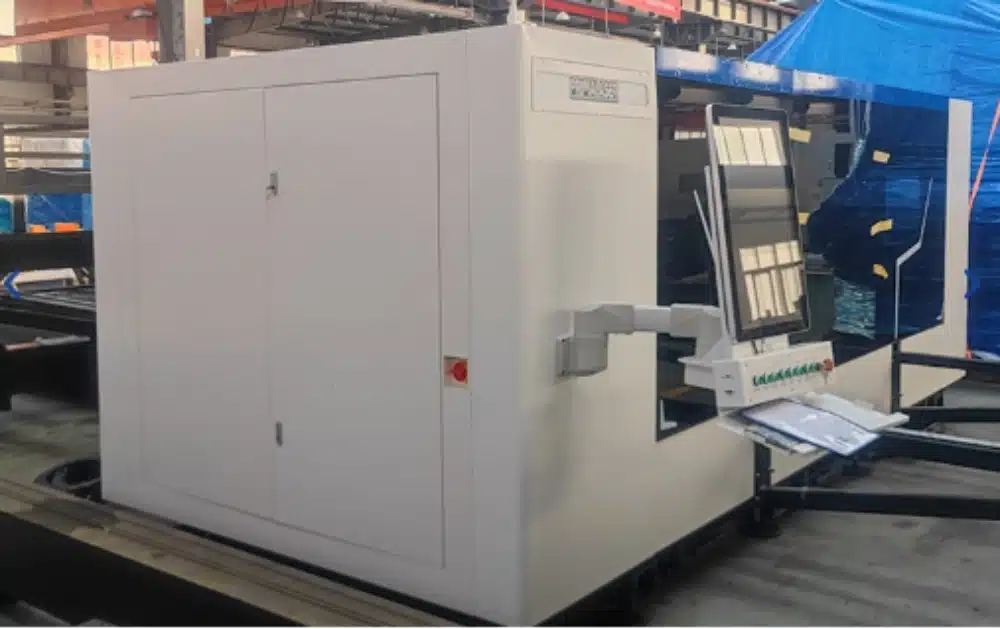
ウイニングインダストリー supplies laser systems, CNC forming equipment, and automation for metalworking projects. For a carbon steel line, the useful discussion starts with the parts you actually make. A thickness list and a few drawings tell much more than saying you want the highest available laser power.
If power selection is still unclear, the guide on how to choose a laser cutting machine for steel is a useful next step because it looks at thickness, production speed, and machine configuration together.
Installation and operator habits matter after delivery as well. Review the available installation, training, technical support, and maintenance services before ordering. For a new project, you can also 技術チームに連絡してください with drawings, material thicknesses, and expected output for configuration and sample-cutting discussion.
結論
Good fiber laser cutting parameters for carbon steel come from a stable combination, not one impressive wattage figure. Start with thickness and a proven recipe. Confirm the optics, gas path, nozzle, and height, then tune speed, power, focus, and pressure in small steps.
For production, keep records of the acceptable range, not just one setting that worked once. Include piercing and small-feature tests, repeat the cut in different areas of the sheet, and watch for changes during a longer run. That gives you a parameter window you can actually use on the shop floor.
FAQ
What Should You Adjust First When Fiber Laser Cutting Carbon Steel?
Start with a verified recipe for the correct material and thickness, then check the machine, optics, gas path, nozzle, and cut height. If those are stable, make a small cutting-speed adjustment before changing several other parameters.
How Should You Read Positive and Negative Focus Values?
Do not assume that positive and negative focus mean the same physical direction on every machine. Controller and cutting-head conventions differ, so confirm the reference direction in the equipment manual before using a focus value from another recipe.
When Should You Replace a Laser Cutting Nozzle?
Replace or inspect the nozzle when it has visible damage, heavy spatter, a distorted opening, poor centering, or when a previously stable recipe begins producing uneven dross or gas flow without another clear cause.
Should You Use Oxygen, Nitrogen, or Air for Carbon Steel?
Oxygen often suits medium and thick carbon steel, while nitrogen or compressed air can suit faster cutting on thinner material. The right choice also depends on edge oxidation, gas supply, operating cost, and the work required after cutting.
Why Can a Good Straight Cut Still Fail on Small Holes or Corners?
Small features and corners hold heat in a smaller area and often use different motion speeds from long straight cuts. They should be tested separately after the main cutting window is stable.