











Gas choice is only half the job. The shield must still cover the pool when the torch reaches a corner, a return, or the far end of a seam. Begin with the metal and the head documentation: nitrogen may suit one approved steel procedure, while argon is the better starting point for another alloy. Record purity and flow where the maker specifies, then trial the least accessible joint.
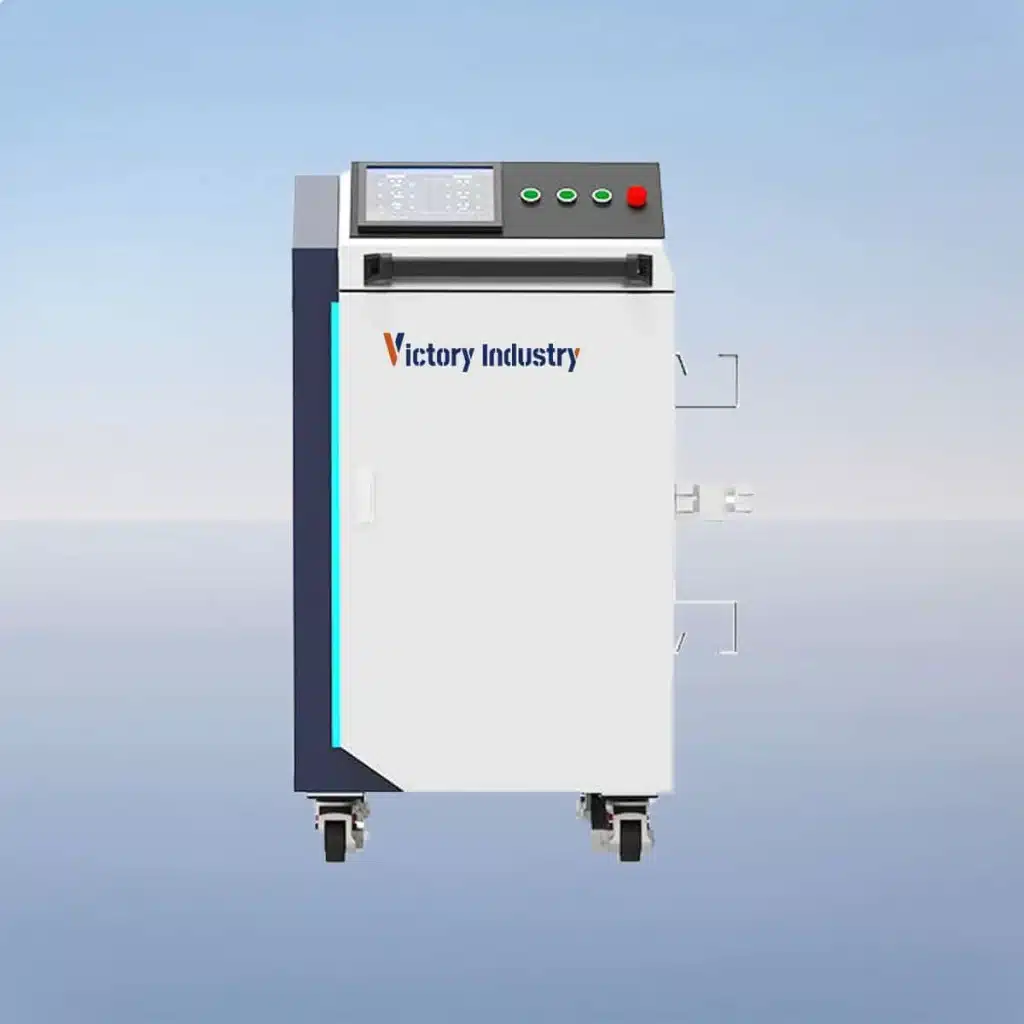
Quick Answer: Which Shielding Gas Should You Use?
| Gas | Why it is considered | Limit to check |
| Argon | Inert shield; often considered for aluminum or where a nonreactive atmosphere matters. | Suitability and cost depend on the alloy and procedure. |
| Nitrogen | An economical option for some manufacturer-approved steel applications. | Check metallurgy, corrosion service and acceptance requirements. |
| Helium or blends | A specialist option where the equipment documentation supports it. | Not every handheld system accepts these gases. |
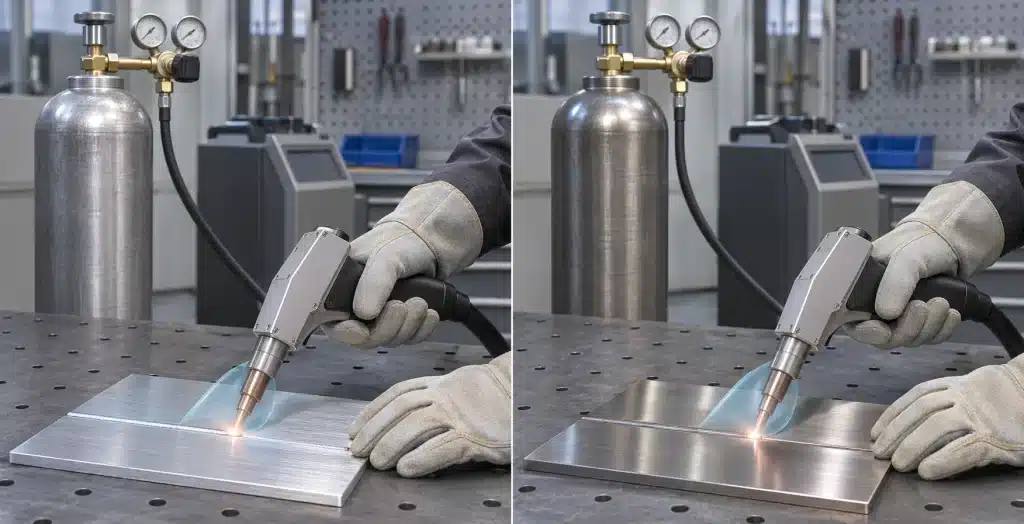
| Material | Usual first check | Decision boundary |
| Stainless steel | Nitrogen on some approved systems; argon for particular quality needs. | Grade, appearance, corrosion service and qualification. |
| Carbon steel | Nitrogen where the equipment maker permits it. | Steel grade, coating, filler and mechanical requirement. |
| Aluminum alloy | Argon on many handheld systems. | Alloy series, preparation, porosity, filler and fit-up. |
A useful inquiry gives Victory Industry the grade, thickness, drawing or joint photo, acceptance method, and expected volume. The joint then drives the gas discussion, rather than the other way around.
Shielding Gas Flow Rate and Purity: What to Check
A flow value can be recorded and still be unsuitable for the proposed setup. It may refer to a regulator reading rather than the machine control. The fitted nozzle may also differ from the one included in the quotation. The measurement point, regulator condition and nozzle all have to be included in the check.
A useful review follows the gas from the source to the pool. A value written beside the source alone misses restrictions farther along the route. Compare the complete delivery path while changes to the proposal are still possible.
The question to work through is whether the same delivery condition reaches the entire seam, not merely its easiest section.
More flow also changes the stream. Low coverage may expose hot metal, but turning the control higher is not an unlimited correction. A turbulent or badly directed jet can pull surrounding air toward the pool. The supplier needs to establish the setting with the nozzle and joint being offered, right through to the end of the weld.
Published figures from one handheld-system maker put nitrogen at 15-25 L/min and argon at 10-20 L/min. Read them as starting points. The proposed head and nozzle may call for something different, and the reading only means anything when its measurement point is known. Finish the check on the actual joint.
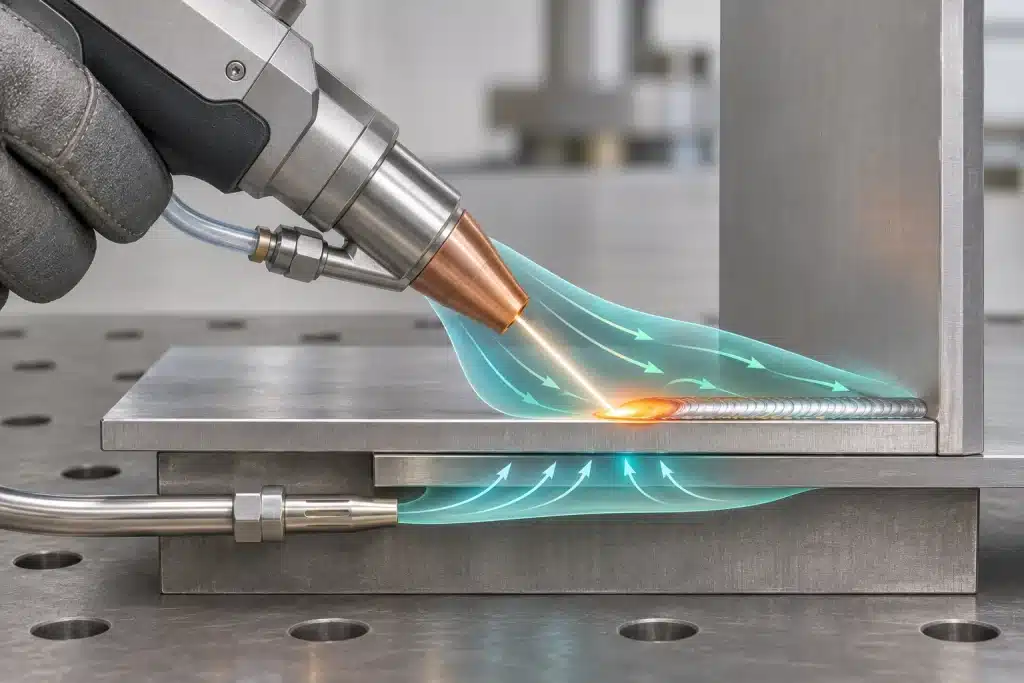
Nozzle Angle, Distance, and Backside Shielding
This is a physical delivery problem.
Where hot metal on the reverse side also needs protection, include that delivery arrangement in the trial.
Moving the nozzle farther away may look like the obvious answer. It also spreads the gas stream. Before accepting the change, find out whether coverage remains stable at the far edge of the pool. The hose position and operator’s travel still apply.
Troubleshooting Oxidation, Discoloration, and Porosity
When colour or pores appear, return to the tested gas route before chasing a higher reading. Look for leaks, the wrong gas, a shifted nozzle, dirty surfaces, changed travel or an exposed root. Keep the rejected coupon and alter one condition at a time.
| Weld problem | Possible cause | First check |
| Yellow or blue discoloration | Inadequate shielding or excess heat input | Gas coverage, travel speed, heat input |
| Porosity | Contamination, moisture or gas entrapment | Gas quality, joint cleaning, leaks |
| Inconsistent bead appearance | Unstable flow or nozzle position | Regulator, nozzle angle, leaks |
| Root-side oxidation | Inadequate backside shielding | Purge arrangement and coverage |
Gas Cylinders vs Nitrogen Generators
A buyer needs a complete path between the gas source and the machine. A cylinder beside the welder may provide it for a trial. A facility line that stops several metres away does not.
Include the working demand in the proposal. A repair machine may operate for short periods and tolerate cylinder changes. Several production heads may draw from one line at the same time. Whatever source is chosen has to maintain the accepted condition during that combined demand. If it cannot, the source has not solved the production requirement.
On the published VIW-F laser welding machine, a nitrogen generator appears in the options list. Other models should be checked separately rather than assumed to include it.
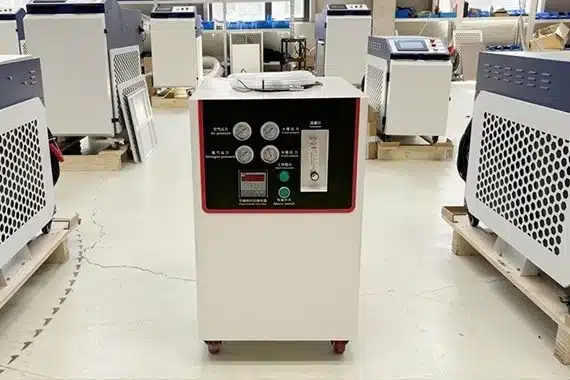
Start a generator check with the actual job: accepted flow, welding time and the stations that may operate together. Then compare that demand with usable output, any buffer vessel and the distribution system. Having sufficient average output is not proof that the source can meet a short peak. Read the service and alarm information as well, since a generator offline for maintenance supplies no gas.
How to Validate a Setup Before Production
A flat blank has access that a partly formed cabinet no longer has. Send a model where available, together with the material grade, thickness, joint, production gap and the dimensions that control assembly. Mark which face will remain visible.
Use the handheld laser welding machine range as the equipment starting point, then verify the proposed joint and gas delivery in a sample trial.
Record the material identity, joint preparation, torch position, travel direction, recipe, filler wire, machine, head, nozzle, gas, and delivery setting. That is the minimum trail needed to repeat the shielding setup.
A finished sample and its record are different pieces of evidence. Put them together before the equipment is reset. Rejected coupons can be useful because they show where coverage, fit-up or another controlled condition stopped meeting the requirement. Neither party should discover later that the settings for the accepted part were not retained.
Use an examination that answers the question behind the joint. If the concern is appearance, a visual requirement may settle it. If the joint must carry load or seal, a smooth surface will not establish the result. Use the agreed drawing and acceptance method, and keep the examination result with the sample.
Watch for changes that the sample record alone may hide. Was the reverse side protected? Was the same nozzle used along the complete seam? Did the operator reposition the work? A successful trial applies to the arrangement tested.
Because the laser welding machine portfolio uses more than one head and configuration, note which machine, nozzle, and gas route produced the accepted sample.
Carry the Trial Into Production
The operator procedure ought to answer the questions settled during the trial. Identify the permitted material and joint range, gas source, nozzle, torch position, recipe and inspection step. Include the supply check performed before welding. Record which change requires another test piece before work resumes.
Check the route and restore the approved condition when a seam begins to discolour. A new test piece applies to the arrangement after the fault is removed.
Request a Configuration and Sample Trial
Use Victory Industry to request a configuration proposal for the least accessible joint, its material and its acceptance method. Agree availability, gas scope, charges and timing with the supplier.
Frequently Asked Questions
Can I use nitrogen instead of argon for stainless steel laser welding?
Possibly. The gas still has to suit the grade, joint, nozzle and proposed machine. Test the real joint before changing an approved setup.
What shielding gas flow rate should I start with?
Begin with the range documented for the head and nozzle. Write down where the reading was taken, then inspect the whole seam.
Why does my laser weld turn yellow blue or dark?
First restore the tested gas route and torch position. If the colour remains, inspect preparation, leaks, travel and backside exposure.
Can an on site generator replace cylinders?
It needs a capacity and delivery check. Provide the accepted flow, simultaneous demand, buffer arrangement, service plan and backup source.
What should be recorded with a trial sample?
Include filler wire and operator where they apply.