











Choosing between an electric press brake and a hydraulic press brake depends on the parts you produce every day. A useful electric vs hydraulic press brake comparison must consider tonnage, working length, material strength, bend sequence, tooling, cycle profile, energy use, maintenance, and payback. This guide compares electric, hydraulic, and hybrid servo press brakes so you can match the drive system to your real production mix.
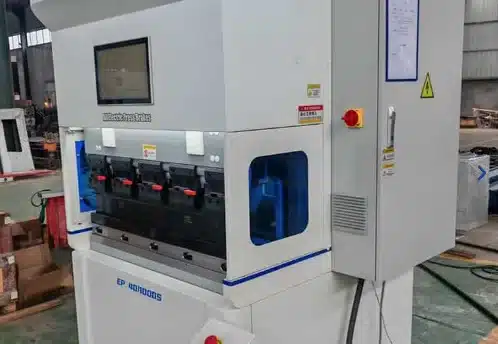
Quick answer: Electric press brakes usually suit thin-to-medium, high-mix work that values fast response, low idle energy use, and reduced hydraulic maintenance. Hydraulic press brakes generally suit high-tonnage, long-bed, and thick-plate work. Hybrid servo-hydraulic models bridge the two when you need hydraulic force with more responsive pump control.
Victory Industry supplies laser systems, CNC forming equipment, and automation for sheet-metal manufacturers. Its application team can size a machine from drawings, material grades, thickness range, longest bend, output target, and angle tolerance. The CNC press brake range includes electric servo, electro-hydraulic, and hybrid servo designs for a balanced comparison.
Electric vs Hydraulic Press Brake: Quick Comparison
Use this table as a selection boundary, not a universal performance guarantee. Actual results depend on the machine architecture, tonnage, working length, tooling, material, stroke, and duty cycle.
| Factor | Electric | Hydraulic | Hybrid |
| Drive | Servo motor and mechanical transmission | Pump, valves, oil, and cylinders | Servo-controlled hydraulic pump |
| Best fit | Thin or medium sheet, high-mix work, frequent starts | High tonnage, long beds, and thick plate | Mixed work needing hydraulic force and better pump control |
| Tonnage and length | Usually lower-to-medium ranges | Broadest heavy-duty range | Broad range, depending on configuration |
| Idle energy | Generally low | Higher on constant-speed systems; architecture dependent | Usually below fixed-output hydraulic systems |
| Noise and heat | Generally lower | Higher on continuous-pump designs | Often lower than traditional hydraulic systems |
| Maintenance | Servo and transmission items remain | Oil, filters, seals, valves, and cooling | Hydraulic circuit plus servo controls |
| Decision warning | Do not choose by speed alone | Do not treat all hydraulic designs as identical | Ask what “hybrid” means in the quotation |
How Do Electric and Hydraulic Press Brakes Work?
The drive system changes how the ram moves, how force is produced, which components need service, and how much power the machine draws. It does not determine part quality alone. Frame rigidity, feedback, tooling, programming, and material consistency still matter.
Electric Servo Drive and Direct Motion Control
A servo-electric press brake uses servo motors and a mechanical transmission to move the ram. The transmission may use belts, ball screws, or another model-specific design, which affects tonnage, stroke, service points, and positioning behavior. Power is drawn mainly during motion, so idle consumption, noise, and heat are usually low.
This design suits frequent starts, repeat programs, and thin-to-medium sheet. Victory Industry lists its Electric Servo CNC Press Brake in available configurations from 20 to 130 tons and working lengths from 1,000 to 3,200 mm. Confirm the exact stroke, daylight, axes, tooling, and safety package against your drawings.
Hydraulic Pressure and High-Force Bending
A hydraulic press brake uses pumps, valves, oil, and cylinders to generate and control ram force. Its broad tonnage and working-length range suits thick steel, heavy brackets, structural parts, and long panels.
A conventional constant-speed pump may keep running during idle time, increasing energy use, heat, and noise. Modern variable-speed or servo-pump systems reduce that penalty. An Electro-Hydraulic CNC Press Brake also uses servo synchronization and CNC feedback to control Y1/Y2 movement. Compare hydraulic machines by actual pump architecture, not by category name alone.
Hybrid Servo-Hydraulic Drive
A hybrid servo-hydraulic press brake keeps hydraulic cylinders while a servo-controlled pump follows the working cycle. Because “hybrid” varies by supplier, the quotation should define the pump arrangement, idle behavior, axes, and remaining hydraulic components.
Where Do Electric and Hydraulic Press Brakes Differ Most?
The useful comparison is not “new technology versus old technology.” It is whether the machine can produce your normal parts at the required quality and output without unnecessary capacity, energy use, maintenance, or setup time.
Accuracy, Tonnage, and Material Range
Electric drive can provide direct ram control, but hydraulic CNC press brakes can also hold stable angles when they use a rigid frame, precise Y1/Y2 synchronization, reliable feedback, suitable tooling, accurate backgauge positioning, and proper crowning.
When a supplier claims higher accuracy, ask for the test material, thickness, bend length, V-opening, target angle, measurement method, and sample size. An accuracy figure without testing conditions does not show how the machine will perform on your parts.
Press brake tonnage must not be selected from thickness alone. Material tensile strength, bend length, V-die opening, inside radius, bend angle, and bending method change the force requirement.
Stainless steel and high-strength steel usually need more force and show more springback than mild steel. Aluminum and coated sheets may require tooling that protects the surface. Working length must cover the actual bend rather than only the overall blank size.
Speed, Energy Use, Noise, and Heat
Electric machines often have fast approach and return movement, yet bending speed is only one part of the cycle. Tool changes, first-part checks, sheet handling, part rotation, and unloading may take longer than ram travel.
For a realistic comparison, measure the full period from loading the blank to removing an accepted part. A machine with faster ram movement may not increase production if tooling changes or manual material handling remain the main bottleneck.
Press brake energy consumption must also be measured under matched conditions. Record the following variables:
- Machine tonnage
- Working length
- Material and thickness
- V-die opening
- Ram stroke
- Bends per part
- Idle ratio
- Shift length
- Actual electricity consumption in kWh
A fixed-speed hydraulic pump, a modern electro-hydraulic system, and a hybrid servo pump will not produce the same result. Noise and heat should be judged under the same duty cycle, especially in multi-shift production.
Which Press Brake Fits Your Production Mix?
The selected machine should fit the jobs that create most of your production hours. Oversizing for a rare heavy part increases investment, while undersizing the normal workload restricts tooling and output.
Thin Parts and Frequent Job Changes
For thin stainless steel, aluminum covers, electrical enclosures, cabinet panels, and small brackets, an electric press brake can be cost-effective when programs change often and the machine starts and stops repeatedly.
High-mix production also benefits from stored programs, quick clamping, suitable backgauge axes, and tooling that covers the usual flange depths. These features can reduce setup time and make repeat orders easier to control.
However, an electric press brake should not be chosen only because it has fast ram movement. Check whether its tonnage, working length, throat depth, stroke, and daylight cover your normal part range.
Thick Plates and Long Components
Hydraulic press brakes are usually easier to justify when thick plate, long bends, heavy force, and large components dominate the schedule.
For structural parts, machinery panels, doors, and elevator components, frame rigidity, tooling load, stroke, daylight, ram synchronization, crowning, and safe material support matter more than a few seconds of return speed.
Long workpieces can cause the machine frame and tooling to deflect under load. A suitable crowning system helps compensate for this change and maintain a more consistent bend angle from the center to both ends.
Mixed Orders and Multi-Shift Work
A mixed shop may bend thin panels, medium-thickness brackets, and longer parts on the same machine. Here, you may still need hydraulic force but want faster response, lower idle waste, reduced heat and noise, and more controlled multi-shift operation.
This is the main selection space for a hybrid servo press brake, provided its normal thickness range, annual working hours, idle ratio, and service requirements justify the design.
Do not assume every hybrid machine works in the same way. Ask the supplier to explain when the pump runs, how pump output changes during the cycle, which hydraulic components remain, and how the system is maintained.
What Costs Matter Beyond the Purchase Price?
Total cost of ownership includes capacity utilization, electricity, maintenance, tooling, setup labor, scrap, downtime, and financing.
A lower-priced machine is not economical if it cannot bend the longest normal part or lacks the required stroke, daylight, or axes. An oversized machine can also waste capital on unused tonnage and working length.
Electric machines remove hydraulic oil, filters, seals, valves, and cooling checks. However, servo motors, drives, feedback devices, bearings, belts or screws, and lubrication still need care.
Hydraulic machines require oil management, filters, hoses, seals, valves, cylinders, and temperature control. Hybrid systems retain a hydraulic circuit and add servo controls.
For a realistic press brake maintenance cost and energy comparison, calculate:
- Measured annual electricity consumption
- Scheduled maintenance parts
- Service labor
- Expected wear components
- Estimated downtime
- Tooling replacement
- Setup labor
- Scrap and rejected parts
- Financing and depreciation
You should also track setup minutes, first-pass yield, accepted-part cycle time, tool-change frequency, and scrap. Quick clamping, stored programs, an accurate backgauge, and CNC crowning may save more money than a slightly faster ram.
The first accepted part is especially important. If operators must perform several trial bends before reaching the correct angle, the lost material and production time can become a significant annual cost.
Can a Hybrid Servo Press Brake Balance Power and Efficiency?
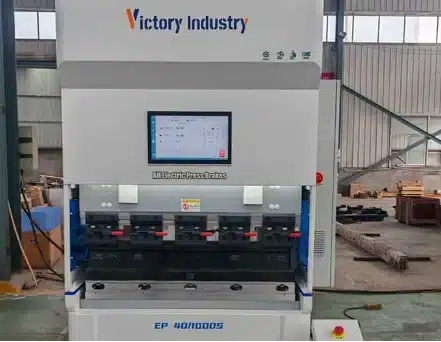
When your work sits between light precision jobs and heavy hydraulic bending, the Hybrid Servo CNC Press Brake is worth evaluating. Its purpose is to retain hydraulic forming force while using demand-based pump control.
Servo-Controlled Hydraulic Power
The hybrid servo-hydraulic drive responds to the working cycle instead of operating like a fixed-output hydraulic system. Depending on the pump and control architecture, this can reduce unnecessary running time, heat, noise, and idle energy while keeping the force needed for demanding bends.
Victory Industry lists available hybrid configurations from 40 to 1,000 tons and working lengths from 1,600 to 16,000 mm. This is a product-family range rather than one standard machine.
Buyers should confirm the following specifications for the quoted configuration:
- Frame and nominal force
- Working length
- Ram stroke
- Daylight
- Throat depth
- Tooling load
- Backgauge axes
- Crowning system
- CNC controller
- Safety package
A smaller configuration may serve cabinet, kitchen equipment, metal furniture, or enclosure production. Larger engineered configurations can support long panels, structural components, and heavier sheet-metal work.
CNC Control, Backgauge, and Crowning
The CNC system supports multi-step programming and repeat jobs. A servo backgauge positions the sheet, while CNC crowning compensates for deflection across long bends.
These functions become valuable when a part has several bends. Instead of measuring every position manually, the operator can follow the stored program while the backgauge moves between programmed steps.
The number of backgauge axes should follow the part geometry. More axes do not automatically create better production. For simple brackets, a basic layout may be enough. Parts with tapered flanges, different bend depths, or complex sequences may justify additional axes.
Safety should be specified as a complete package. A foot pedal alone is not enough. Depending on the risk assessment and destination market, the machine may require rear guards, light curtains or laser guarding, interlocks, emergency stops, safety PLC functions, and operator training.
How Should You Specify the Right Press Brake?
A supplier cannot size the machine from a statement such as “we bend 3 mm steel.” The quotation should be based on real production information.
Send the following details:
- Material grades
- Minimum and maximum thickness
- Longest bend
- Part drawings
- Inside radius
- Bending method
- Daily or monthly output
- Required angle tolerance
- Surface-quality requirements
Mention high-strength materials, narrow flanges, return bends, hems, deep boxes, and surface-critical parts because they may require different tooling or machine clearances.
Discuss the V-die opening early. A smaller opening generally requires more force and creates a smaller inside radius. A larger opening reduces the required force but changes the radius and minimum flange size.
State the required stroke and daylight, deepest flange, bend sequence, backgauge needs, and whether long parts require crowning or automatic angle measurement.
You should also confirm safeguarding, local voltage and frequency, ambient conditions, foundation limits, loading space, installation, testing, operator training, spare parts, preventive maintenance, remote support, and future automation before the order is fixed.
Which Press Brake Is Better for Your Production?
Choose a servo-electric press brake when most work uses thin-to-medium sheet, changes frequently, and benefits from low idle energy use and reduced hydraulic maintenance.
Choose a hydraulic press brake when high tonnage, long working length, thick plate, and heavy forming dominate production.
Consider a hybrid servo-hydraulic press brake when you need hydraulic force with more responsive pump control across a mixed workload.
The final electric press brake vs hydraulic press brake decision should come from the parts you make, not from a generic claim that one technology is always faster, more accurate, or cheaper.
Place the following information on the same selection sheet:
- Material and thickness range
- Maximum bend length
- V-die opening
- Tooling requirements
- Ram stroke and daylight
- Backgauge layout
- Crowning requirements
- Accepted-part cycle time
- Annual operating hours
- Idle ratio
- Maintenance capability
- Service and training requirements
After selection, installation, testing, training, preventive maintenance, spare parts, and later upgrades still affect payback. Review Victory Industry’s service support, then contact the technical team with your drawings, material range, longest bend, output target, and tolerance for a configuration review.
FAQ
Q1: Which Press Brake Is More Energy Efficient?
A1: A servo-electric press brake usually has low idle energy use. A hybrid servo press brake can reduce unnecessary pump running while retaining hydraulic force. Compare actual kWh under the same tonnage, working length, stroke, material, and duty cycle.
Q2: Is a Hydraulic Press Brake Better for Thick Steel?
A2: Hydraulic machines are often better suited to thick steel, high tonnage, and long bends. The frame, tooling, Y1/Y2 synchronization, stroke, daylight, and crowning must still match the job.
Q3: Are Electric Press Brakes Better for High-Mix Production?
A3: Electric press brakes can be a strong choice when jobs use thin-to-medium sheet, change often, and benefit from quick response, stored programs, low idle energy use, and reduced hydraulic maintenance.
Q4: Is a Hybrid Press Brake Worth It?
A4: A hybrid press brake may be worth considering when one machine must cover mixed thicknesses or multi-shift work and the shop needs hydraulic force with more responsive pump control. Check annual operating hours, idle ratio, service needs, and the exact drive architecture.
Q5: What Information Is Needed for a Press Brake Quotation?
A5: Send material grades, thickness range, maximum bend length, drawings, inside radius, V-die opening, bending method, output, tolerance, tooling, stroke, daylight, backgauge needs, local voltage, and safety requirements.
Q6: Why Does CNC Crowning Matter for Long Workpieces?
A6: The machine frame and tooling deflect under load, which can create different angles at the center and ends of a long workpiece. CNC crowning applies compensation across the working length to improve bend-angle consistency.