
Industrial cleaning evolves rapidly these days. Factories that still rely on chemical washing along with manual grinding or abrasive blasting often encounter greater waste output. They also deal with uneven surface treatment and added safety pressure. Laser cleaning delivers a cleaner approach to eliminate rust, paint, oxide layers, and surface contaminants. At the same time it grants manufacturers stronger process control overall.
Manufacturers who seek dependable laser processing equipment can turn to Sieg Industrie. This company supplies industrial solutions centered on accuracy, stability, and everyday factory performance. Its product range covers laser cutting systems, welding units, cleaning machines, and marking devices. It also includes CNC press brakes, robotic welding setups, robotic cutting tools, automatic loading solutions, and tailored automation lines. The practical value in real production comes from a complete project approach. Teams review materials first, run sample tests, match parameters carefully, plan safety measures, handle installation, train operators, and provide ongoing after-sales support. Rather than offering one fixed setup, the experts adjust power levels, cleaning widths, cooling methods, safety designs, and automation choices to match actual production demands.
Why Traditional Cleaning Creates Pressure for Modern Factories
Before selecting a newer cleaning method, factories should examine the hidden costs of older processes. Chemical cleaning often leaves residues and generates wastewater that needs special handling. Sandblasting produces dust along with spent abrasive media and extra cleanup tasks. Manual grinding frequently removes excess material and leads to inconsistent surface quality in many cases.
These issues reach beyond the cleaning step alone. They can delay production schedules, raise disposal costs, and create extra safety worries for workers. Manufacturers who handle structural steel, welded assemblies, molds, aluminum parts, or equipment housings find that a controlled surface preparation method cuts down on avoidable problems.
Reducing Waste Without Adding Complicated Steps
Laser cleaning applies controlled ablation to strip unwanted layers from surfaces. It avoids chemical liquids unlike solvent-based treatments. It also skips expendable media unlike abrasive blasting. This setup makes it simpler to cut secondary waste while maintaining a more streamlined cleaning workflow throughout.
The benefit matters for factories that aim to boost sustainability without losing productivity. A cleaner process only adds value when it maintains steady throughput. In actual production settings the right parameters depend on contamination thickness, substrate material, cleaning width, and desired finish. Sample testing plus parameter checks therefore become essential before full rollout.
Protecting the Base Material During Cleaning
One major worry with aggressive cleaning methods involves damage to the base material underneath. Workpieces that demand dimensional accuracy or surface integrity can suffer from over-cleaning. This situation often results in rework, defects, or needless scrap.
Laser surface cleaning equipment stays non-contact and highly focused. Suitable parameters let it remove rust, coatings, oxide layers, or deposits while limiting unwanted impact on the substrate. This feature proves especially helpful when cleaning aluminum oxide ahead of joining, preparing precision parts, or maintaining valuable molds and components.
Why a Laser Cleaning Machine Fits Cleaner Industrial Production
A laser cleaning system guides factories away from messier and less controllable methods. It moves them toward dry, precise, and repeatable surface treatment instead. The approach supports cleaner production because the process stays easier to contain, simpler to integrate, and more consistent than many traditional options.
The benefit extends past environmental gains alone. Improved cleaning control can also lower downstream defects. It enhances surface consistency before welding or coating steps and reduces repeated manual touch-up work. Manufacturers who already employ laser welding machines, robotic welding systems, or wider industrial automation solutions can treat surface preparation as part of a connected production plan.
Chemical-Free Cleaning for Greener Operations
Factories lower their reliance on solvents through this method. They reduce the load tied to chemical storage, handling, and disposal as a result. This change creates a tidier workspace and shrinks the environmental footprint linked to liquid waste management.
Laser rust removal systems provide a more focused alternative for rust removal, paint stripping, oxide cleaning, and pre-coating preparation. They appeal strongly in settings where cleaner operation, better surface control, and less secondary waste matter equally with raw cleaning speed.
Cleaner Surface Preparation Before Welding or Coating
Surface condition shapes the success of later processes. Rust, oil, oxide, and old coatings weaken weld quality or reduce coating adhesion. Inconsistent preparation regularly produces uneven final outcomes.
Laser cleaning readies the surface in a deliberate and repeatable manner. Removing oxide before welding improves process stability for example. Cleaning steel surfaces before coating supports better finishing quality at the same time. Factories that value weld appearance, coating reliability, and repeatable output should view surface preparation as a critical production step rather than a minor pre-process.
How the VIQ-P Supports Practical Green Cleaning
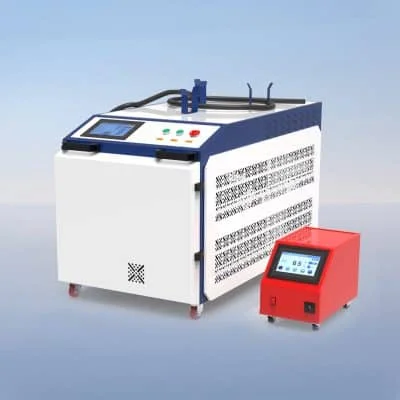
The VIQ-P Laser Cleaning Machine serves industrial users who need adaptable and efficient surface treatment. It handles rust removal, paint removal, coating removal, oxide cleaning, and contamination removal across many production and maintenance environments.
A practical industrial cleaner must also match daily operating conditions. The VIQ-P enables mobile use, handheld operation, and adjustable configurations for varied task types. Common industrial cleaning projects may involve laser power from 50 W to 2000 W. They may also require cleaning widths from 10 mm to 200 mm along with handheld or automated modes and air or water cooling based on power level and duty needs.
Portable Design for Flexible Factory Use
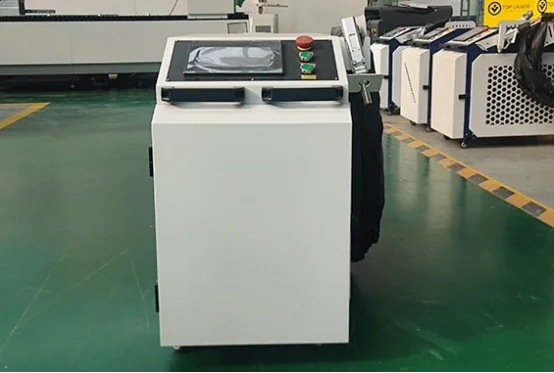
Large parts do not always move easily. A portable cleaning setup lets operators bring the process nearer to the actual workpiece. This avoids transporting heavy components through the workshop.
The design helps with structural steel frames, machine components, molds, vehicle parts, and on-site repair tasks. Maintenance teams can manage paint removal during refurbishment or localized rust treatment on steel structures with greater flexibility and reduced disruption.
Handheld Cleaning Head for Accurate Control
Some surfaces remain flat and simple. Others feature corners, weld seams, curved profiles, grooves, or hard-to-reach zones. A handheld cleaning head supplies operators with direct control when targeting localized contamination.
This proves valuable when only a specific layer or area requires treatment. It also increases usefulness for repair work, mold cleaning, and detailed pre-weld preparation where broader methods often prove inefficient.
Stable Laser Output for Consistent Results
Cleaner production involves more than waste reduction. It also requires stable results with fewer retries. Consistent laser output helps minimize uneven cleaning and cuts the need for repeated passes caused by weak process control.
Repeatability counts in routine industrial use. The VIQ-P supports ongoing cleaning tasks where rust, oxide, or coating removal must stay predictable from one part to the next. This consistency grows especially important during batch production or quality-sensitive surface treatment.
Cooling and Control for Long-Term Operation
Industrial cleaning frequently involves longer operating periods. A suitable cooling system maintains stable machine performance and supports reliability across repeated work cycles.
Control flexibility holds equal importance. Adjustable cleaning width, power, scan settings, and frequency let the process adapt to different surfaces and contaminants. Correct settings help factories balance efficiency, surface protection, and overall operating cost more effectively.
Key Applications That Support Cleaner Production
Different industries apply laser cleaning for distinct reasons. Some focus on corrosion removal. Others require paint stripping, coating removal, or surface preparation before welding and finishing. Across these scenarios the goal stays similar. Operators remove the unwanted layer while preserving the valuable base material as much as possible.
Rust Removal for Metal Fabrication
Rust removal ranks among the most common industrial applications. A non-contact cleaning system can treat steel plates, fabrication parts, structural supports, and welded components without abrasive media.
Metalworking workshops gain reduced dust, lower cleanup pressure, and less unnecessary surface wear. The method works particularly well when preparing structural steel before welding or coating, where surface quality influences later process stability.
Paint and Coating Removal for Maintenance
Old paint and coatings often need removal before repair, inspection, or recoating. Traditional methods can generate dust, chemical residue, or uneven stripping patterns.
Laser cleaning removes coatings in a more controlled way. Maintenance teams working on equipment housings, metal panels, repair zones, and high-value components find this precision valuable when accuracy matters more than rough bulk removal.
Mold Cleaning With Less Surface Wear
Molds used in rubber, plastics, and similar sectors require regular cleaning. Aggressive cleaning methods can shorten mold life and harm surface finish.
Laser treatment offers a contact-free approach for residue removal. Tire mold cleaning and other detailed mold applications benefit from preserved surface features and reduced manual scraping or repeated abrasive work. The outcome becomes a cleaner maintenance routine with improved control over delicate tooling.
Pre-Weld Cleaning for Better Weld Quality
Oxide layers, rust, and other contaminants affect welding performance. Preparing material before joining improves process stability, weld appearance, and consistency.
Factories that use laser welding machines or robotic welding systems can integrate laser cleaning into a more controlled workflow. Removing oxide from aluminum parts or cleaning steel edges before welding establishes a stronger foundation for the next production stage.
What to Check Before Choosing a System
Selecting the right system depends on material type, contamination category, cleaning area, and target productivity. A small maintenance task and a continuous industrial cleaning line often need very different machine configurations.
Before purchase evaluate substrate type, rust or coating thickness, required cleaning width, target cycle time, operating mode, cooling preference, extraction needs, and whether handheld use or later automation fits best. These factors shape both cleaning results and long-term project efficiency.
Match Power to Cleaning Speed and Material
Higher power improves throughput during broad-area cleaning or heavier contamination scenarios. Lower power suits delicate surfaces or finer cleaning tasks better. The correct choice should follow actual application needs rather than a simple preference for larger numbers.
The VIQ-P comes in multiple configurations. This allows factories to match capacity to real workloads. Cleaning speed varies with contamination type, material response, and desired finish. Pilot testing therefore offers the best route to define a reliable parameter window before full-scale use.
Plan Safety From the Beginning
Laser cleaning demands proper safety planning. Operators should consider protective eyewear, shielding curtains or enclosed workstations, emergency stop systems, fume and dust extraction, and clear operating procedures.
A safety-first configuration supports smoother daily use. Victory Industry stresses interlocks, extraction interfaces, and operator guidance as part of practical project design. This emphasis helps the system fit industrial environments where compliance and repeatability both matter.
Consider Future Automation Needs
Repetitive cleaning tasks benefit from early automation planning. Laser cleaning integrates with robots, gantry systems, fixed workstations, or broader surface treatment lines for more repeatable output.
Factories that begin with handheld cleaning still gain from thinking ahead. A modular approach makes future upgrades simpler when production volume rises or cleaning needs become more standardized.
Service and Contact for a Better Cleaning Project
A stronger cleaning project requires more than equipment alone. Manufacturers also gain from application guidance, sample testing, operator training, maintenance planning, and after-sales support.
Sieg Industrie supplies support that includes quality inspection, installation and commissioning, preventive maintenance guidance, operator training, troubleshooting assistance, and configuration recommendations. These services help users apply equipment correctly and maintain stable long-term operation.
Factories preparing to select a laser cleaning solution should gather details on material type, contamination category, cleaning area, site conditions, and target production speed. With those details the technical team can propose a suitable configuration instead of relying on a one-size-fits-all answer.
Schlussfolgerung
Cleaner industrial manufacturing develops through practical process changes. Factories that reduce chemical use, abrasive residue, unnecessary substrate damage, and excessive manual cleanup move closer to an efficient and responsible production model.
Laser cleaning supports this shift by removing rust, paint, oxide layers, and contaminants with better control and lower secondary waste. Manufacturers seeking cleaner operations, dependable surface preparation, and adaptable industrial implementation find the VIQ-P offers a practical solution with room for immediate use and future automation.
FAQ (häufig gestellte Fragen)
Q1: What Can a Laser Cleaning Machine Remove?
A1: It removes rust, paint, oxide layers, coatings, oil residue, and other surface contaminants from many industrial materials. Results depend on selected settings and contamination type.
Q2: Will Laser Cleaning Damage the Base Material?
A2: Correct parameters make laser cleaning selective and controllable. It removes unwanted surface layers while lowering the risk of unnecessary substrate damage. Sample testing remains recommended for sensitive materials.
Q3: Is Laser Cleaning Better Than Sandblasting?
A3: The answer depends on the application. Laser cleaning avoids abrasive media, produces less secondary waste, and delivers stronger precision. It works especially well for high-value parts, controlled cleaning, and sensitive surfaces.
Q4: Can the VIQ-P Be Used for Pre-Weld Cleaning?
A4: Yes. It removes oxide layers, rust, and surface contamination before welding. This improves process consistency and surface readiness for subsequent joining operations.
Q5: How Do I Choose the Right Laser Cleaning Machine for My Factory?
A5: Consider material type, contamination thickness, cleaning area, power range, cleaning width, safety requirements, target speed, and whether handheld or automated operation fits. A sample test often confirms the best configuration reliably.