


Fiber lasers can be set up to cut copper and brass. These metals are reflective so the laser and cutting head must be set up to deal with reflective materials. You will also need to adjust the piercing, focus, assist gas and cutting speed to suit the metal. Check how a proposed machine will cut the actual thickness of metal you work with, make small holes, produce acceptable cut edges and deal with longer production runs.
While a simple clean sample from easy material will not assist with different alloys ordered, a drawing plus a few standard production sheets will generally tell you more about a given machine than a long list of allegedly cut metals.
Why Copper and Brass Are Difficult to Cut
Reflectivity and Back Reflection
Copper and brass surfaces can reflect a portion of the beam back to the cutting head before a stable cut is established. This can cause damage to the optics and laser source. Anti-back-reflection protection, monitoring and a sound protective window are of greater importance than high power ratings and claims made by the machine.
Surface finish can change the job of piercing different materials. Polished sheet, oxidized stock and material that has been lubricated with oil or has a protective film can all form differently. Find the grade of your material and test it as the machine manufacturer has it. Test it in the same condition that it was when you first started testing.
Fast Heat Transfer
Copper is a very fast heat remover from the cutting point. The beam has to put a lot of energy into a very small area in order to start and then keep the kerf open. This can create spatter if too much power is added without properly checking the focus and the correct piercing method for the material. Brass is a different beast and is affected by the alloy mix and the surface finish of the material and how the molten metal comes out of the cut.
Can a Fiber Laser Cut Copper?
Thin Copper Sheet
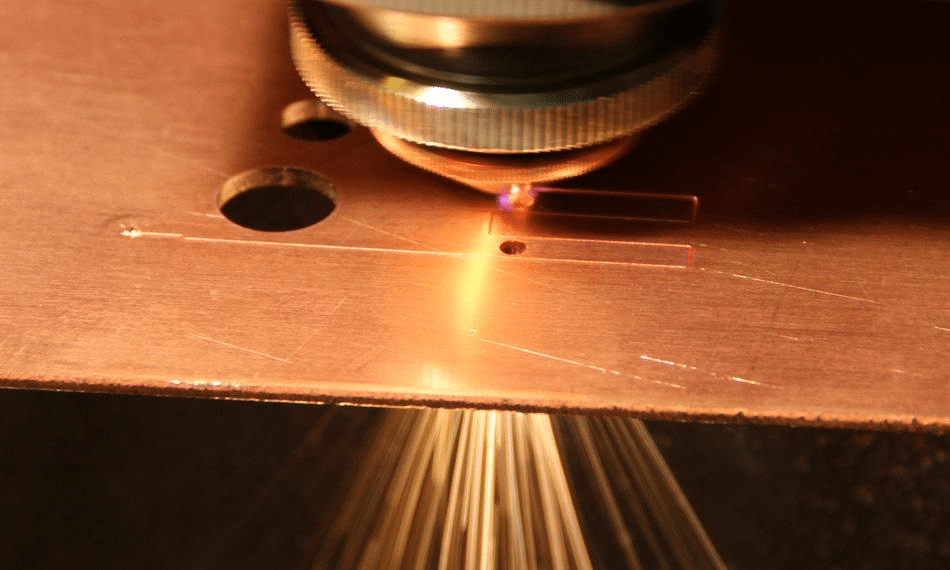
Thin copper sheet is often used for busbars, switches, electrical connections and heat exchanger parts. Much of this work contains small holes and narrow slots which are generally harder to form than a straight edge. Inspect both faces of a sample. A hole appearing round on one face may have a taper or mass of dross attached to the reverse face.
Make sure the protective window of the cutting head does not get dirty during the piercing process. Also check for flatness. A thin electrical part that has been bent can be of no use whatsoever and may not fit into the next assembly even if the full outline of the part has been cut out.
Thicker Copper and Laser Power
Thicker copper often requires more power and a careful setup for the pierce. There is no maximum thickness that is useful for all situations. Thickness of copper, power, type of cutting head, gas, speed and edge standard all affect what is practical. The machine may be able to cut a thick plate very slowly, but that does not make it suitable for production.
This starts with listing out the actual thicknesses of copper you buy. Then, instead of copying the laser power settings for carbon steel, ask for each thickness to be set up individually. Make sure to list the tiniest holes, the lead-ins, and all the corners.
Can a Fiber Laser Cut Brass?
Alloy and Surface Condition
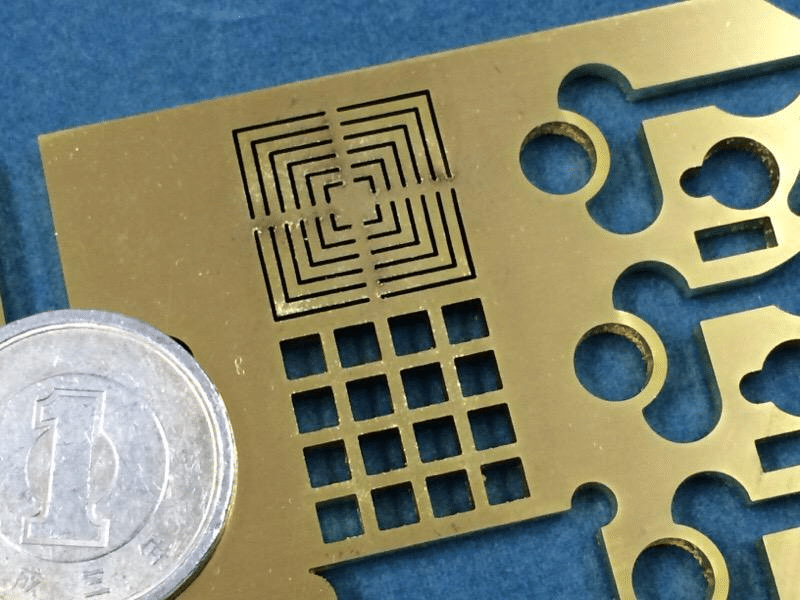
Yes, fiber laser cutting of brass is possible. The term brass often refers to different copper-zinc alloys, which contain varying amounts of zinc and possibly other elements. Surface finish of the material to be cut can also result in different burrs, different discoloration and different edge quality. Record the exact type of material and the batch number in your trials. If the parts are to be coated, soldered or brazed in a subsequent process, it is particularly important to note the results of your trials.
Having a smooth outer surface does not in itself confirm that the processing parameters have been set correctly. Small internal features, sharp corners and the underside of thin gauge sheets can frequently reveal problems with large samples that have appeared to be OK on visual inspection.
Zinc-Containing Fumes
Brass contains zinc. The fumes and vapors generated during laser cutting of brass may contain zinc compounds. Effective fume extraction and suitable filtration are required. The operator should be made aware when an extraction fault or alarm occurs, as strong fume extraction does not compensate for poor cutting settings.
Machine Features That Matter for Reflective Metals
Laser Source and Cutting Head Protection
Check if the laser and the cutting head are approved for processing copper/brass. Ensure sufficient back-reflection protection, protective-window monitoring, adequate interlocks for alarms and collision protection. Verify that the nozzle is properly centered and not damaged. Note that the initial check is for hardware sufficiency, and then settings for focus, speed, gas and piercing can be optimized.
Victory Industry supplies Fiber Laser Cutting Machines for metal processing. Depending on material and required productivity, we offer different configurations of the source, the optics, the nozzle and the CNC controlled motion system. More details about the 10 core systems of a Fiber Laser Cutting Machine are explained in How Does a Fiber Laser Cutting Machine Work?
Cooling, Assist Gas and Motion Control
Stability of the chiller, clean cooling water, constant assist-gas pressure and adequate nozzle alignment are key to long cutting times. Depending on the cutting edge required and the machine configuration, other approved gases such as Oxygen, Air or Argon may be suitable for laser cutting of copper or brass. Comparison of the actual edge and gas usage is likely to reveal some surprises against normal practice.
For small components like these, controlling the motion of the cutting tools is crucial, especially at narrow slots. The worst corner setting can ruin a narrow slot while straight cuts look perfect. It is not the machine with the highest power rating that is most useful but the one that can reproduce a given shape again and again.
Parameters, Test Procedure and Safe Production
Start With a Controlled Test Coupon
Use a coupon with straight lines, small holes, narrow slots and inside corners. Test both the thinnest and thickest material on your order list. Change one setting at a time: power, focus, speed, nozzle or gas pressure. Write down piercing time, cutting speed, edge color, burr, dross and gas consumption. Keep the grade and surface preparation the same so the comparison means something.
The test sheet should specify whether it was produced with laser, cutting head, nozzle, focus and assist gas. Parameters can vary greatly depending on the machine and material, and should be verified with a test cut before considering them to be production settings.
Check Parts After a Longer Run
Taking one good sample part and cutting enough parts to test the protective window, nozzle, and chiller for stability is just the beginning. Check the holes for size, inspect the underside of the part for any changes, and look for any changes in the pierce mark or edge roughness. If the part goes directly into bending, machining, plating, or assembly then test it at that step.
Safety, Maintenance and Cost per Part
Keep the enclosure, interlocks, extraction and warning systems working. Replace protective windows that are cloudy, cracked or burned, following the equipment instructions. Keep dust and metal fines out of cabinets and moving parts, and handle used filters and waste under local rules.
Analyzing the value of copper or brass cutting is not just about minutes. There is the value of gas, electricity, cleaning, rejects, labor and downtime to consider. A busy busbar manufacturer will likely place a high value on in-house work, possibly even producing small quantities of Brass on a regular basis. Victory Industry can discuss specific machine configurations and go for sample testing via our services team.
Conclusion
A fiber laser can also cut copper and brass as long as the laser, the cutting head and the machine setup is suitable for cutting reflective metals. Due to high reflectivity and fast heat conduction, cutting of copper requires special care. Zinc-containing fumes/vapors may be generated during brass laser cutting. Note that both materials are not to be cut like carbon steel.
To give you a more practical answer, we would need to know your alloy, desired thickness and your drawings. We can check the first pierce, very small holes, cut edge quality and run longer before committing to a particular machine. Please refer to our contact page and send us the grade, thickness, drawings and desired finish that you require for a suitable test cut.
FAQs
Can a Fiber Laser Cut Copper?
Laser sources and cutting heads are available that are optimized for cutting reflective metals. It is also possible to fine-tune copper-specific parameter settings. However, first test the required material grade and the respective material thickness and part geometry.
Can a Fiber Laser Cut Brass?
Yes. The cutting results will depend upon the brass alloy being cut, the thickness and surface condition. Check the cut edge for quality and ensure that the extraction is suitable for zinc fumes.
What Laser Power Is Needed for Copper?
The required laser power for cutting of copper depends on several parameters like thickness, material grade, piercing, cutting speed, hole diameter and surface finish. A sample test is more meaningful than just a wattage figure.
How Do I Protect the Laser Head When Cutting Reflective Metals?
Approved laser source and approved cutting head must have back-reflection protection. Monitor the protective window of the laser system and keep the nozzle of the cutting head always centered. Maintain cooling of laser source and cutting head and respect alarms and interlocks. Never try to switch off a protective shutdown.
Does Copper Cutting Need Special Gas?
Choose the gas and pressure to match your material and desired edge profile. Compare approved setups on the same test sample and factor in the gas consumption for each.