











CNC press brakes give sheet metal factories better control over bend angle, backgauge position, setup time, and repeat jobs. They help repeat parts match while reducing trial bending and rework.
A clean blank is only the start of a cabinet, bracket, machine cover, door frame, elevator panel, or kitchen equipment part. It can still become scrap when the bend line shifts, the angle changes across a long sheet, or springback is handled by guesswork. The benefits of CNC bending machines in machining should be judged through final assembly.
Victory Industry supplies laser systems, CNC forming equipment, and automation. Buyers can discuss cutting, bending, welding, and handling as one production route.
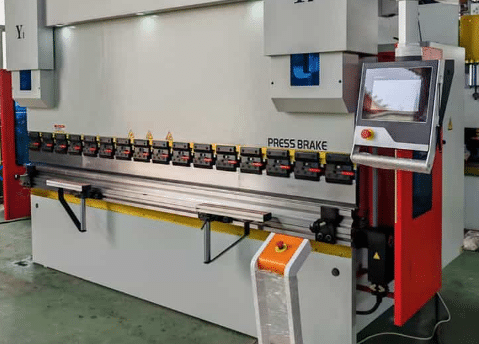
Why Do Metal Parts Still Fail After Accurate Cutting?
Even when the drawing and cut size are correct, the first bend can go wrong. This is due to the differences in material thickness. For example, stainless steel, carbon steel, galvanized steel and aluminum all rebound to a different extent after bending. Tool wear, V-opening, grain direction, ram depth, and positioning add more variation.
Turn Flat Blanks Into Parts That Fit
Cutting gives a part its outline. Bending gives it strength, clearance, and a shape that other parts can meet. If a cabinet side is slightly open, a door may not sit flat. If a bracket angle is wrong, the holes can be correct on paper and still fail to line up.
A bending problem often appears later as a welding or assembly problem, even though the real issue began at the press brake.
Stop Angle Errors Before the Batch Grows
A CNC system controls ram movement, backgauge positions, bending steps, and saved programs. It does not remove material behavior, but it gives the operator a repeatable starting point. A test bend is still needed. Once checked, the program can be used for the rest of the order or called back when the job returns.
Main Benefits of CNC Bending Machines in Machining
For mixed production, the useful result is a balance of accuracy, repeatability, setup speed, and less manual correction. Job changes should not become a new experiment every time.
Improve Accuracy and Repeatability
The ram, CNC backgauge, tooling and the compensation system control where the bend is made and how the bend is made. It helps to control the bend positions and angles more precisely from part to part.
The first sample may pass inspection, but the real cost appears if the next fifty parts drift. Stable bending also makes welding and assembly easier to manage.
Reduce Scrap, Rework, and Trial Bending
Every failed trial uses sheet, machine time, and labor. Saved programs reduce repeated measuring and help the operator return to a known setup.
A change in material grade, thickness, tooling, or bend radius may still need adjustment. The benefit is that the operator starts from recorded data instead of memory.
Rely Less on One Senior Operator
Good operators still check tooling, material condition, safety, and the first part. CNC control reduces how much process knowledge stays with one person.
Backgauge movements and bend sequences can be stored. Newer operators have a clear process to follow, while experienced staff can focus on difficult parts.
How an Electro-Hydraulic CNC Press Brake Supports Heavy Bending
Thicker sheets and long workpieces need enough force, frame rigidity, working length, and balanced ram movement. A small machine cannot be made suitable for heavy work by programming alone.
The Electro-Hydraulic CNC Press Brake is made for jobs where synchronized cylinder control and higher forming capacity matter. Depending on configuration, ranges can cover about 40 to 400+ tons and working lengths from roughly 1600 to 6000+ mm. The correct size still depends on material tensile strength, thickness, bend length, die opening, and the bend itself.
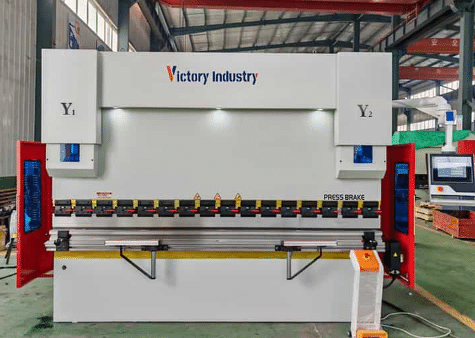
Keep Both Sides of the Ram Moving Together
Even if the left and right cylinders are moved unevenly, the angle remains constant across the workpiece. This is achieved by means of electro-hydraulic servo-synchronization which continuously monitors and corrects the ram movement. For long bends in particular, this provides a solid basis, but in addition always the tooling and the material to be bent must be checked.
Handle Long Parts With the Right Capacity
Required tonnage is affected by material strength, bend length, V-opening, and bending method. Too little capacity limits the work. Far more capacity than needed can add cost and floor space without improving the part.
CNC crowning matters on long workpieces. Under load, the frame and tooling can deflect slightly. Crowning adds compensation so the center and both ends stay closer to the target angle.
CNC Features That Improve Bending Results
Machine specifications can look similar on a quotation sheet. Daily use shows the difference. Control, backgauge, tooling, compensation, and safety decide how smoothly the machine handles real orders.
Plan Multi-Step Parts With CNC Programming
A part with several bends needs the right sequence. One wrong step can trap the workpiece against the punch or make the next bend hard to reach.
CNC programming stores the order of operations for repeat work, saving time when the same part family returns.
Position Bend Lines With a Servo CNC Backgauge
The backgauge sets the sheet position before each bend. If it is wrong, the bend line is wrong, no matter how accurate the ram is.
Servo positioning reduces hand measuring and makes multi-bend parts easier to run. Extra axes can help with tapered parts, different flange depths, or workpieces needing support at more than one point.
Change Tools Faster With Quick Clamping
Quick tool clamping helps shops that change punches and dies often. It suits high-mix work where materials, radii, and part designs change during the day. Tooling must still match the job because a worn punch, unsuitable V-die, or poor alignment can cancel the benefit of a good control system.
Applications and Machine Selection
CNC bending machines bring the most value where the formed part must fit another part, such as cabinets, machinery guards, elevator panels, brackets, HVAC parts, and metal furniture.
Match the Machine to the Parts You Sell
Start with drawings, not a general catalog. Record material grades, thickness range, longest bend, flange depth, bend radius, daily volume, and required tolerance. These details show whether you need more working length, more axes, faster tool changes, or heavier capacity.
An Electric Servo CNC Press Brake can suit work where speed, clean operation, and lower energy use matter. A Hybrid Servo CNC Press Brake offers another route when the buyer wants a balance between hydraulic force and servo efficiency. For long or thicker work, the Electro-Hydraulic CNC Press Brake may be more practical. The final configuration still has to follow the part list.
Check Safety, Maintenance, and Service
Light curtains or laser guarding, emergency stops, safe foot controls, overload protection, and operator training should be discussed before shipment. Local requirements differ, so the safety package needs to match the place of use.
Hydraulic oil, filters, lubrication, backgauge calibration, tooling wear, and safety checks need a schedule. Victory Industry provides installation, debugging, training, technical support, and maintenance services.
When asking for a quotation, send drawings, material grades, thickness range, maximum bend length, expected output, and layout limits. This makes it easier to rule out a machine that is too small, too slow, or more complex than the work requires.
Conclusion
A CNC press brake earns its place when it makes production easier to repeat, not when it simply adds another large machine to the floor. A sensible buying process starts with real parts, clear capacity calculations, suitable tooling, safety, and a service plan. Share those details with Victory Industry before choosing a model, and keep the discussion focused on the work the machine must do.
FAQ
Q1: What Are the Main Benefits of CNC Bending Machines in Machining?
A1: They improve control over bend angle, part position, repeat jobs, and multi-step bending. They can also reduce trial pieces, rework, and setup time. Results still depend on correct tooling, material data, machine capacity, and a checked first part.
Q2: Why Choose an Electro-Hydraulic CNC Press Brake for Heavy Sheet Metal Bending?
A2: It provides synchronized ram control and can be configured for longer workpieces and higher tonnage. Tonnage must still be calculated from material strength, thickness, bend length, die opening, and bending method.
Q3: Can a CNC Press Brake Remove All Setup Work?
A3: No. Saved programs reduce repeated work, but operators still need to confirm the material, tooling, bend sequence, backgauge position, and first bend. Changes in sheet thickness or grade may need correction.
Q4: How Does CNC Crowning Help on Long Parts?
A4: Long bends can vary between the center and ends because the machine and tooling deflect under load. CNC crowning applies compensation along the bending length, helping the angle stay more consistent.
Q5: What Information Should a Buyer Provide Before Requesting a Quotation?
A5: Send drawings, material grades, thickness range, longest bend, bend radius, flange depth, production volume, tolerance needs, and floor space. Photos or samples can also help the supplier check tooling and handling needs.