











Most buyers start their search for a sheet metal cutting machine by asking one fundamental question: How much laser power is required for my application. As the most important factor, the laser power determines the cutting speed, the maximum cutting thickness and the cut surface quality. Additionally the laser power has a direct influence on the daily production. If a company is cutting stainless steel, carbon steel, aluminum or galvanized sheets the wrong laser power can be a bottleneck in production.
But after the first few real orders, another issue often shows up. A clean laser-cut sheet is still flat. It still needs bending, fitting, welding, and assembly. If the bending angle is off, the part may not fit the cabinet, frame, bracket, door panel, or machine cover. That is where the press brake starts to matter.
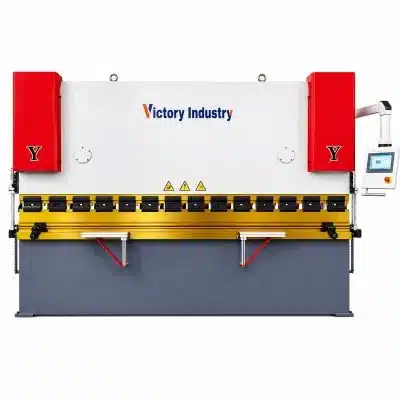
Victory Industry works with laser cutting machines, CNC press brake machines, robotic welding and cutting systems, and automation lines for metal fabrication. From a buyer’s view, this matters because cutting and bending should not be planned as two separate jobs. A fast cutting machine is useful, but the next process must keep up. For many workshops, the Electro-Hydraulic CNC Press Brake is the machine that turns flat laser-cut parts into real usable products.
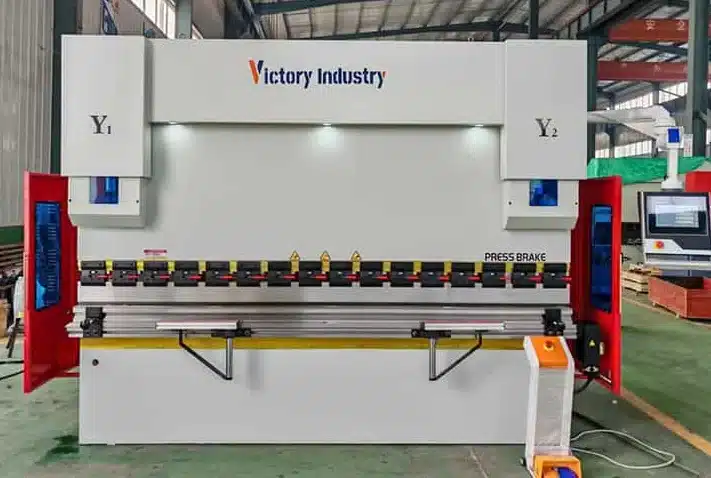
Laser Cutting Is Fast, But Bending Decides Final Part Quality
Laser cutting power affects processing speed. Higher laser power allows for processing of thicker materials and higher production output. This is why most buyers first compare power of 1500W, 3000W, 6000W, 12000W and more before moving on to other characteristics.
CUT is only the beginning. Once a part is cut from sheet material, it must be bent. A slow, finicky, or difficult-to-set press brake can immediately negate any benefits gained from the use of a fast cutting laser.
Cutting Gives Shape, Bending Gives Structure
Laser cutting gives the flat shape. It cuts holes, slots, edges, and profiles. In some factories, punching is also used for repeat holes or simple sheet work. You may even see laser cutting and punching used together on one production plan.
Bending is different. It gives the flat sheet its structure. A cabinet panel gets its return edge. A bracket gets its working shape. A machine cover gets its final size. An elevator panel or electrical enclosure only becomes useful when the bends line up with the drawing.
So the question is not only, “Can this machine cut fast?” You also need to ask, “Can my bending process keep up with this cutting output?”
Poor Bending Can Waste Good Laser-Cut Parts
You may cut a whole batch with clean edges and accurate holes. Then the operator starts bending. One part is fine. The next one is slightly off. A long panel may have one angle near the left side and another angle near the middle. This kind of problem is easy to miss in a quotation, but it shows up during assembly.
A bad bend does not only waste material. It wastes cutting time, operator time, and delivery time. If the part needs rework, the whole production plan becomes messy. In sheet metal work, a small angle issue can turn into a big fitting problem.
This is common in electrical cabinets, HVAC parts, elevator panels, metal furniture, shelves, machinery covers, and industrial equipment parts. If the backgauge is not steady, every repeated bend needs checking. If tooling change is slow, small-batch orders become tiring. That is why a CNC press brake after laser cutting is not a small add-on. It is part of the whole line.
What an Electro-Hydraulic CNC Press Brake Does After Cutting
A normal buyer may not care about every technical term at first. What you really care about is simple. The machine should bend accurately, repeat the same result, and not make the operator fight with setup all day.
An electro-hydraulic structure helps control ram movement more evenly. The left and right sides of the ram need to work together. For long parts, thick plates, and repeated bends, this matters a lot.
Servo Synchronization Keeps the Ram Movement Stable
The electro-hydraulic servo synchronization system helps control the ram during bending. In simple words, it helps the machine move more steadily across the working length.
If you bend thick carbon steel, wide stainless steel panels, or parts that need tight repeatability, this kind of control helps reduce daily trouble. You do not want a press brake that only looks strong on paper. You want steady pressure, steady motion, and parts that come out close to the drawing.
CNC Control Makes Multi-Step Bending Easier
Many sheet metal parts are not one-bend parts. They may need several bends, different flange sizes, and different angles. If the operator adjusts too many things by hand, setup gets slow. Mistakes also become easier.
CNC control helps with bending programs and step-by-step operation. For the operator, the sequence is clearer. For repeat orders, it saves time because the machine can call back the old program instead of starting again from notes on the workbench.
This is useful for factories that process mixed orders. You may bend cabinet parts in the morning, brackets after lunch, and machine covers before the day ends. A CNC bending machine makes that kind of work easier to manage.
Key Features That Improve Bending Accuracy and Output
A press brake is not only about force. Positioning, frame strength, tooling, and safety all affect the final result. This is why the same tonnage can feel very different in real use.
Servo CNC Backgauge for Repeatable Positioning
The servo CNC backgauge helps position the workpiece before bending. If the sheet is not placed correctly, the bend line will not be correct. It sounds basic, but this is one of the most common daily problems in a busy workshop.
A good backgauge must move fast and stop accurately. For batch production, this helps keep parts consistent. For metal cabinets, door frames, brackets, and covers, small size differences will be noticed during assembly. Workers may not care what system is inside the machine, but they will care if every part fits without extra correction.
CNC Crowning for Long Panels
Long parts often show the weak points of a press brake. Short parts may look fine, but long panels can have angle differences from one end to the other. The middle of the bend may not match both sides because the frame, ram, and tooling all carry load across a wider length.
CNC crowning helps compensate for machine deflection. It helps keep the bending angle more even across long workpieces. If you make cabinet doors, elevator panels, wide covers, or long structural parts, this feature is worth checking. It can reduce manual adjustment and save correction time.
Quick Clamping and Safety for Daily Work
Quick clamping helps reduce tooling change time. This matters when the workshop handles small and medium batches. A few minutes saved each time may not look big, but after many orders, it becomes real time.
Safety should also be checked from the beginning. A press brake may include a safety foot pedal, rear safety guard, safety light curtain options, lubrication system, and electrical cabinet protection. These are not fancy details. They affect daily operation, maintenance, and long-term use.
Electro-Hydraulic vs Torsion-Axis vs Electric Press Brakes
Buyers often compare several press brake types before placing an order. No single type fits every factory. The better choice depends on the parts, budget, accuracy needs, and production style.
| Press Brake Type | Best Fit | Main Point to Check |
| Electro-Hydraulic CNC Press Brake | Medium to heavy sheet metal, long panels, mixed production | Good balance of force, accuracy, CNC control, and crowning options |
| Torsion-Axis Press Brake | Simple parts, lower budget, less demanding accuracy | Lower cost, but limited control for long or complex bending |
| Electric Servo CNC Press Brake | Thin sheet, faster light-duty bending, energy-saving needs | Clean and efficient, but not always the best choice for heavier plates |
| Hybrid Servo CNC Press Brake | Workshops wanting lower energy use with hydraulic bending force | Good for buyers who want a balance between power and energy control |
If your workshop already runs laser cutting and needs steady bending for many part types, the electro-hydraulic type is usually easier to match with real sheet metal work. It gives enough force for common industrial parts and still keeps CNC control for repeat orders.
How to Choose the Right Press Brake for Your Laser Cutting Line
Do not buy a press brake only by looking at the biggest tonnage. Bigger is not always smarter. Smaller is not always cheaper in the long run. The right choice depends on material, thickness, bending length, V-opening, bend radius, tooling, and part drawings.
If you are also choosing a cutting machine, you can review the full Victory Industry products first and match the cutting and bending stages together. For a laser cutting line, the VIE Laser Cutting Machine can handle front-process cutting, while the press brake handles the forming work after cutting.
Match Press Brake Tonnage to Real Parts
Press brake tonnage depends on sheet thickness, material strength, V-opening, bend length, and bend radius. Thin stainless steel panels do not need the same force as thick carbon steel structural parts. Aluminum also behaves differently.
Before asking for a quotation, prepare several common drawings. Include the material, thickness, maximum bending length, and daily output. This is much more useful than saying, “I need a strong machine.” A supplier can only recommend a suitable press brake when the real part list is clear.
Match Axis Configuration to Part Complexity
Different axis configurations fit different jobs. Basic axis control can handle simple bends. More axis control helps when parts have deep flanges, several bend steps, narrow return edges, or frequent size changes.
Options such as 3-axis, 4-axis, 6-axis, 6+1-axis, and 8+1-axis setups should not be chosen just because they sound better. Choose them based on your part complexity. If your factory has many mixed orders, more backgauge control can save setup time and reduce operator checking.
Consider Tooling, Layout, and Future Automation
Press brake tooling also affects the final result. Punch type, die opening, radius, material surface, and part shape all matter. If the tooling is wrong, even a good machine cannot give clean bending results.
Factory layout should also be considered early. If parts are large, front support arms may be needed. If you plan to add loading support or robotic feeding later, leave room around the machine. For buyers planning a complete sheet metal line, it is better to discuss cutting, bending, welding, and handling at the same time.
You can also check service support if you need help with machine selection, installation, training, maintenance planning, or future automation layout.
Conclusion
Laser power matters. No one doing sheet metal work would deny that. A weak cutting setup can slow the whole workshop. But laser power is only half the story.
After cutting, bending decides whether the part becomes a usable product or another piece waiting for rework. If your parts need clean angles, repeatable size, long-panel consistency, and faster setup, the Electro-Hydraulic CNC Press Brake should be part of your equipment plan.
For electrical cabinets, HVAC parts, elevator manufacturing, metal furniture, kitchen equipment, construction materials, automotive parts, and machinery covers, bending quality affects assembly more than many buyers expect. The best choice is not always the biggest machine. It is the machine that matches your material, thickness, bending length, axis needs, tooling, safety requirements, and future production plan.
If you already know your material, thickness, bend length, drawings, and target output, you can send the details through the contact page and ask for a practical press brake recommendation.
FAQ
Q1: Why does an Electro-Hydraulic CNC Press Brake matter after laser cutting?
A1: Laser cutting makes the flat shape, but the Electro-Hydraulic CNC Press Brake forms the final structure with accurate bends, stable angles, and repeatable positioning.
Q2: How do I choose the right press brake tonnage?
A2: Press brake tonnage depends on material type, sheet thickness, bending length, V-opening, bend radius, and part drawings. It should be checked from real parts, not guessed from one number.
Q3: Is CNC crowning necessary for every bending job?
A3: CNC crowning is most useful for long workpieces. It helps compensate for machine deflection and keeps the bending angle more even across the full length.
Q4: How many press brake axes do I need?
A4: Simple parts may only need a basic axis setup. Parts with deep flanges, several bends, different sizes, or high-mix orders may need more axis control for faster and more stable positioning.
Q5: What is the difference between an electro-hydraulic press brake and a torsion-axis press brake?
A5: An electro-hydraulic press brake gives better CNC control, ram synchronization, and long-part accuracy. A torsion-axis press brake is usually more basic and may fit simpler, lower-budget bending work.
Q6: Can one Electro-Hydraulic CNC Press Brake handle many part types?
A6: Yes. CNC programming, servo CNC backgauge control, quick clamping, and suitable press brake tooling can support high-mix sheet metal production.
Q7: What information should I provide before asking for a quotation?
A7: You should provide material type, sheet thickness, maximum bending length, part drawings, daily output needs, tooling requirements, safety needs, and any future automation plan.