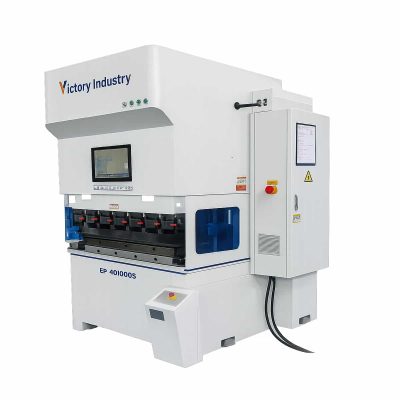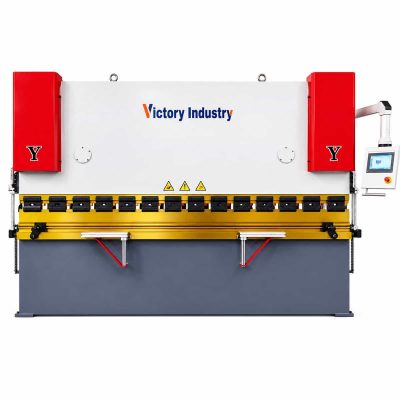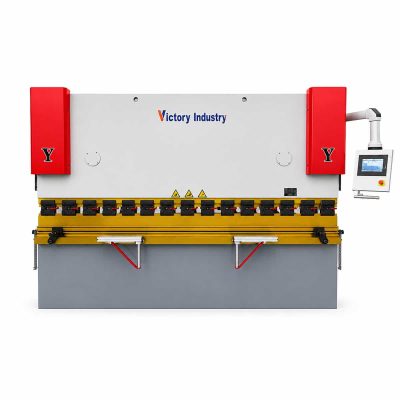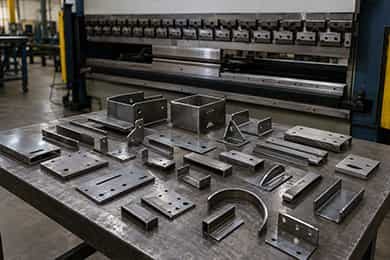
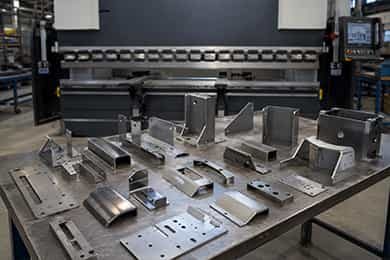
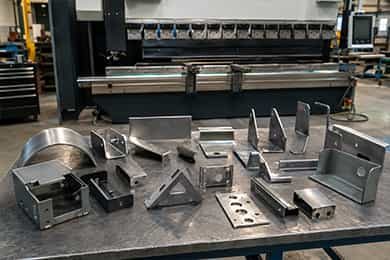
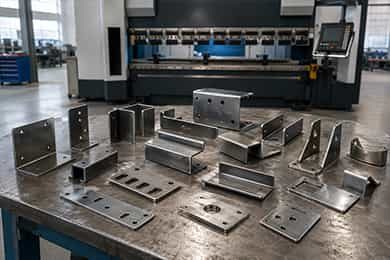
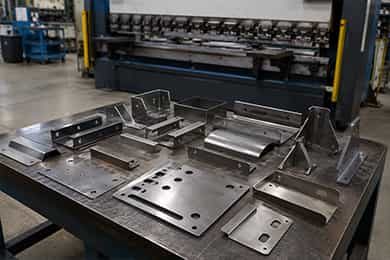
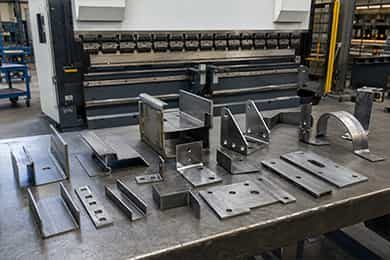
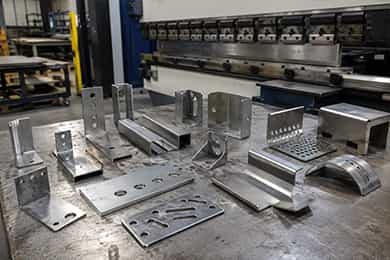
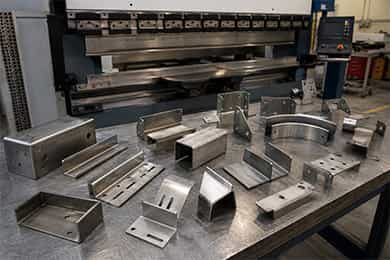
CNC press brakes utilize advanced control systems, precision backgauges, and programmable parameters to achieve highly accurate bending results. This ensures consistent angles and dimensions across every workpiece, reducing errors, minimizing rework, and helping manufacturers maintain strict quality standards.
Automated programming and rapid setup capabilities significantly reduce production time compared to conventional press brakes. Operators can store and recall bending programs instantly, enabling faster job changeovers, improved workflow efficiency, and higher output in both small and large production runs.
Once a bending program is created, the machine can repeatedly produce identical parts with minimal variation. This high level of repeatability is especially valuable for mass production applications where consistent quality and precise dimensions are critical to customer satisfaction.
CNC press brakes can process a wide variety of materials, including carbon steel, stainless steel, aluminum, copper, and other alloys. They can also accommodate different sheet thicknesses, making them suitable for diverse manufacturing and fabrication requirements.
Precise control over bending angles, positions, and forming sequences helps minimize production mistakes and scrap. By reducing material waste and improving first-pass yield, CNC press brakes contribute to lower manufacturing costs and more sustainable production practices.
Modern CNC press brakes feature intuitive touchscreen interfaces, graphical programming, and automated functions that simplify machine operation. These features reduce operator workload, shorten training time, and enable manufacturers to achieve high productivity with greater ease and confidence.
| Comparison Item | CNC Press Brake | Pan Brake Folder | Tube/Pipe Bending Machine | Plate Bending Rolls |
|---|---|---|---|---|
| Primary Function | Bends sheet metal into precise angles and complex profiles. | Folds sheet metal along straight lines. | Bends tubes, pipes, and hollow sections. | Rolls metal plates into cylinders, cones, and curved shapes. |
| Material Type | Sheet metal, steel, stainless steel, aluminum, copper, and alloys. | Thin to medium-gauge sheet metal. | Round, square, rectangular tubes and pipes. | Thick metal plates and sheets. |
| Bending Complexity | Excellent for simple to highly complex multi-bend parts. | Best for simple folds and box-shaped components. | Designed specifically for curved tube and pipe geometries. | Primarily used for continuous curved bending. |
| Precision & Accuracy | Very high precision with CNC-controlled positioning and angle correction. | Moderate precision, depending on operator skill. | High precision for tube and pipe applications. | Good for rolling operations but less suitable for tight-angle bends. |
| Production Efficiency | High productivity with automated programming and repeatability. | Suitable for low- to medium-volume production. | Efficient for specialized tube fabrication. | Efficient for large curved structures and cylindrical components. |
| Typical Applications | Metal fabrication, automotive, aerospace, electrical enclosures, machinery parts. | HVAC ducts, cabinets, boxes, panels, and roofing products. | Exhaust systems, handrails, frames, furniture, and pipelines. | Pressure vessels, storage tanks, wind towers, and large cylinders. |
| Flexibility | Handles a wide range of materials, thicknesses, and part designs. | Limited to sheet folding operations. | Limited to tube and pipe bending tasks. | Limited to curved plate-forming applications. |
| Best Choice For | Manufacturers requiring versatile, precise, and repeatable sheet metal bending. | Fabricators producing folded panels and box-shaped parts. | Companies specializing in tube and pipe fabrication. | Industries producing large rolled or cylindrical metal structures. |
Contact Information Form: