











Industrial laser cutting machines can be classified in two ways. Fiber and CO2 describe the laser source. Sheet, tube, and sheet-and-tube describe the workpiece format the machine is built to handle. For an industrial buyer, the second view is often more useful.
The four practical choices here are sheet fiber laser cutters, tube fiber laser cutters, sheet-and-tube fiber laser cutters, and CO2 laser cutters for approved non-metal materials. Start with material and workpiece shape. Then look at regular thickness, output, edge quality, factory utilities, automation, and laser power.
ウイニングインダストリー supplies laser cutting, welding, cleaning, and marking equipment, along with CNC forming machines and automation systems. This also helps when one machine may later join a larger fabrication line.
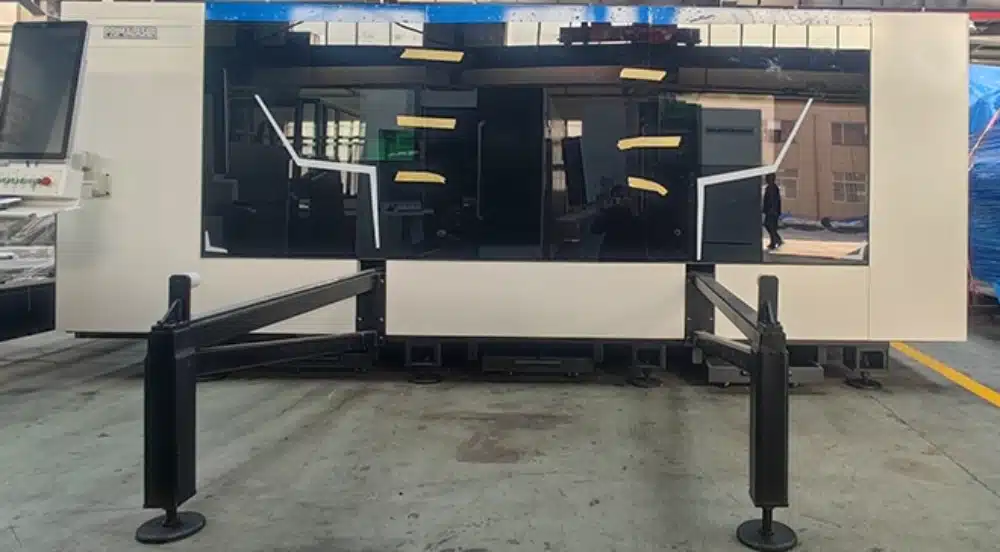
img.4 Types of Industrial Laser Cutting Machines a Buyer’s Guide.webp
What Are the Four Main Types of Industrial Laser Cutting Machines?
The first three use fiber sources but handle different workpieces. The fourth uses a CO2 source for approved non-metals.
| Machine Type | Main Workpiece | Typical Materials | ベストフィット |
| Sheet fiber laser cutter | Flat sheet and plate | Carbon steel, stainless steel, aluminum | Sheet metal fabrication |
| Tube fiber laser cutter | Tubes and profiles | Carbon steel, stainless steel, aluminum | Frames, furniture, machinery |
| Sheet-and-tube laser cutter | Sheets and tubes | Common industrial metals | Mixed production |
| CO2 laser cutter | Flat approved non-metals | Acrylic, wood, leather, fabric | Signage, furniture, packaging |
Fiber vs CO2 in Daily Production
Fiber laser cutting is usually the practical choice for regular metal work and needs less optical alignment than a mirror-based CO2 system. CO2 machines suit acrylic, wood, leather, fabric, and other approved non-metals. One does not replace the other.
Which Sheet Fiber Laser Cutter Fits Flat Metal Production?
A sheet fiber laser cutter makes sense when most jobs start as flat metal: cabinets, brackets, panels, enclosures, and structural parts.
Match the VIB to Sheet Metal Work
これ VIBレーザー切断機 is made for flat metal sheets such as stainless steel, carbon steel, and aluminum. It uses a heavy welded bed, aviation aluminum beam, servo motion, linear guides, a laser cutting head, and a closed enclosure.
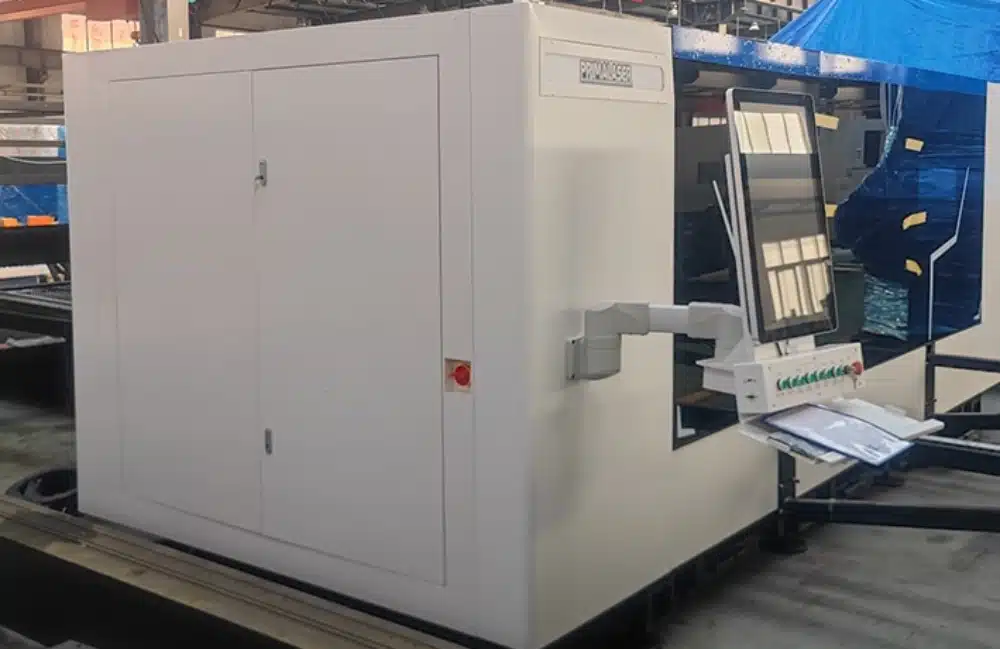
img.VIB Laser Cutting Machine.webp
Working areas run from 3,000 × 1,500 mm to 6,000 × 2,500 mm, with laser power from 1,500 to 20,000 W. Positioning accuracy is listed at ±0.05 mm and repeat positioning accuracy at ±0.03 mm. Optional items include smoke purification, gas-pressure control, an air compressor, and a safety light curtain. Availability can vary by model and market.
Choose Laser Power from Regular Thickness
Power should match the material you cut every week. Higher power can improve speed or thickness capacity, but it also raises electrical, cooling, gas, and purchase demands.
Check normal thickness, maximum thickness, edge requirement, piercing frequency, daily output, gas supply, and planned automation before moving up in wattage.
How Can a Tube Fiber Laser Cutter Reduce Handling and Deformation?
Long tube can sag, thin-wall profiles may distort, and poor chuck alignment can shift slots or holes. A dedicated tube machine addresses this through chuck control, supports, motion, and cutting sequence.
Use the VIT-A for Repeated Tube Orders
これ VIT-Aレーザーカッター is designed for tube cutting with automatic loading and unloading. It combines a rotary chuck, welded bed, servo motion, linear guides, laser cutting head, and control system.
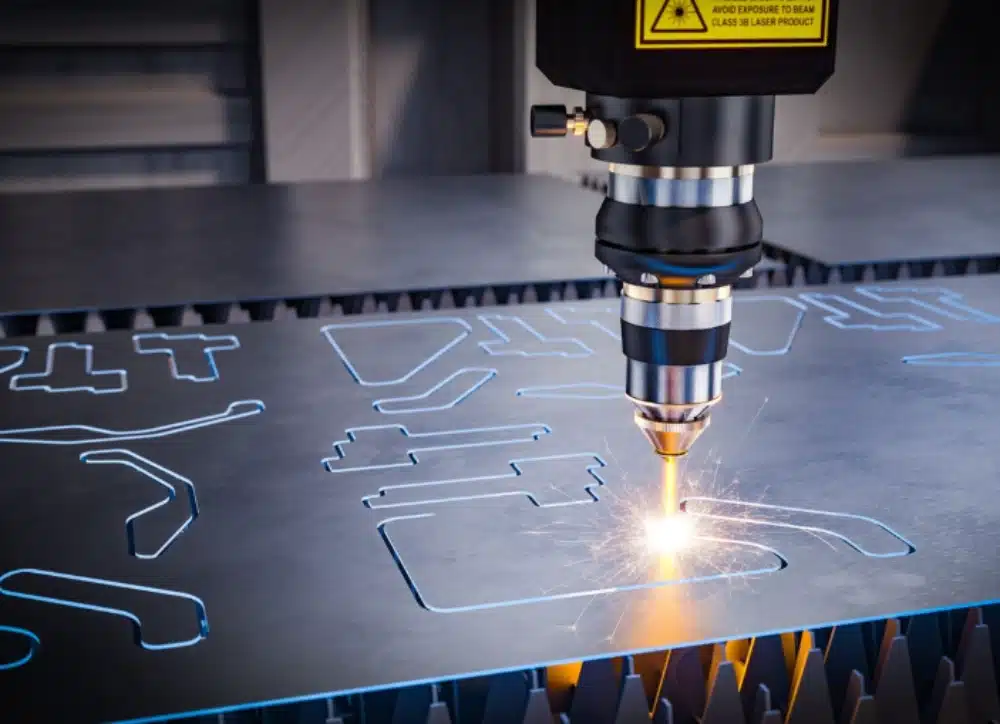
img.VIT-A Laser Cutting Machine.webp
Available configurations handle 6,000 mm tube lengths, with processing ranges of 220 mm or 350 mm depending on the model. Laser power runs from 1,000 to 6,000 W. Positioning accuracy is listed at ±0.05 mm and repeat positioning accuracy at ±0.03 mm.
Check the Chuck and Supports before Wattage
More power will not stop a long tube from moving. Check tube diameter, wall thickness, length, weight, profile shape, chuck range, support method, and expected tail material first.
Automatic loading is useful for larger batches and stable tube sizes. Frequent short runs and profile changes may reduce the return.
When Does a Sheet-and-Tube Laser Cutter Make More Sense?
Some workshops cut plates and profiles for the same assembly. Two dedicated machines give more capacity but need more space and capital. A combined machine sits between them.
Use the VIE-T for Mixed Production
これ VIE-Tレーザー切断機 combines a flat cutting area with a rotary chuck for tubes. It also uses an exchange worktable.
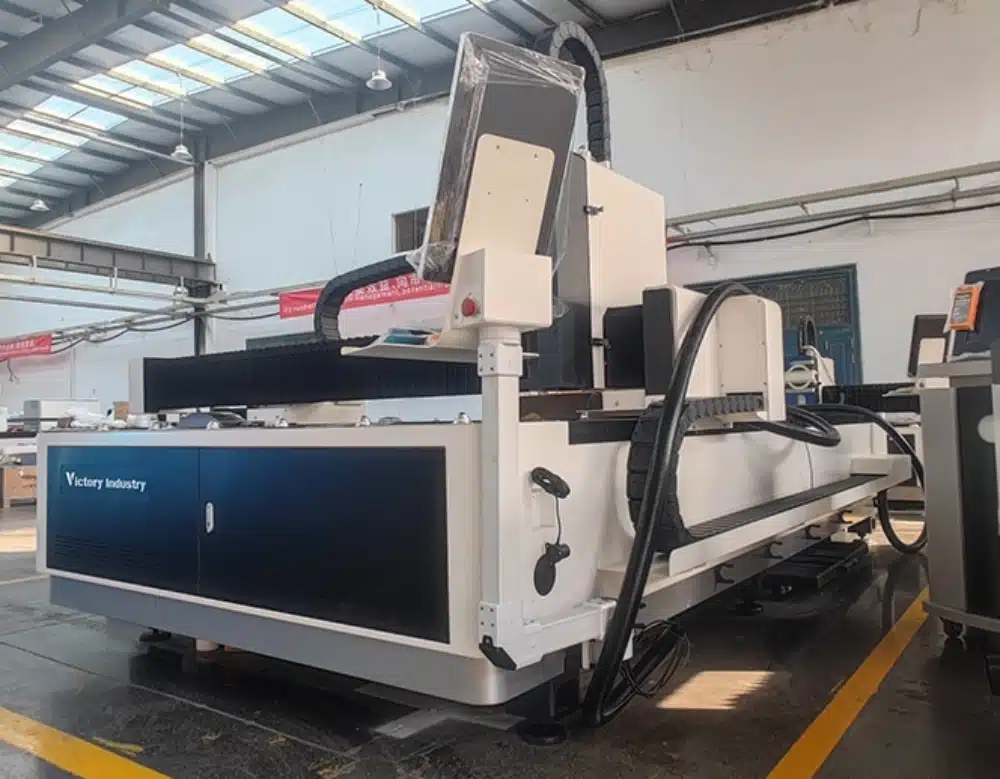
img.VIE-T Laser Cutting Machine.webp
Working areas range from 3,000 × 1,500 mm to 6,000 × 2,500 mm, with laser power from 1,500 to 20,000 W. The same control and motion platform serves sheet and tube work, while the chuck handles tube rotation.
Know Where a Combination Machine Has Limits
A combined system cannot cut a sheet and a tube at the same time. If both formats already keep separate machines busy, dedicated equipment is usually better.
A combination machine makes more sense when production is mixed, floor space is tight, or neither format can keep a dedicated laser busy all day.
Which CO2 Laser Cutter Fits Approved Non-Metal Materials?
For acrylic, wood, leather, fabric, or another approved non-metal, CO2 is usually the better fit. Focus on working area, table style, cooling, extraction, and material safety.
Use the VIC-E for Cutting and Engraving
これ VIC-Eレーザー切断機 is a CO2 system for non-metal cutting and engraving. Its working areas run from 600 × 400 mm to 1,500 × 3,000 mm, with laser power from 80 to 600 W.
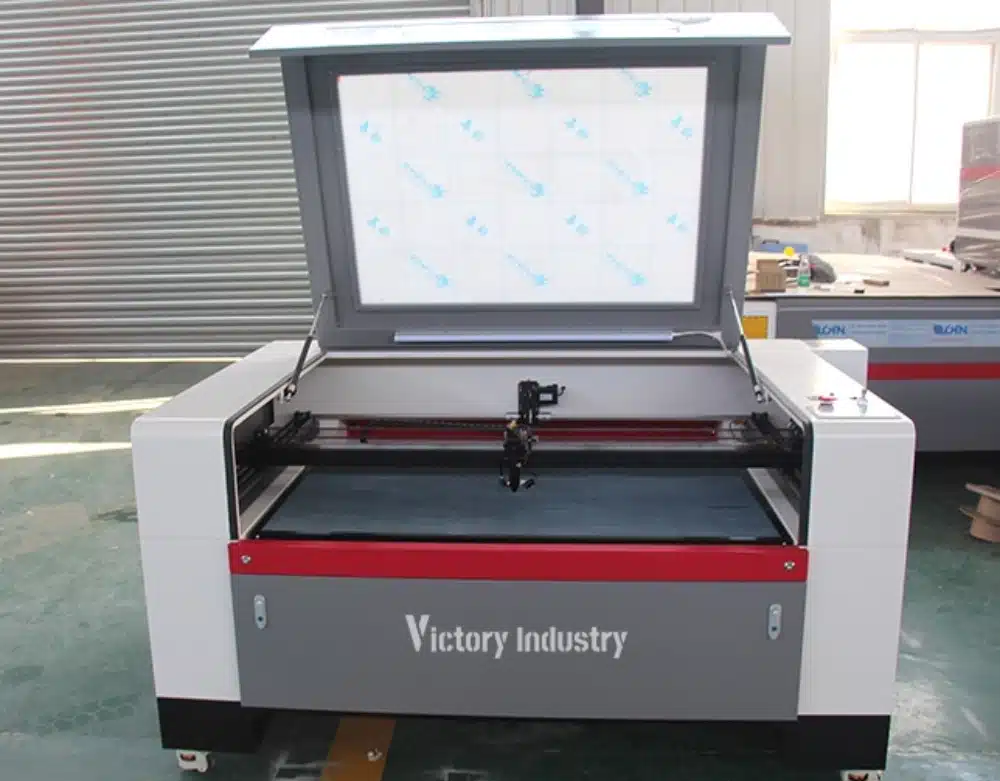
img.VIC-E Laser Cutting Machine.webp
It uses linear guides, a stepper motor, belt drive, electric lifting table, red-dot positioning, and a control system for common graphic formats. Buyers can choose a knife table or honeycomb table. A rotary attachment is optional for selected cylindrical workpieces.
Control Fumes, Heat, and Material Risk
Do not label an unknown polymer simply as “plastic.” Confirm the resin, additives, coating, backing, and adhesive, then check the SDS before testing.
PVC, vinyl, and other chlorinated materials should not be laser cut because they can release hazardous chlorine-containing gases and corrode equipment. Polycarbonate also tends to cut poorly and may produce heavy soot or ignite. Unknown material should stay off the machine. Effective exhaust and stable cooling are basic requirements.
How Do You Choose the Right Laser Cutting Machine?
Start with material grade, regular and maximum thickness, sheet or tube size, batch quantity, daily output, and edge requirement.
Check Factory Requirements and Total Cost
Include electricity, assist gas, cooling, extraction, compressed air, consumables, maintenance, labor, installation, training, and floor space.
Confirm plant voltage and capacity, grounding, gas supply, chiller location, exhaust route, machine footprint, installation access, and safe working clearance. Automation should be judged by real utilization, not by how advanced it sounds.
Send a Better RFQ
Send three to five real drawings, material grades, regular and maximum thickness, batch size, required output, factory voltage, preferred assist gas, and available floor space. Ask for a sample cut when edge quality, small holes, reflective metals, or thin-wall tubes are important.
勝利工業提供 installation, training, technical support, maintenance, and upgrade services. A complete RFQ lets the technical team compare VIB, VIT-A, VIE-T, and VIC-E around the work you actually run.
結論
The right laser cutter is the one that stays useful on your normal orders. Flat metal points toward a sheet fiber machine. Repeated profiles point toward a tube fiber machine. Mixed sheet and tube work may justify a combination system. Approved non-metals usually point toward CO2.
Power still matters, but it comes after material, workpiece format, thickness, output, and factory conditions. If you are comparing configurations, send your drawings and production requirements and request a sample cut before you decide.
FAQ
Q1: What Are the Four Main Types of Industrial Laser Cutting Machines?
A1: For equipment buying, the four practical options are sheet fiber laser cutters, tube fiber laser cutters, sheet-and-tube fiber laser cutters, and CO2 laser cutters for approved non-metal materials.
Q2: Which Laser Cutter Is Best for Flat Metal Sheets?
A2: A sheet fiber laser cutter is normally the best fit for carbon steel, stainless steel, aluminum, and other compatible metals. Match the working area and power to your regular sheet size and thickness.
Q3: Can One Laser Cutter Process Both Sheets and Tubes?
A3: Yes. A sheet-and-tube machine combines a flat cutting bed with a rotary chuck. It saves space and suits mixed production, but it cannot cut a sheet and a tube at the same time.
Q4: Is a Fiber Laser Better Than a CO2 Laser Cutter?
A4: Not for every job. Fiber laser is usually better for industrial metal cutting. CO2 is more practical for approved non-metals such as acrylic, wood, leather, and fabric.
Q5: How Should I Compare Running Cost before Buying?
A5: Compare electricity, assist gas, cooling, extraction, compressed air, consumables, operator time, maintenance, and expected machine utilization. A lower purchase price does not always mean a lower cost per finished part.