











A laser cleaning trial should show whether the machine can remove the target contamination without unacceptable changes to the part, meet the required cycle time, and repeat the result across representative samples. Agree on the pass criteria before testing, and time the full process from loading to final inspection. Use the same criteria to compare the trial with your current cleaning method.
What the Trial Should Prove
The trial is an acceptance exercise, not a demonstration of the brightest clean spot. It should answer four questions: Can the process reach the required level of cleanliness? Does the substrate remain within its drawing or process limits? Can the result be repeated? Does the complete cycle fit the production and cost target?
Write those questions into the trial plan before samples are sent. Name the downstream operation as well. A part being prepared for paint may need an agreed surface condition or adhesion check. A repair-weld area may need a weld coupon or another established release test. A mold face or machined sealing surface may have limits on roughness, dimensions, or visible change. A photograph alone cannot release every application.
Keep one untreated reference and, where practical, a sample cleaned by the current method. These references make the comparison more useful than a general statement that the laser result looks better.
Choose Representative Samples
Use the same material grade, thickness, geometry, coating, and contamination state found in production. Include ordinary work and the upper end of normal variation. If parts arrive oily, rusted, painted, or thermally discolored, do not polish or pre-clean them unless that step is part of the proposed production route.
The sample set should expose access problems. Include an edge, recess, thin section, joint area, or other critical feature when it occurs on the real part. For mixed work, group parts into families that share a likely process window rather than assuming one saved job will cover everything.
| Sample or condition | Why include it | What to compare |
| A Typical part | Establish the baseline | Compare the current process with each candidate under the same pass criteria and full-cycle timing. |
| B Worst-case sample | Test normal upper variation | Use the heaviest expected contamination or hardest-to-clean area. Log extra passes, rework, and misses. |
| C Critical area | Check access and surface condition | Include edges, recesses, or thin sections. Record visible changes and inspect any layer that must remain. |
| D Repeat trial | Verify repeatability | Retest the shortlisted setup. Record the pass count, cycle-time range, and exceptions. |
| Ref Untreated sample | Document the original condition | Keep before photographs and relevant measurements separate from current-process and laser results. |
Label every sample before testing. Record the sample ID, material grade, contamination type and estimated thickness, target area, machine model and laser mode, recipe ID, number of passes, beam-on time, total cycle time, surface checks, pass or fail decision, and photo ID. This record connects the accepted sample to the quotation and later commissioning work.
Set Pass Criteria
State what must be removed, what may remain, and what must not change. Replace phrases such as “clean metal” or “good finish” with an inspection method and an acceptance boundary that purchasing, quality, and production can apply in the same way.
Begin with visual checks for remaining contamination, uneven cleaning, heat marks, melting, pitting, or exposed porosity. Add measurements only when the application needs them. Surface profile, dimensions, adhesion, residue, weld quality, or another downstream test should follow the drawing, coating system, welding procedure, or established plant standard.
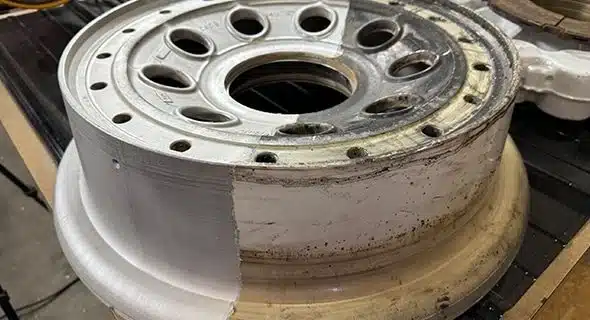
Use the same lighting, viewing distance, measurement method, and inspection location for each candidate. Photograph the same area before and after cleaning. For critical surfaces, keep the accepted and rejected samples together so reviewers can see the boundary.
Classify the result rather than forcing every trial into a simple yes or no:
- Pass: representative and worst-case samples meet the surface requirement, no unacceptable substrate change is found, the result repeats, and the full cycle meets the agreed limit.
- Conditional pass: the result is acceptable only with a defined restriction, such as a separate recipe for one part family, additional extraction, protected areas, or a revised handling step.
- Fail: required contamination remains, substrate damage exceeds the limit, repeatability is poor, or the process cannot meet the production requirement without an impractical workaround.
A conditional pass is not a rejection. It identifies the controls that must appear in the process plan and quotation.
Check Safety Before Testing
Complete the safety review before the laser is energized. Identify the coating or contamination where possible. Old paint, plated surfaces, oils, and unknown residues may create hazardous fumes or combustible debris. If the material is uncertain, a competent person should decide whether sampling, special filtration, or other controls are required.
Confirm the controlled area, access restriction, beam containment or barriers, emergency stop, interlocks, warning signs, fire precautions, and the protective equipment specified for the actual laser and task. Eye protection is one part of the control plan, not a substitute for enclosure, access control, and trained operation. Reflective surfaces and off-axis reflections also need attention.
Run the extraction during the trial and observe the pickup at the hardest-to-reach area. Record the extractor, filter, hose position, and any enclosure used for the accepted setup. If plume escapes when the operator changes angle, the production arrangement has not yet been demonstrated.
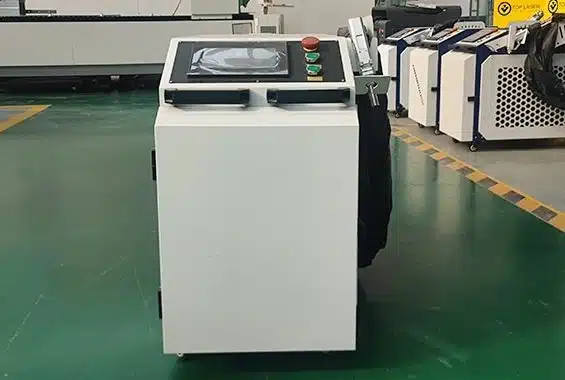
The published VIQ laser cleaning machine includes a handheld head, water cooling, an emergency stop, and listed safety features. Confirm that the actual trial unit and the quoted configuration include the controls required by the site risk assessment.
Compare Laser Setups
Industrial laser cleaning systems can use pulsed or continuous-wave sources. If the part is heat-sensitive or a layer must be preserved, include a pulsed option in the screening when available. Where throughput is a priority, evaluate a suitable continuous-wave option as well. Compare both against the same surface requirements and full cycle time. Wattage alone does not tell you which option will work better.
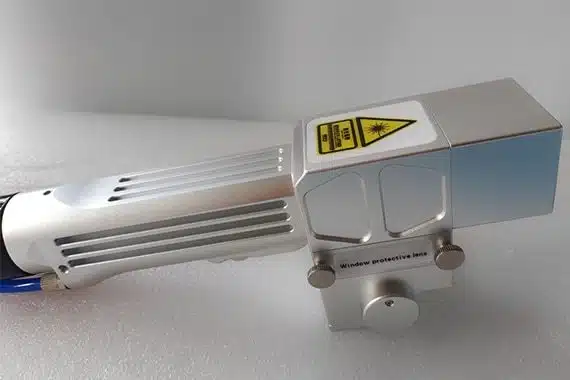
Do not infer the laser mode from a model suffix. The current English VIQ and VIQ-P product descriptions both refer to a continuous laser generator. Verify the source type and delivered configuration directly. The industrial laser cleaning machine range can frame the available choices, but the trial record must identify the exact unit used.
Ask the technician to start conservatively and change one main variable at a time. Record power or energy setting, scan width and pattern, travel speed, working distance, number of passes, cooling interval, and any fixture or robotic path. Once a candidate setting passes, repeat it on representative parts. Let an intended production operator run one repeat after instruction. A process that works only with constant supplier coaching is not ready for transfer.
Test geometry separately. Note any change in head angle, distance, overlap, part position, or access. Include stops for repositioning and inspection in the route. A fast pass across a flat coupon does not predict the cycle for a formed production part.
Measure Performance and Cost
Record beam-on time and total cycle time separately. Total cycle time starts when the part is presented and ends after the required inspection. It includes loading, positioning, extraction setup, cleaning, turning, rework, inspection, and unloading.
For example, suppose a batch of 10 parts uses 8 minutes of beam-on time and 7 minutes for handling and inspection. The full cycle is 15 minutes. If nine parts pass and one fails, the observed effective output is 36 accepted parts per hour. Reporting only the eight-minute cleaning period would overstate capacity, while counting all ten parts would ignore the rejection.
Use the same time boundary and acceptance rule for the current process and every laser candidate. If the comparison includes abrasive or chemical cleaning, review the laser cleaning comparison as background, then replace generic claims with plant data.
Calculate cost per accepted part as total comparable period cost divided by the number of accepted parts. Include operator time, filters and other consumables, maintenance, utilities, waste handling, equipment downtime, and an agreed allocation of capital cost. Keep rework and rejected samples visible. A short demonstration cannot prove a long-term return, but it can give purchasing a transparent basis for comparing routes.
Request a Trial Review
The final report should identify the samples, accepted recipe, machine configuration, inspection results, cycle breakdown, extraction arrangement, operator observations, and unresolved actions. Compare the tested machine with the offered machine line by line. Laser source, cleaning head, controller, cooling, fiber length, safety equipment, extraction scope, utilities, documentation, training, commissioning, spares, and the final acceptance test should be clear.
Discuss your application with Industri Kemenangan by sending the material grade, part photographs, coating or rust details, target finish, and required output through the contact team. Ask which configuration should be evaluated and whether a sample trial is appropriate. Any sample service, schedule, and deliverables should be confirmed for the specific request rather than assumed.
FAQ (Pertanyaan umum)
How many parts should go into a laser cleaning trial?
Include a typical part, the hardest acceptable part, a critical feature, and enough additional pieces to repeat the preferred setting. Three repeat samples are a practical starting point, but the quantity should reflect production variation and the risk of the application.
Who decides whether the sample passes?
The buyer sets the acceptance requirement with quality, production, safety, and the downstream process owner. The supplier can explain machine capability and test settings, but the release condition must match the operation that follows cleaning.
Should the trial compare pulsed and continuous-wave cleaning?
Compare both when they are credible candidates for the part. Heat-sensitive surfaces or layers that must remain may justify screening a pulsed option. Throughput-focused work may justify a suitable continuous-wave option. Use the same samples and pass criteria.
Which time should be used for a capacity estimate?
Use total cycle time from part presentation through final inspection. Record beam-on time separately. The difference shows how handling, repositioning, extraction setup, inspection, and rework affect real output.
What should the quotation identify after a successful trial?
It should identify the offered model and configuration, safety and extraction scope, utilities, training, commissioning, documentation, spares, warranty boundaries, and acceptance test. It should also disclose every difference between the trial unit and the offered unit.