
Current sheet metal manufacturing evolves more rapidly than numerous facilities anticipated. Increasing workforce expenses, more constrained timelines for delivery, and firmer standards for quality push producers to reconsider the way assembly lines function. Conventional procedures that depend largely on hand labor fall short when buyers anticipate accuracy, quickness, and reliability all together.
Robotic setups and laser methods start to modify the whole operation in this context. These extend from cutting and bending to welding and surface readying. Rather, it stands as a pressing requirement now. Producers frequently pursue combined packages instead of separate units. Industrie de la victoire stands out among firms offering these combined systems. Such systems merge laser devices, CNC equipment, and robotic mechanization to aid contemporary assembly lines.
The Shift From Traditional Fabrication to Intelligent Production Lines
The change in sheet metal assembly occurs gradually. It starts with identifying the boundaries of past manufacturing techniques. Then, it progresses to adopting frameworks that manage greater volumes without adding more complication.
Limitations of Conventional Sheet Metal Workflows
Conventional workflows for cutting, bending, and welding are becoming outdated with the rise of robotic welding and fiber laser cutting technologies. Workers shift pieces by hand between positions. As a result, this causes holdups and raises the risk of mistakes. Hand-based welding commonly produces irregular heat application. Such issues impact both robustness and looks.
Tighter allowances make these difficulties more apparent. Today’s sophisticated gear reaches placement accuracy from ±0.03–0.1 mm. Keeping up this standard through hand methods proves challenging.
How Automation Redefines Production Efficiency
Robotic welding and fiber laser cutting systems integrate automation into every stage of production, increasing efficiency and reducing downtime. Fiber laser cutting units provide rapid cutting rates and dependable results, particularly on slim and average sheets. Their closed light route cuts down on care needs and boosts dependability.
Robotic transfer setups lessen hold times across steps. Gear idles for shorter periods. Therefore, manufacturing turns more foreseeable. Industrie de la victoire supplies packages that unite cutting, bending, and welding into single procedures. These assist plants in shifting to effective and solid workings.
Moreover, by linking these elements, factories achieve smoother operations. This leads to fewer interruptions and higher daily yields.
Why Robotic Systems Are Becoming the Backbone of Modern Fabrication?
Why Robotic Welding Systems Are Transforming Fabrication and Boosting Efficiency They exceed basic replacement of hand tasks. In fact, they steady the full operation.
Consistency and Repeatability in High-Volume Production
Robotic welding setups keep steady paths and tool positions. Thus, this lowers flaws like irregular joins or extra splatter. During lot manufacturing, reliability usually counts more than pace.
Factory robots normally achieve duplication in the ±0.03–0.1 mm range. This lets even caliber persist over big manufacturing batches. It does so even under ongoing use.
Additionally, such precision ensures that products meet standards without variation. As a result, customer satisfaction improves noticeably.
Flexible Automation for Multi-Industry Applications
Robots handle various duties, such as welding, cutting, placing, and clearing. Suitable clamps enable one setup to adjust to diverse item kinds. This adaptability holds worth when manufacturing needs shift often.
Robotic Integration Capabilities in Real Production
Industrie de la victoire presents merged robotic setups that encompass robots, welding energy supplies, clamps, and safety measures. These receive planning as whole assemblies. That eases fitting and lessens matching problems.
This method further trims the span needed to go from readying to total manufacturing. Such duration often worries those adding mechanization.
How Fiber Laser Cutting and Laser Welding Systems Are Revolutionizing Precision Manufacturing
Robots oversee paths and linking, yet laser methods set the standard for execution quality. Their effects show clearest in cutting and welding.
Advantages of Fiber Laser Cutting in Sheet Metal Processing
Fiber laser cutting units employ a firm medium laser sent via light fiber. They yield strong energy use and steady light standard. These units work effectively on stainless steel, carbon steel, aluminum, brass, and copper.
Against usual cutting ways, fiber lasers give swifter rates and need less upkeep. No reflectors require setting, which shortens stoppages. Helping gases like oxygen or nitrogen get chosen per needed edge standard.
In addition, the efficient design cuts energy costs. Thus, operations become more cost-effective over time.
Laser Welding as a Replacement for Traditional Methods
Laser welding brings heat to a tiny spot. This shrinks the heat impact zone and checks shape shifts. On slim and mid-gauge items, it yields tidier fuses and slimmer post-work demands.
Across many manufacturing cases, laser welding swaps TIG or MIG steps. This fits best where pace and looks both matter.
Introducing the VIW-R Laser Welding Machine
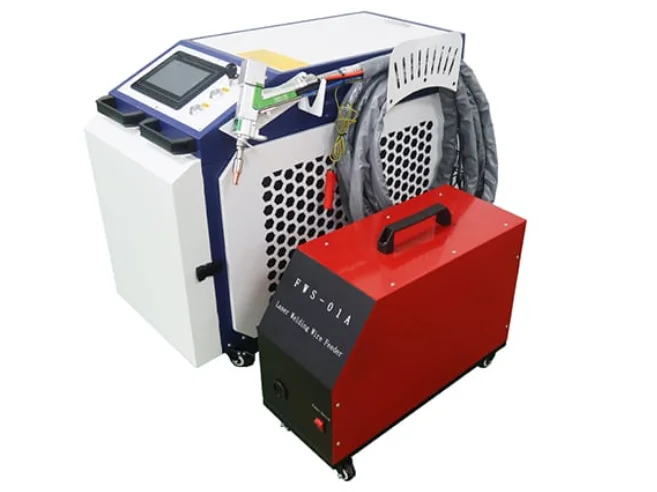
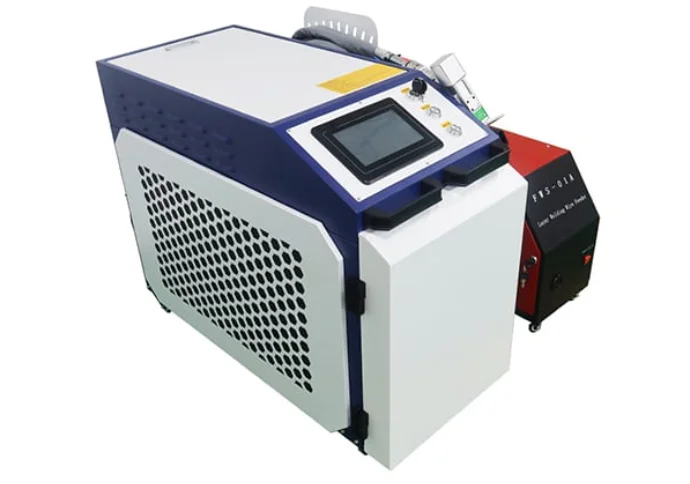
Le Machine de soudage laser VIW-R gets built for quick welding with little twisting. It backs assorted join styles, like overlap, edge, and corner fuses. Extra choices such as filler supply and sway welding raise space allowance and fuse power.
It fits stainless steel, carbon steel, and aluminum mixes with right settings. Victory Industry builds this unit focusing on merging. Hence, it pairs with robotic setups for mechanized assembly lines.
Moreover, its versatile features adapt to varied tasks. This ensures broad use in different production settings.
Addressing Production Bottlenecks With Integrated Automation Solutions
Addressing Production Bottlenecks with Integrated Robotic Welding and Laser Cutting Automation.
Reducing Manual Handling Through Robotic Loading and Unloading
Self-running place and clear systems cut waits between tasks. Robots with grasp or suck tools manage pieces steadily. This lowers harm and faults.
For gear care uses, one robot aids several units. That boosts total gear use and holds manufacturing flowing well.
In turn, this setup maximizes resource flow. Consequently, efficiency rises across the board.
Improving Workflow Continuity Across Cutting Bending and Welding
Linking cutting, bending, and welding makes manufacturing firmer. Pieces go right from one step to another. Needless waits drop away.
CNC curve presses with many-axis oversight raise curve accuracy and duplication. Traits like peak offset aid steady lines on long pieces.
Additionally, these controls ensure uniform outcomes. Thus, quality stays high throughout.
End to End Production Line Solutions
Industrie de la victoire gives full assembly line packages that blend laser cutting units, curve presses, robotic fuse setups, and laser fuse gear. These get shaped on real manufacturing wants, with plan outlining and step pairing.
Industry Applications Where Robotics and Lasers Deliver the Most Impact?
Key Industry Applications for Robotic Welding and Laser Cutting: Automotive, Electronics, and Beyond.
Automotive and Parts Manufacturing
Vehicle manufacturing calls for accuracy and duplication as key. Robotic welding secures steady join standard. Laser cutting deals with tricky forms using fine accuracy.
These tools speed up part creation. Hence, assembly lines run faster and safer.
Electrical Cabinets and Enclosures
Lot making of covers needs steady sizes and neat ends. Laser cutting and CNC curve units give needed accuracy. Auto welding keeps even looks.
Engineering Machinery and Structural Components
Thick items benefit from strong laser cutting for better output. Robotic welding gives firm effects for frame builds. Laser clean also works to strip rust or scale before welding.
In these fields, prep work enhances join quality. Therefore, structures last longer under stress.
Customized Solutions for Different Production Needs
Making needs differ by item, gauge, and yield goals. Industrie de la victoire puts forward fitted setups, with gear pick and mechanization degree, to suit certain making wants.
The Role of Smart Manufacturing and Industry 4.0 Integration
Mechanization goes beyond just gear. Info and ties grow as vital pieces of making.
Data Driven Production and Real Time Monitoring
New setups link to making control bases to follow gear state and output right away. This spots issues soon and cuts surprise stops.
Real-time views help adjust on the fly. In effect, uptime increases substantially.
Scalable Automation for Growing Businesses
Mechanization adds in stages. One starts with a lone unit and grows with output. Block setups ease this way and add bend.
Gradual builds suit expanding firms. Hence, investments pay off steadily.
Future Ready Manufacturing With Integrated Solutions
Laser gear field shows firm rise, with more call for cutting, welding, and mark units. This flow points to advanced making methods turning usual needs.
Victory Industry aids this move with packages that fit coming making wants sans often changing setups.
Building Competitive Advantage Through Automation and Laser Innovation
Robotic setups and laser methods alter how sheet metal assembly lines work. They add quickness, accuracy, and reliability to steps once based on hand labor.
Producers face the task of picking smart ways to take up these methods. Blended systems that mix cutting, bending, and welding give a plain road ahead. Gear like the VIW-R Laser Welding Machine takes a main part in raising fuse standard and cutting making time.
Shifting to mechanized and tied assembly lines cuts costs, lifts item standard, and speeds answers to market calls. This move already forms the next phase of making over many fields.
FAQ (questions fréquentes)
Q1: How do robotic systems improve sheet metal production efficiency?
A: Robotic systems reduce manual work, maintain consistent quality, and allow continuous operation, which increases overall output. Their ability to handle repetitive tasks with precision ensures that production lines operate faster and more reliably, cutting downtime between operations.
Q2: Is laser welding suitable for all types of sheet metal?
A: Laser welding works particularly well for stainless steel, carbon steel, and certain aluminum alloys when the appropriate parameters are applied. It excels in applications requiring minimal distortion, making it ideal for thin to medium gauge materials.
Q3: What is the advantage of fiber laser cutting over traditional methods?
A: Fiber laser cutting offers higher speed, better energy efficiency, and lower maintenance compared to traditional methods. Its sealed optical design eliminates the need for mirrors, resulting in fewer maintenance issues and reduced downtime. This technology is particularly effective for cutting reflective materials like stainless steel and aluminum.
Q4: Can automation be applied to small or medium-sized factories?
A: Yes, modular robotic and laser systems allow gradual upgrades, meaning small and medium-sized factories can integrate automation without a full overhaul of their existing setups. This approach ensures a faster return on investment and improves operational efficiency over time.
Q5: How can a manufacturer start upgrading to automated production?
A: Manufacturers can begin by automating key processes such as cutting or welding, then expand by integrating robotics and other automated equipment. It’s advisable to work in phases, starting with simpler tasks and scaling up as needs grow and technologies evolve.
Q6: Is robotic welding suitable for high-mix, low-volume production?
A: Yes, robotic welding is ideal for high-mix, low-volume production due to its flexibility and repeatability. Robots can easily adapt to different part types and sizes, reducing the need for reprogramming or downtime, and ensuring consistent quality across diverse production runs.
Q7: How do laser and robotic systems reduce labor dependency in sheet metal production?
A: By automating tasks such as cutting, welding, and part handling, laser and robotic systems reduce the need for manual labor. This shift minimizes human error, lowers labor costs, and allows workers to focus on more strategic tasks, ultimately increasing overall production capacity.
Q8: What is the ROI of automation in sheet metal production lines?
A: The return on investment (ROI) of automation can be significant, especially in high-volume production environments. Automation improves throughput, reduces cycle times, and cuts labor costs, leading to higher profitability. The ROI depends on the scale of automation implemented, with some systems offering a payback period of just a few years.