Automated Welding Solutions

Automated welding solutions combine welding robots, positioners, fixtures, and intelligent controls to improve productivity, weld quality, safety, and manufacturing efficiency across diverse industries.

Introduction

As manufacturing industries continue to pursue higher productivity, consistent quality, and lower operating costs, automated welding has become an essential technology for modern production environments. Automated welding solutions integrate advanced welding equipment, robotic systems, intelligent controls, and automated material handling technologies to streamline welding processes and improve overall manufacturing efficiency by reducing reliance on manual labor. Automated welding systems help manufacturers achieve greater precision, repeatability, and production consistency while minimizing defects and material waste. Automated welding solutions are widely used across industries such as automotive manufacturing, construction machinery, metal fabrication, aerospace, shipbuilding, energy equipment, and heavy industrial production. Whether performing MIG, TIG, laser, plasma, or hybrid welding processes, automation enables manufacturers to maintain stable welding quality even during high-volume production runs and complex fabrication tasks.
Modern automated welding systems can be customized to accommodate different product sizes, materials, joint configurations, and production requirements. From standalone robotic welding cells to fully integrated automated production lines, these solutions offer flexible, scalable options for businesses seeking to enhance competitiveness and adapt to growing market demands. By combining intelligent automation with advanced welding technology, manufacturers can achieve higher throughput, improved workplace safety, reduced labor costs, and long-term operational efficiency.

Automated Welding Solutions

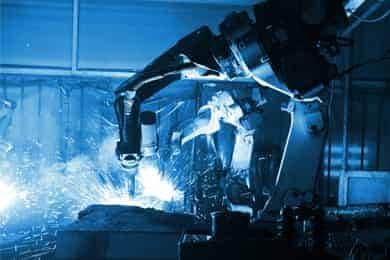
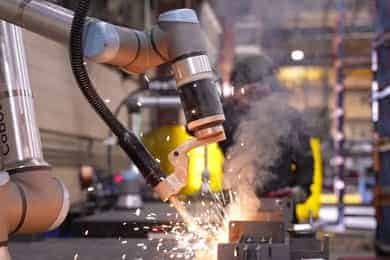
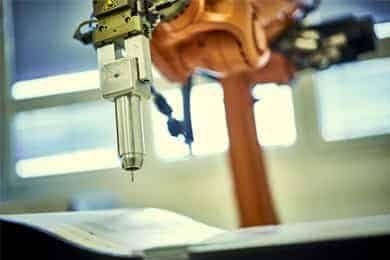
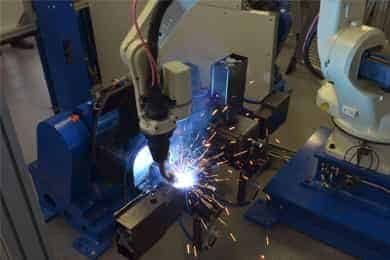
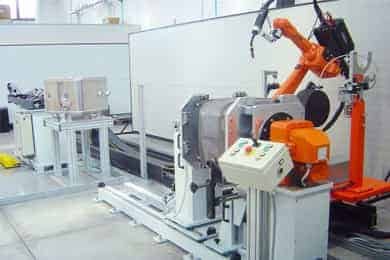
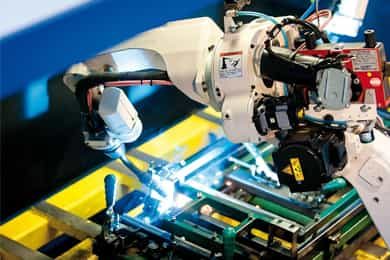
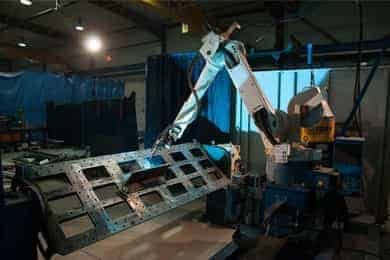
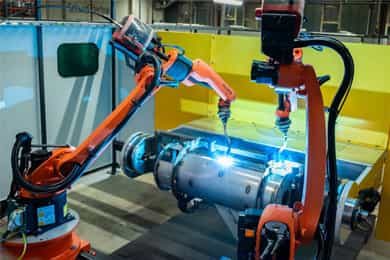
Automated welding solutions combine advanced welding technologies with robotic automation systems to create efficient, reliable, and highly productive welding processes. These solutions typically integrate welding robots, welding power sources, welding positioners, rotary tables, workpiece fixtures, material handling systems, and intelligent control software into a unified production system designed to meet specific manufacturing requirements. Depending on the application, automated welding cells can be equipped with MIG/MAG welding, TIG welding, laser welding, plasma welding, or hybrid welding technologies. Welding robots perform precise and repeatable welding operations, while welding positioners and rotary manipulators automatically adjust the workpiece to the optimal welding angle, ensuring consistent weld quality and improved penetration. Automated loading and unloading systems can further streamline production by reducing manual intervention and minimizing cycle times.
These solutions are suitable for a wide range of industries, including automotive manufacturing, construction machinery, agricultural equipment, metal fabrication, pressure vessel production, shipbuilding, and structural steel processing. By combining advanced welding processes with intelligent automation, manufacturers can increase productivity, improve weld consistency, reduce labor costs, enhance workplace safety, and achieve stable, high-quality welding results even in demanding high-volume production environments.
Automated Welding Solutions

Applications

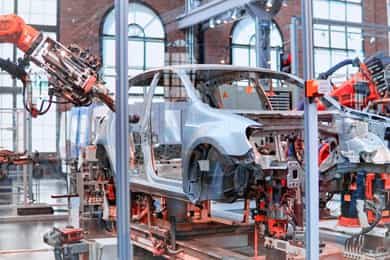
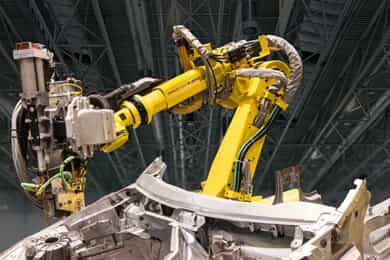
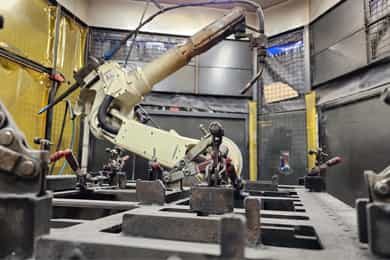
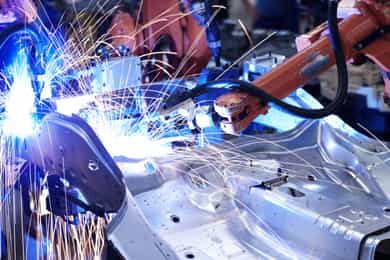
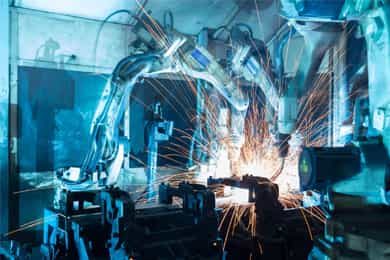
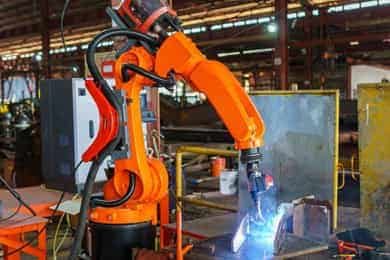
Automated welding solutions are widely used in industries that require high production efficiency, consistent weld quality, and reliable manufacturing processes. In the automotive industry, they are used for welding vehicle frames, chassis components, exhaust systems, and structural assemblies. Construction machinery manufacturers rely on automated welding systems to produce excavator arms, loader frames, and heavy equipment structures with high precision and strength. In the metal fabrication sector, automated welding solutions streamline the production of cabinets, enclosures, steel structures, pipes, and custom-fabricated components. They are also extensively applied in shipbuilding, pressure vessel manufacturing, agricultural machinery, railway equipment, and energy-related industries, where large-scale and repetitive welding tasks are common. By integrating welding robots, positioners, fixtures, and intelligent control systems, automated welding solutions can handle complex weld geometries, improve production throughput, reduce labor dependency, and ensure consistent welding quality across a wide range of materials and product designs.
Automated Welding Samples

Advantages of Automated Welding

Consistent Weld Quality

Automated welding systems deliver highly consistent welds by maintaining precise control over welding parameters such as speed, current, voltage, and torch position. This reduces human error, minimizes defects, and ensures uniform weld quality across every workpiece, even during long production runs.

Increased Production Efficiency

Automated welding significantly improves production speed by performing repetitive welding tasks continuously with minimal interruptions. Robots can operate around the clock, reducing cycle times and increasing throughput, helping manufacturers meet demanding production schedules and improve overall operational efficiency.

Reduced Labor Costs

By automating repetitive and labor-intensive welding processes, manufacturers can reduce dependence on skilled manual welders for routine tasks. This lowers labor costs, helps address workforce shortages, and allows employees to focus on higher-value production, programming, and quality control activities.

Enhanced Workplace Safety

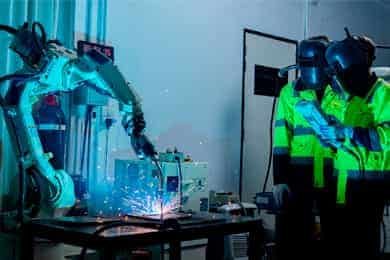
Automated welding minimizes direct operator exposure to welding arcs, heat, sparks, fumes, and hazardous working environments. By allowing robots to perform dangerous welding operations, companies can improve workplace safety, reduce injury risks, and create a healthier working environment for employees.

High Precision and Repeatability

Welding robots can repeatedly execute complex weld paths with exceptional accuracy. This level of precision is particularly valuable for components requiring tight tolerances, intricate geometries, or multi-pass welding, ensuring consistent results that are difficult to achieve through manual welding alone.

Lower Material Waste

Precise control of welding parameters helps optimize material usage and reduce welding defects such as undercut, porosity, and excessive spatter. This minimizes rework, lowers scrap rates, reduces filler material consumption, and contributes to more cost-effective manufacturing operations.

Comparison With Handheld Welding

Comparison Item Automated Welding Solutions Handheld Welding
Production Efficiency High-speed continuous operation for maximum throughput Slower production speed dependent on operator performance
Weld Quality Consistent and repeatable weld quality across all parts Quality varies based on operator skill and experience
Precision Precise control of weld path, speed, and parameters Precision depends on manual control and technique
Labor Requirements Requires minimal operator intervention Requires skilled welders throughout the process
Labor Costs Lower long-term labor costs in mass production Higher labor costs due to manual operation
Workplace Safety Reduces worker exposure to heat, sparks, and fumes Greater exposure to welding hazards
Production Volume Ideal for medium- to high-volume manufacturing Better suited for low-volume production and repairs
Material Waste Lower scrap rates and reduced rework Higher risk of defects and material waste
Flexibility Best for repetitive and standardized welding tasks More adaptable for custom projects and small batches
Return on Investment High ROI for continuous production environments Lower initial investment but higher operating costs over time

Customer Reviews

Michael
Production Manager
We introduced an automated welding solution into our fabrication workshop about a year ago, and the results have exceeded our expectations. The system combines welding robots and positioners, allowing us to handle large batches with consistent quality. Before automation, weld quality varied between operators, and rework was a common issue. Now, the welds are much more uniform, and our production efficiency has increased significantly. The system is easy to operate after proper training, and the technical support team was responsive during installation and commissioning. Overall, it has helped us reduce labor costs while improving both productivity and product quality.
Daniel
Manufacturing Director
Our company produces heavy equipment components, and welding has always been one of the most time-consuming stages of production. After implementing an automated welding cell, we saw an immediate improvement in throughput. The welding robot works continuously with excellent repeatability, and the positioner ensures ideal welding angles throughout the process. We especially appreciate the stability of the weld quality, even during long production runs. Downtime has been minimal, and maintenance requirements are straightforward. The investment paid for itself faster than we expected. For manufacturers looking to scale production while maintaining quality standards, automated welding is definitely worth considering.
Sarah
Operations Supervisor
We were searching for a solution that could improve welding consistency without sacrificing flexibility. The automated welding system we selected has been a great fit for our operation. It handles a variety of component sizes and welding requirements while maintaining stable quality. The robot programming process was easier than our team expected, and operators adapted quickly. One of the biggest benefits has been the reduction in rework and rejected parts. Production planning is also more predictable because cycle times remain consistent. This system has become an important part of our manufacturing process and has helped us better meet customer delivery schedules.
James
Plant Manager
Safety and productivity were the two main reasons we invested in automated welding equipment. Since installation, both areas have improved noticeably. Operators are no longer exposed to welding fumes and sparks for extended periods, and the robotic system performs repetitive welding tasks with impressive accuracy. The weld appearance is consistent, and the quality inspection team has reported fewer defects than before. We also appreciate the reliability of the equipment during multi-shift production. The system runs smoothly and integrates well with our existing workflow. It has become one of the most valuable upgrades we have made in recent years.
Emily
Production Engineer
Our factory manufactures structural steel components, and maintaining weld quality across large production volumes was always challenging. The automated welding solution solved many of these problems. The robot follows programmed weld paths accurately, while the positioner ensures optimal workpiece orientation. This combination has significantly improved consistency and reduced dependence on individual operator skills. The equipment has been reliable, and routine maintenance is simple to manage. We have also reduced material waste because welding parameters remain stable throughout production. The overall efficiency gains have allowed us to take on larger orders without increasing labor requirements.
Robert
General Manager
We compared several automation suppliers before choosing our welding solution, and the performance has been excellent. Installation was completed on schedule, and the training provided helped our team become productive quickly. The robotic welding system delivers consistent results on both simple and complex weldments, helping us improve product quality and customer satisfaction. Production output has increased, while labor pressure has decreased. We also appreciate the flexibility of the system, as it can be adapted for different products with minimal adjustments. From a business perspective, the combination of quality improvement, efficiency gains, and reduced operating costs has made this investment highly worthwhile.

Frequently Asked Questions

Why Is The Initial Cost Of Automated Welding Systems So High?

Automated welding systems often require a significant initial investment, but this cost reflects the advanced technology, equipment, and integration needed to achieve high levels of productivity, precision, and reliability. Here are the main factors that contribute to the higher upfront cost:

  • Industrial Robots and Automation Equipment: Automated welding systems typically include welding robots, robotic arms, controllers, positioners, rotary tables, fixtures, and safety enclosures. These components are designed for continuous industrial operation and must meet strict performance and durability standards, making them more expensive than conventional welding equipment.
  • Advanced Welding Technology: Many automated systems incorporate sophisticated welding processes such as robotic MIG, TIG, laser, plasma, or hybrid welding. High-quality welding power sources, sensors, seam-tracking systems, and monitoring devices add to the overall investment while improving weld quality and process stability.
  • Custom Engineering and Integration: Most automated welding solutions are tailored to specific products, materials, and production requirements. Designing workstations, programming robots, developing fixtures, and integrating material handling systems require engineering expertise and additional development costs.
  • Safety Systems and Compliance: Automated welding cells must include protective fencing, light curtains, emergency stop systems, fume extraction equipment, and other safety features to comply with workplace regulations. These safety measures contribute to the total system cost but are essential for protecting personnel and ensuring safe operation.
  • Software and Control Systems: Modern automated welding solutions rely on advanced software for robot programming, process control, production monitoring, and quality management. These intelligent control systems improve efficiency and consistency but increase the initial investment.
  • Installation and Training: Implementing an automated welding system often involves on-site installation, commissioning, testing, and operator training. These services ensure that the system performs correctly and that personnel can operate and maintain it effectively.
  • Long-Term Cost Savings: Although the upfront investment is higher than that of handheld welding equipment, automated welding systems can significantly reduce labor costs, increase production speed, improve weld consistency, lower material waste, and minimize rework. Over time, these operational savings often offset the initial cost and deliver a strong return on investment.

While the initial cost of automated welding systems may seem substantial, it represents an investment in higher productivity, better quality, improved safety, and long-term manufacturing efficiency. For medium- and high-volume production environments, the benefits frequently outweigh the upfront expense.

Automated welding solutions are known for their exceptional accuracy and consistency, often surpassing what can be achieved through manual welding. Their precision comes from the combination of robotic control, advanced sensors, and programmable welding parameters. Here are the key factors that determine the accuracy of automated welding systems:

  • Robotic Positioning Accuracy: Modern welding robots are capable of positioning the welding torch with extremely high precision, often within fractions of a millimeter. This allows the system to follow programmed weld paths accurately and produce consistent welds across large production batches.
  • Repeatability: One of the greatest strengths of automated welding is repeatability. Once a welding program is optimized, the robot can repeat the same weld sequence thousands of times with virtually identical results. This consistency reduces variation between parts and improves overall product quality.
  • Precise Control of Welding Parameters: Automated systems maintain stable welding speed, current, voltage, wire feed rate, and torch angle throughout the welding process. Unlike manual welding, where these factors may fluctuate due to operator fatigue or technique differences, automation ensures uniform weld quality.
  • Seam Tracking and Vision Systems: Many advanced welding solutions incorporate laser seam tracking, vision cameras, or intelligent sensors that automatically detect joint locations and compensate for minor part variations. These technologies help maintain welding accuracy even when workpieces are not perfectly aligned.
  • Improved Weld Quality: Accurate torch positioning and consistent process control result in better weld penetration, bead appearance, and joint strength. Automated welding can significantly reduce common defects such as undercut, porosity, lack of fusion, and excessive spatter.
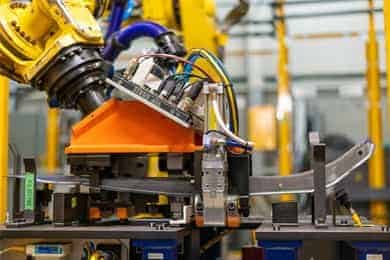
  • Workpiece Positioners and Fixtures: Automated welding systems often include positioners, rotary tables, and precision fixtures that hold parts securely and present them at optimal welding angles. This minimizes movement and ensures accurate weld placement throughout the operation.
  • Complex Geometry Capability: Robotic welding systems can accurately handle complex weld paths, curved joints, multi-axis movements, and difficult-to-reach areas that would be challenging for manual welders. This makes them particularly valuable for intricate components and high-precision applications.
  • Factors Affecting Accuracy: While automated welding is highly precise, overall accuracy still depends on factors such as robot calibration, fixture quality, workpiece consistency, sensor performance, and proper programming. Regular maintenance and process optimization are important to maintain peak performance.

Automated welding solutions deliver outstanding accuracy by combining precise robotic motion, intelligent sensing technology, and consistent process control. For manufacturers that require high-quality, repeatable welds and tight production tolerances, automated welding is one of the most accurate and reliable welding methods available.

Automated welding systems are designed for reliability and long-term operation, but like any industrial equipment, they require regular maintenance to maintain performance and prevent unexpected downtime. Here are the most common maintenance issues encountered in automated welding systems:

  • Welding Torch Wear: Welding torches are exposed to intense heat, spatter, and mechanical stress during operation. Consumable components such as contact tips, nozzles, gas diffusers, and liners gradually wear out and require periodic replacement to maintain weld quality and stable arc performance.
  • Spatter Accumulation: Weld spatter can build up on torch components, fixtures, sensors, and surrounding equipment. Excessive spatter may affect weld quality, interfere with robot movement, or reduce sensor accuracy. Regular cleaning is essential to prevent operational issues.
  • Wire Feeding Problems: Automated welding systems rely on smooth wire feeding for consistent performance. Worn drive rolls, clogged liners, improper tension settings, or damaged wire can lead to feeding interruptions, unstable arcs, and welding defects.
  • Robot Calibration Drift: Over time, robotic welding systems may experience slight deviations in positioning accuracy due to mechanical wear, collisions, or prolonged operation. Periodic calibration and accuracy verification help ensure precise weld placement and repeatable results.
  • Fixture and Positioner Wear: Welding fixtures and positioners are subject to continuous mechanical loading. Loose clamps, worn bearings, damaged locating pins, or misaligned fixtures can affect workpiece positioning and reduce welding accuracy.
  • Cable and Hose Damage: Robot dress packs, welding cables, gas hoses, and sensor wiring experience constant movement during operation. Repeated bending and flexing can cause wear, cracks, or connection failures that may disrupt production.
  • Sensor and Vision System Issues: Automated welding systems often use seam-tracking sensors, cameras, or laser scanners. Dust, welding fumes, spatter, and contamination can reduce sensor performance and affect weld path accuracy. Routine cleaning and inspection are necessary.
  • Cooling System Maintenance: Water-cooled welding equipment requires regular inspection of pumps, filters, hoses, and coolant levels. Blockages, leaks, or poor coolant quality can cause overheating and shorten component life.
  • Electrical Component Failures: Servo drives, controllers, relays, power supplies, and electrical connections may degrade over time. Loose connections, voltage fluctuations, or component aging can result in unexpected faults or system downtime.
  • Software and Program Management: Robot programs, welding parameters, and system backups should be regularly reviewed and maintained. Software updates, parameter verification, and data backups help prevent operational errors and simplify recovery after system failures.

With a structured preventive maintenance program, most of these issues can be identified and addressed before they affect production, helping automated welding systems deliver reliable performance, consistent weld quality, and maximum uptime.

While automated welding systems offer significant advantages in productivity, consistency, and quality, they are not without limitations. Understanding these constraints helps manufacturers determine whether automation is the right solution for their specific production requirements. Here are the most common limitations of automated welding systems:

  • High Initial Investment: Automated welding systems require substantial upfront costs for robots, welding power sources, positioners, fixtures, safety equipment, software, and system integration. This investment can be difficult to justify for small manufacturers or low-volume production environments.
  • Limited Cost-Effectiveness for Small Batches: Automated welding delivers the greatest value in repetitive, high-volume production. For short production runs, prototypes, or one-off projects, setup and programming time may outweigh the productivity benefits of automation.
  • Programming and Setup Requirements: Welding robots must be programmed and configured before production begins. Complex parts, frequent design changes, or multiple product variations can increase setup time and require skilled programming personnel.
  • Dependence on Consistent Part Quality: Automated welding systems perform best when workpieces are manufactured within tight tolerances. Variations in part dimensions, joint fit-up, or positioning can reduce welding accuracy and lead to defects if not properly managed.
  • Reduced Flexibility for Unexpected Changes: Human welders can quickly adapt to changes in joint conditions, material inconsistencies, or production requirements. Automated systems are less flexible and may require program adjustments, sensor recalibration, or fixture modifications when conditions change.
  • Maintenance and Technical Expertise: Automated welding equipment contains robots, sensors, controllers, servos, and welding components that require regular maintenance. Troubleshooting and repairs often require specialized technical knowledge, which may not always be available in-house.
  • Space Requirements: Automated welding cells typically occupy more floor space than manual welding stations. Safety fences, positioners, material handling systems, and robotic work envelopes can increase facility space requirements.
  • Accessibility Challenges: Although robots can perform complex movements, certain weld locations, deep cavities, or highly restricted areas may still be difficult to access without specialized tooling or fixture designs.
  • Potential Downtime Impact: When an automated welding cell experiences a fault, production can stop completely until the issue is resolved. In high-volume manufacturing, even short periods of downtime can affect production schedules and output targets.
  • Training Requirements: Operators, maintenance personnel, and programmers must be trained to operate, maintain, and optimize the system effectively. This training requires both time and resources.

Despite these limitations, automated welding systems remain highly valuable for many manufacturers. When properly implemented in suitable applications, their benefits in productivity, quality, repeatability, and long-term cost savings often outweigh the challenges associated with automation.

Automated welding solutions are highly effective for repetitive and high-volume manufacturing, but several factors can limit their flexibility compared to manual welding. Understanding these limitations helps manufacturers select the most appropriate welding approach for their production environment. Here are the primary factors that can reduce the flexibility of automated welding systems:

  • Product Variation: Automated welding systems perform best when welding similar parts repeatedly. Frequent changes in product size, geometry, joint design, or material specifications may require new programs, fixture adjustments, or process optimization, reducing operational flexibility.
  • Programming Requirements: Every new part or welding task typically requires robot programming and testing. Complex weld paths, multiple product variants, or custom fabrication projects can increase setup time and slow production changeovers compared to manual welding.
  • Fixture Dependency: Automated welding relies heavily on fixtures and work-holding devices to position components accurately. When product designs change, existing fixtures may become unsuitable, requiring modification or replacement before production can continue.
  • Part Tolerance Sensitivity: Automated systems generally require consistent workpiece dimensions and joint fit-up. Significant variations in part quality, assembly accuracy, or material deformation can affect welding performance unless advanced seam-tracking or adaptive control systems are installed.
  • Limited Adaptability to Unexpected Conditions: Skilled welders can immediately adjust welding techniques when encountering gaps, misalignment, contamination, or material inconsistencies. Automated systems may struggle with unexpected variations unless equipped with intelligent sensing and correction technologies.
  • Changeover Time: Manufacturing environments that frequently switch between products may experience longer setup times with automation. Robot programs, fixtures, welding parameters, and quality verification procedures often need adjustment before production resumes.
  • Accessibility Constraints: Although robotic systems can perform complex movements, some components with deep cavities, narrow spaces, or unusual geometries may require specialized tooling or robot configurations. In certain cases, manual welding remains more practical.
  • System Design Limitations: Many automated welding cells are optimized for specific applications. Systems designed for particular product families may not easily accommodate significantly different components without substantial reconfiguration or additional investment.
  • Economic Considerations: While automation excels in large-scale production, it may be less economical for low-volume, highly customized, or frequently changing manufacturing operations. The cost of programming, tooling, and setup can outweigh productivity benefits in such situations.
  • Operator and Technical Skill Requirements: Flexible automation often depends on skilled personnel who can modify programs, optimize welding parameters, and troubleshoot system issues. Limited technical expertise can reduce the system’s ability to adapt quickly to changing production needs.

Despite these limitations, modern technologies such as offline programming, collaborative robots, vision systems, seam tracking, and modular fixtures are continuously improving the flexibility of automated welding solutions, making them suitable for an increasingly wide range of manufacturing applications.

Implementing automated welding solutions can deliver substantial improvements in productivity, quality, and cost efficiency, but the transition from manual to automated welding often presents several challenges. Successfully addressing these issues is critical to achieving the expected return on investment and long-term operational benefits. Here are the most common challenges manufacturers face when implementing automated welding systems:

  • High Initial Investment: One of the biggest challenges is the upfront cost of purchasing robots, welding equipment, positioners, fixtures, safety systems, and integration services. Companies must carefully evaluate production volumes and expected savings to justify the investment.
  • System Integration Complexity: Automated welding solutions must often be integrated with existing production lines, material handling systems, quality control processes, and factory automation networks. Ensuring compatibility between different equipment and software platforms can be complex and time-consuming.
  • Robot Programming and Setup: Developing robot programs, optimizing welding parameters, and configuring workpiece positioning require specialized expertise. Initial programming and testing may take considerable time, especially for complex parts or applications with multiple weld types.
  • Workpiece Consistency Requirements: Automated welding systems depend on consistent part dimensions and joint fit-up. Variations in manufacturing tolerances, component positioning, or assembly quality can affect weld accuracy and require additional sensing or adaptive control technologies.
  • Fixture Design and Tooling: Effective automation requires precise fixtures to securely locate and hold workpieces during welding. Designing, manufacturing, and maintaining these fixtures can represent a significant portion of the implementation effort and cost.
  • Workforce Training: Operators, programmers, and maintenance personnel must learn how to operate, troubleshoot, and maintain automated welding equipment. Training requirements can create temporary productivity challenges during the transition period.
  • Process Optimization: Automated welding is not simply a direct replacement for manual welding. Welding procedures, joint designs, material preparation methods, and production workflows often need to be optimized to achieve the best performance from the automated system.
  • Maintenance and Technical Support: Automated systems contain robots, controllers, sensors, welding equipment, and software that require ongoing maintenance. Companies must establish preventive maintenance programs and ensure access to qualified technical support.
  • Change Management: Employees may initially resist automation due to concerns about job roles or unfamiliar technology. Effective communication, training, and involvement of production teams can help improve acceptance and support successful implementation.
  • Production Downtime During Deployment: Installing and commissioning an automated welding system may temporarily disrupt production schedules. Careful planning is required to minimize downtime and ensure a smooth transition.

Although these challenges can be significant, proper planning, experienced system integration, employee training, and realistic implementation goals can help manufacturers successfully adopt automated welding solutions and achieve long-term gains in productivity, quality, and competitiveness.

Automated welding solutions can significantly improve workplace safety by reducing direct human involvement in welding operations. However, they still present several safety concerns that must be properly managed through equipment design, safety systems, training, and operational procedures. Here are the most common safety concerns associated with automated welding systems:

  • Robot Motion Hazards: Industrial welding robots can move rapidly and unexpectedly within their work envelope. Personnel who enter the robot cell without proper safety precautions may be at risk of collisions, crushing injuries, or entanglement. Safety fencing, light curtains, and interlock systems are essential to prevent unauthorized access.
  • Arc Radiation Exposure: Automated welding systems generate intense ultraviolet (UV), infrared (IR), and visible light radiation. Direct or reflected exposure can cause eye injuries and skin burns. Protective enclosures, welding screens, and restricted access zones help minimize exposure risks.
  • Welding Fumes and Gases: Welding processes produce fumes and gases that may contain hazardous substances depending on the material being welded. Prolonged exposure can affect respiratory health. Effective fume extraction systems, ventilation equipment, and air quality monitoring are important safety measures.
  • Heat and Burn Risks: Welded components, fixtures, and welding torches can remain extremely hot after welding operations. Operators performing inspections, maintenance, or material handling may be exposed to burn hazards if proper procedures are not followed.
  • Electrical Hazards: Automated welding systems use high-voltage electrical equipment, including welding power sources, robot controllers, servo drives, and control panels. Damaged wiring, improper grounding, or maintenance errors can increase the risk of electric shock.
  • Fire and Explosion Risks: Welding sparks, molten metal, and high temperatures can ignite nearby combustible materials. In facilities where flammable gases, liquids, dust, or vapors are present, the risk of fire or explosion requires additional precautions and strict safety controls.
  • Mechanical Hazards from Positioners and Fixtures: Welding positioners, rotary tables, clamps, and automated handling equipment contain moving parts that can create pinch points, crushing hazards, and entanglement risks during operation.
  • Maintenance and Lockout/Tagout Risks: Many accidents occur during maintenance activities rather than normal production. Failure to properly isolate electrical, pneumatic, hydraulic, or robotic systems before servicing can expose workers to unexpected equipment movement or stored energy hazards.
  • Programming and Human Error: Incorrect robot programming, improper safety settings, or operator mistakes can lead to collisions, equipment damage, or unsafe operating conditions. Regular inspections and safety validation procedures help reduce these risks.

While automated welding systems introduce specific safety challenges, modern safety technologies—including protective barriers, emergency stop systems, safety-rated sensors, and comprehensive operator training—can effectively control these hazards. When properly implemented and maintained, automated welding solutions often provide a safer working environment than traditional manual welding operations.

Operating an automated welding system requires a combination of welding knowledge, equipment operation skills, safety awareness, and basic technical understanding. While operators do not necessarily need to be expert welders, proper training is essential to ensure safe operation, consistent weld quality, and maximum system productivity. Here are the key areas of training typically required for automated welding system operators:

  • System Operation Training: Operators must learn how to start up, shut down, and operate the automated welding system correctly. This includes understanding the human-machine interface (HMI), control panels, production modes, and basic system functions used during daily operation.
  • Welding Process Fundamentals: Although much of the welding process is automated, operators should understand basic welding principles, including welding methods, joint types, weld quality requirements, and common welding defects. This knowledge helps them identify potential issues and monitor process performance.
  • Robot Operation Basics: For robotic welding systems, operators are often trained to understand robot movements, work zones, coordinate systems, and basic robot commands. While advanced programming may be handled by specialists, operators should know how to safely interact with robotic equipment.
  • Safety Training: Safety training is one of the most important requirements. Operators must understand robot safety procedures, emergency stop functions, lockout/tagout practices, personal protective equipment (PPE) requirements, welding hazards, and safe entry procedures for robotic cells and automated workstations.
  • Fixture and Workpiece Handling: Operators need training on loading and unloading parts, securing workpieces in fixtures, verifying alignment, and ensuring proper positioning before welding begins. Incorrect part placement can lead to defects and production interruptions.
  • Quality Inspection Procedures: Automated systems still require quality verification. Operators should learn how to inspect weld appearance, identify common defects, interpret quality standards, and recognize conditions that may require process adjustments or maintenance intervention.
  • Basic Troubleshooting Skills: Training typically includes identifying and responding to common issues such as wire feeding problems, sensor faults, torch wear, communication errors, or alarm messages. Basic troubleshooting helps minimize downtime and improve productivity.
  • Preventive Maintenance Awareness: Operators are often responsible for routine maintenance tasks such as cleaning torches, checking consumables, inspecting cables, monitoring coolant levels, and reporting equipment abnormalities before they develop into larger problems.
  • Software and Production Monitoring: Modern automated welding systems may include production monitoring software, quality tracking tools, and data reporting functions. Operators should understand how to use these systems to monitor performance and maintain production records.

Comprehensive operator training ensures that automated welding systems operate safely, efficiently, and reliably. Well-trained operators play a critical role in maintaining weld quality, maximizing equipment uptime, and achieving the full benefits of welding automation.
Related Resources

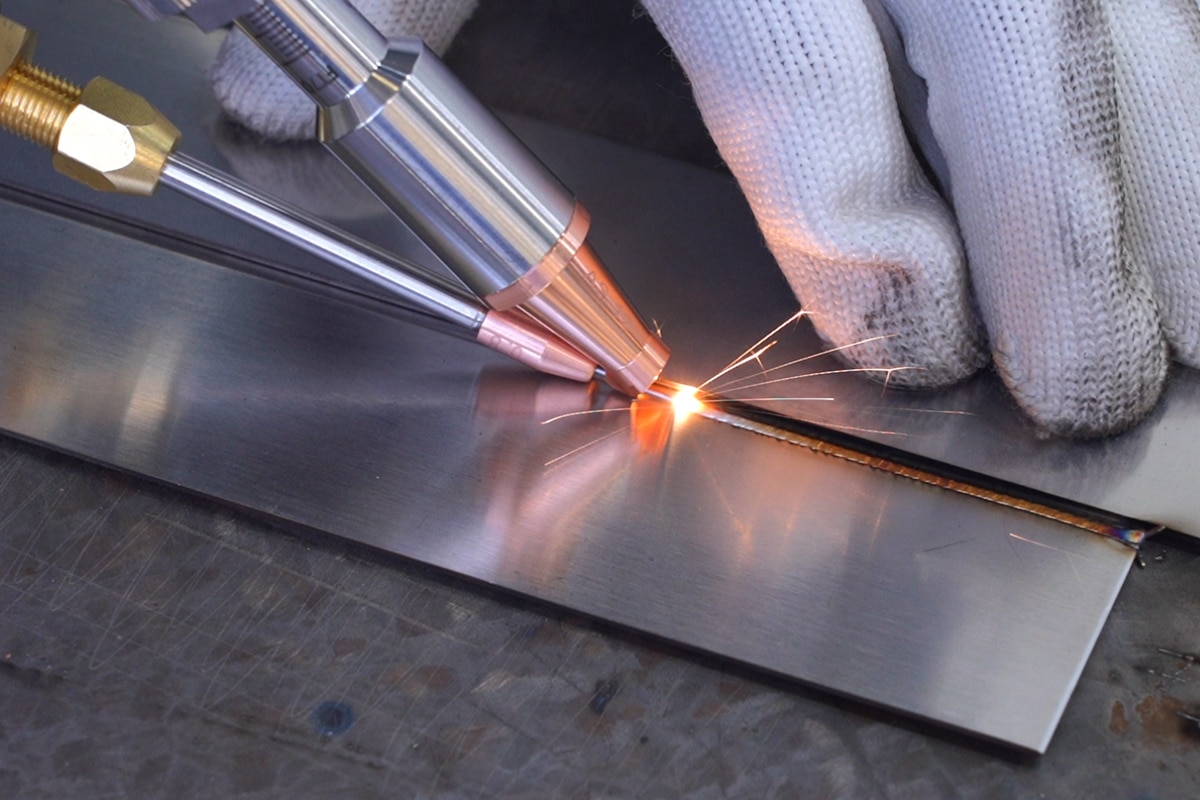
Laser Welding VS MIG Welding

Laser Welding VS MIG Welding

This article compares laser welding and MIG welding, detailing their principles, benefits, limitations, and applications to help readers understand their unique roles in manufacturing.

Contact Us

Looking to improve welding efficiency, reduce labor costs, and achieve consistent weld quality? Our automated welding solutions are designed to help manufacturers streamline production and increase competitiveness. Whether you need robotic welding cells, welding positioner systems, automated production lines, or fully customized welding solutions, our team can provide expert guidance based on your products, materials, and production requirements.
We work closely with customers to develop reliable, scalable, and cost-effective automation systems that deliver long-term value. Contact us today to discuss your welding challenges, request a customized solution, or receive a detailed quotation. Let us help you build a smarter, safer, and more productive welding operation.

Contact Information Form:

By submitting your information, you’re taking the first step towards a partnership that redefines what’s possible in laser cleaning. Our team will promptly reach out to discuss your unique requirements and guide you through the journey of enhancing your manufacturing capabilities with Victory Industry’s laser cleaning solutions.