
If you continue to face the untidy spatters from MIG or the gradual, careful speed of TIG welding, then 2026 marks the time to alter your workshop’s approach. The production sector has shifted to quicker and neater methods. Laser welding technology no longer remains a distant idea. Instead, it serves as the present norm for those committed to metal joining. Whether you manage a compact repair facility or oversee a large factory setup, selecting the top laser welding machine involves finding a mix of strong output and wise regulation.
Victory Industry has dedicated years to improving these setups. They have progressed from basic laser devices to intricate, clever automated systems. Their emphasis on dependable factory construction guarantees that you acquire more than equipment. Rather, you gain a lasting ally for your work area.
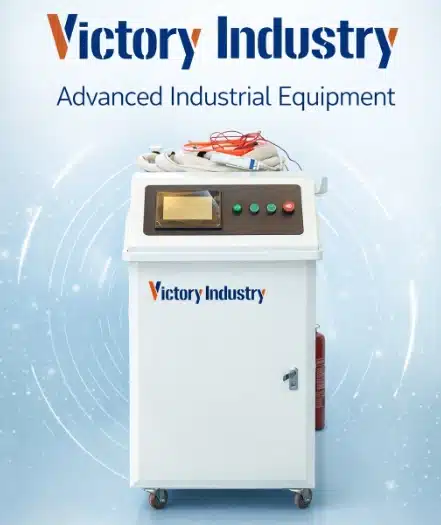
Why Laser Welding Technology Dominates Global Manufacturing in 2026?
The move to fiber laser arrangements stems from a clear fact. They perform the task more effectively and swiftly than outdated techniques. During 2025 and 2026, online queries for laser welding machines display a consistent rise. This occurs because makers grow weary of the intense heat bending from arc joining. For instance, the global laser welding machines market grew from USD 3.55 billion in 2025 to a projected USD 3.77 billion in 2026, reflecting a year-over-year increase driven by demand for precision in manufacturing.If you seek a seam that appears polished without extended rubbing later, this method proves ideal.Asia-Pacific leads with 49.35% of market value share in 2025 and is projected to grow at the fastest regional CAGR of 7.62% through 2031, driven by strong manufacturing in China, Japan, and South Korea.
Superior Speed and Minimal Thermal Distortion
Laser welding supplies a highly focused heat source. As a result, you achieve a small heat-affected zone (HAZ). This feature proves invaluable when handling slim components that typically twist or pierce under a standard flame. Moreover, you reach rates of multiple meters each minute. Consequently, it far outpaces TIG.
Versatile Performance Across Diverse Metallic Materials
These devices show no preference for materials. You switch easily from stainless steel to carbon steel. You even address challenging aluminum mixtures. In 2026, the finest laser welding machines manage shiny metals like aluminum more effectively. They achieve this through particular burst adjustments or “wobble” methods. These keep the molten area steady.Fiber laser technology, which excels on reflective metals like aluminum and copper, accounted for 43.68% of market revenue in 2025 due to its high absorption rates and stability.
Long-term Cost Efficiency and Lower Maintenance
Consider the hours spent on after-treatment tasks. These include rubbing, smoothing, and aligning. Laser welding reduces those efforts greatly. The light route stays enclosed. There are no reflectors to adjust repeatedly, unlike in earlier CO2 setups.
Key Features to Look for in the Best Laser Welding Machine 2026?
Purchasing a laser device can seem daunting amid all the specialized terms. However, certain key attributes distinguish a premium factory tool from an inexpensive amateur model. You must seek gear that stresses your protection. At the same time, it should offer sufficient adaptability to manage unusual, isolated assignments that frequently arrive at your station.
Technical Comparison: 2026 Laser Welding Solutions
When selecting the best machine for your facility, it is essential to match the technical specifications with your production volume and material requirements. Below are the typical configurations for the primary categories of laser welding systems available in 2026:
| Feature | Handheld / Portable (VIW Series) | Robotic Welding Cell (Automated) | High-Precision / 3D Systems |
| Typical Power Range | 1kW – 3kW | 1.5kW – 6kW+ | Project-dependent |
| Cooling Method | Water-cooled (typical) | Integrated Industrial Chiller | High-stability Water Cooling |
| Repeatability | Manual / Operator-dependent | ±0.03 mm – 0.1 mm | High-precision / Calibrated |
| Primary Advantage | High mobility & low ROI | Consistent batch production | Complex 3D geometries |
| Best Application | Cabinets, furniture, repair | Automotive parts, frames | Aerospace, medical, 3D trim |
| Key Consumables | Protective lenses, nozzles | Contact tips, liners, nozzles | Precision optics, filters |
Integrated Safety Systems and Protective Interlocks
Protection stands as the domain where skimping proves unacceptable. A leading laser welding machine requires safety locks. These stop the laser from activating until the holder touches the item. Additionally, choose makers that supply suitable eye protection advice and staff instruction guides immediately upon delivery.
Flexible Joint Capability and Wobble Welding Heads
The era has passed when laser welding demanded a flawless, gap-free alignment. Current wobble welding holders mix the liquid pool. This enables covering wider spaces in overlapping, edge, or corner seams. Such adaptability simplifies application in practical workshops. There, components rarely align perfectly.
Intelligent Control and Automation Interface Support
You might begin with a portable model. Later, you could connect it to a mechanical device. Select units that include an automation link. This lets the energy unit interact with a six-axis robot or a rail framework. Thus, your manual spot transforms into a productive group output area.
Best Handheld Solution for Versatile Fabricators: VIW Laser Welding Machine
For the facility handling various tasks, ease of movement holds primary importance. You cannot always transport the piece to the device. Often, the device must reach the piece. Here, a movable, powerful hand-held model reshapes your routine. It substitutes the bulky lines and gas containers of TIG with a smooth, fiber-light transfer method.
High Mobility for On-site Industrial Applications
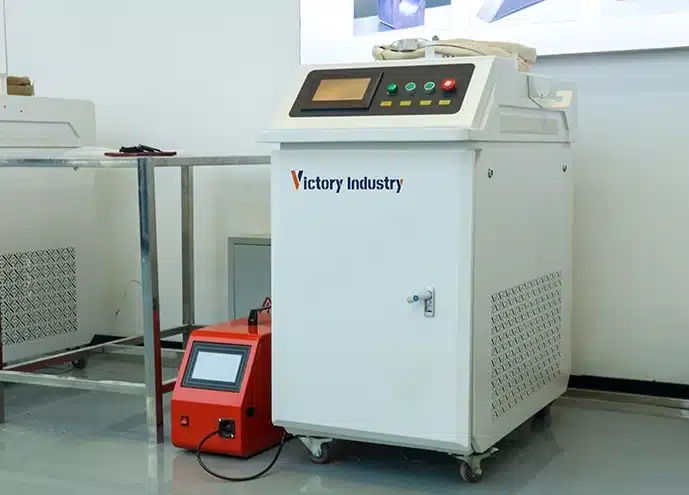
The VIW Laser Welding Machine suits this level of adaptability. It fits large flat metal builds, cases, and covers where a stationary unit cannot access. You navigate around the object without restriction. This allows entry into narrow areas that automated limbs could not manage.
Rapid ROI for Small Businesses and Workshops
As a modest enterprise leader, the optimal affordable pick is the one recovering costs quickest. This model operates far swifter than TIG or MIG for slim to average uses. Therefore, you complete additional work daily. The slight after-treatment further cuts expenses on rough materials and staff time.
Ergonomic Design for Reduced Operator Fatigue
Joining metals demands effort. A weighty, unbalanced holder exhausts you early. Effective hand-held arrangements consider the user. They include light holders and supple lines.
Top-rated Performance for Industrial Accuracy: VIW-A Laser Welding Machine
When your output enters the “factory-level” realm, a simple portable holder falls short. You require steadiness enduring round-the-clock use. This must avoid power shifts or part overheating. At this point, superior cooling and filler supply turn crucial.
Enhanced Stability with Advanced Cooling Systems
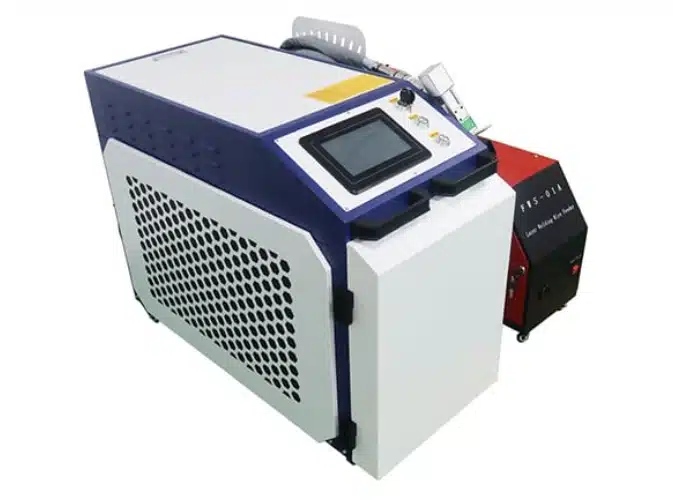
The VIW-A Laser Welding Machine employs a sturdy water-cooling arrangement. It maintains the laser origin and sights at even warmth. This avoids the “output decline” seen in basic air-cooled models during extended sessions. Reliable cooling leads to reliable seam standards.
Integrated Wire Feeding for High-strength Joints
At times, the substance proves somewhat thick. Or the alignment lacks perfection. Incorporating a filler supplier to your laser configuration permits adding metal fill. This boosts seam durability and aids in spanning spaces. It renders the device more tolerant in factory settings.
The Professional Choice for High-precision Work: VIW-P Laser Welding Machine
In fields such as medical tool production or luxury vehicle tasks, adequate quality suffices not. You demand accuracy gauged in tiny measurements. The most developed setups in 2026 apply excellent light quality. This ensures the seam locates precisely each instance.
Superior Beam Quality for Precision Fabrication
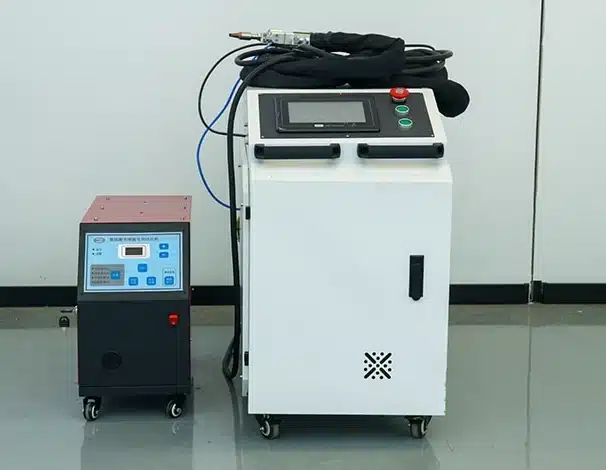
The VIW-P Laser Welding Machine serves as the preferred option for exact tasks. It creates a neat, uniform seam with almost no spray.
Advanced Seam Tracking and Vision Options
Exactness frequently needs extra oversight. You equip these expert models with sight mechanisms or seam sensors. Such features let the laser trace the seam on its own. It adjusts for minor fixture or component shifts automatically.
Modular Design for Simplified Maintenance
No factor disrupts output like a device tough to repair. Expert setups feature a segmented inner build. If a sight clouds or a sieve requires swap, you replace it promptly. You can discover more on sustaining top operation via the Victory Industry Blog.
How to Choose the Best Laser Welding Machine for Your Business?
Evaluate Your Specific Material and Thickness Requirements
Most portable and average factory lasers range from 1kW to 3kW. For mainly thin sheets below 3mm, 1.5kW often hits the ideal balance. Regarding denser layers or rapid aluminum efforts, aim toward 3kW. This secures adequate depth.
Analyze the Total Cost of Ownership
The listed cost forms only the start. Include power use, cover gas, and supplies like guard sights and tips. An effective fiber laser cuts your energy expenses compared to prior methods. For a precise estimate matching your funds, contact the group at the Contact Us Page.
FAQ
Q1: Can laser welding machines handle aluminum effectively in 2026?
A: Yes, with the right parameters and shielding gas like Argon, laser welding is excellent for aluminum. Using a “wobble” welding head or a wire feeder can significantly improve the stability and strength of the weld in these alloys.
Q2: Is a laser welder really faster than TIG welding?
A: Absolutely. In many thin-to-medium thickness applications, laser welding can be several times faster than TIG. It also requires much less post-weld cleaning because the bead is cleaner and there is less distortion.
Q3: What kind of safety gear do I need for a laser welding system?
A: You must have laser-rated safety eyewear specifically matched to the laser’s wavelength. Additionally, using a laser-safe enclosure or protective curtains and ensuring the system has safety interlocks is vital for protecting everyone in the shop.
Q4: Do laser welding machines require a lot of maintenance?
A: No, especially compared to traditional CO2 lasers. Fiber lasers use a sealed optical path, so there are no mirrors to clean or align.
Q5: Can I use a laser welder for thick steel plates?
A: While laser welding is a powerhouse for thin-to-medium materials, for very thick sections, traditional TIG or MIG might still be preferred unless you invest in a very high-power (and expensive) industrial laser system. Sample testing is always recommended for heavy-duty applications.