
As manufacturers transition toward advanced laser processes, technologies such as Laser Cutting Machines, Laser Cleaning Machines, and Laser Marking Machines are increasingly integrated into modern metal fabrication lines alongside laser welding solutions.The manufacturing field develops quickly, and as we approach 2026, moving away from standard TIG or MIG setups toward fiber laser methods has become a vital approach for long-term success rather than a mere addition. If you still deal with uneven joins, bent sheets, or insufficient trained personnel, pinpointing the best laser welding machine undoubtedly stands out as the leading choice on your equipment priorities. This overview details exactly the factors you ought to consider in order to keep your operations ahead in 2026.
Why 2026 Is the Year of Precision Welding?
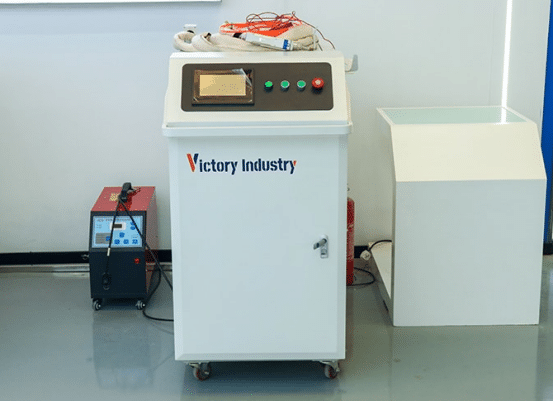
Methods for connecting materials in industry have advanced a great deal over time. Older approaches rely on large amounts of heat that harm sensitive items, but current fiber laser devices offer pinpointed power for quick joining with notably reduced areas affected by heat. As a result, users achieve excellent join strength with minimal bending. Individuals working on materials like stainless steel, carbon steel, or aluminum combinations now view the best laser welding machine as the central tool for getting a smooth result without lengthy cleanup tasks.Laser welding systems using fiber sources typically operate with laser power levels between 1 kW and 3 kW for handheld or medium-duty industrial systems. Under appropriate parameter settings, welding speeds can reach several meters per minute depending on material thickness and joint configuration, significantly exceeding traditional TIG welding productivity. The concentrated beam energy generates a much smaller heat-affected zone (HAZ), reducing thermal distortion in thin sheet assemblies.
The Move Toward Fiber Laser Technology
Fiber laser welding systems rely on advanced Fiber Laser Sources, which deliver stable beam quality and efficient energy conversion for precision metal processing.Fiber lasers utilize a fixed-state generator sent via fiber optics. Such a design fits well for working with metals because it delivers strong energy use and stronger outcomes on shiny surfaces like brass and copper. Since there are no reflective surfaces in the route, the entire unit stays sealed and needs only basic care, offering a key advantage for busy work environments.Fiber laser systems operate with high electro-optical conversion efficiency, enabling lower overall power consumption compared with many traditional laser technologies. The sealed optical transmission path eliminates mirror alignment requirements and reduces maintenance frequency. This design ensures stable beam delivery and consistent energy density at the welding point, which directly influences penetration depth and weld consistency.
Victory Industry Redefining Standards for the Industrial Laser Welding System
As you look for a partner in this shift, Victory Industry sets itself apart through the blend of advanced building techniques and solid factory-built features. The company goes beyond basic supply; it acts as a skilled producer of factory tools, with a focus on smart system upgrades that blend smoothly into worldwide trade networks.
Global Expertise and Quality Assurance
Reliability holds great importance when investing in equipment matched to 2026 levels. Victory Industry applies strict checks on quality right from gathering materials until the last review. Every piece receives detailed tests for steadiness and protection before it ships out. Such dedication to lasting ties and ongoing progress makes sure your workflow stays running when it counts the most.
Why Your Current Welding Process Fails?
Many facilities face the same troubles, such as growing worker pay, sheets that bend easily, and uneven results leading to high repair costs.
High Labor Costs and Skill Shortages
Finding a skilled TIG operator grows tougher and pricier each year. Handheld laser units solve this by being much easier to handle, which cuts down the time needed to teach new staff. Thus, a beginner can create even, clean lines faster than with older ways.
Material Deformation and Post-Processing
Too much warmth endangers thin metals greatly. Regular welding creates a wide Heat-Affected Zone (HAZ), which causes twisting and curving in fragile parts. Fiber lasers provide exact control, so the HAZ stays narrow. You thus see less twisting in average-sized pieces, and this lets you skip the boring steps of fixing shapes after welding and heavy sanding.Traditional arc welding processes generate relatively wide heat-affected zones because the heat input is distributed across a larger area. In contrast, laser welding concentrates energy in a narrow beam spot, which significantly reduces the thermal influence on surrounding material. The result is lower distortion levels in thin stainless steel sheets, precision cabinets, and structural brackets.
How to Choose a Laser Welding Machine for Stainless Steel
Picking the right unit depends on if you want hands-on flexibility or automatic large-scale work. The lineup includes specific types made for these varied factory needs.
The Versatile Workhorse: VIW Laser Welding Machine
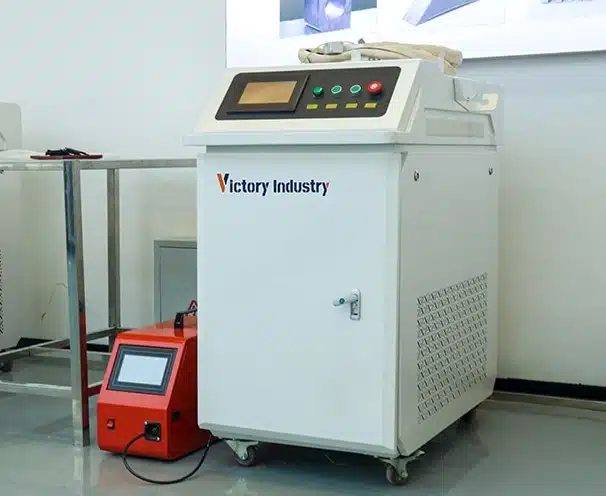
For a unit that handles overlap, edge, and corner links on different items, the VIW Laser Welding Machine works best. It runs in the 1 to 3 kW range usually, making it a flexible and strong pick for everyday building jobs.
The Automation Specialist: VIW-A Laser Welding Machine
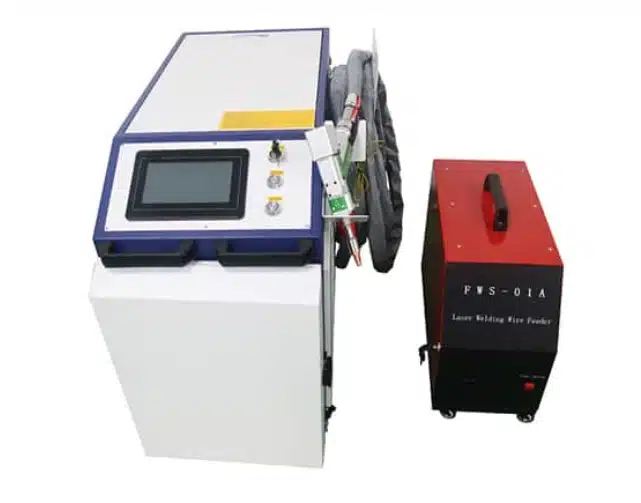
If your setup aims to grow, the VIW-A Laser Welding Machine fits perfectly for easy addition. It pairs well with six-axis robot setups or beam systems, helping deliver the steady high output that keeps factories strong in 2026.
img.VIW-A Laser Welding Machine.webp
The Precision Performer: VIW-P Laser Welding Machine
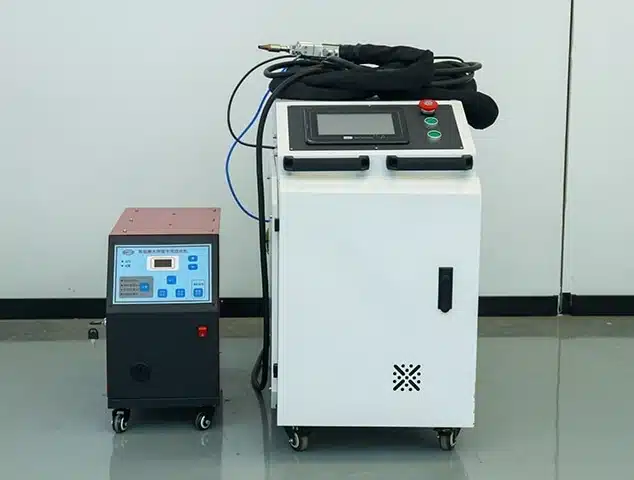
Basic setups sometimes do not meet demands. The VIW-P Laser Welding Machine offers changes for special factory links needing better firmness or exact beat patterns to meet tough standards.
Technical Advantages of Modern Welding Technology
Features that make one model the industrial laser welding system often hide in plain sight. They include the sway feature and the way extra material gets added.
Wobble Welding and Wire Feeding
Sway heads in welding mark a big step forward since they handle spaces better and give nicer seam looks.
Industry Applications
You find these tools in many places, from fine furniture areas to car plants. In metal sheet work, they help build kitchen tools, power boxes, and covers where looks and toughness matter a lot. For car parts, they shape supports and true frames with steady repeats.
Customization and Services
Getting the fiber laser welding machine means more than just buying. It calls for a setup that fits your space. That covers custom strength choices, set work spaces, and safety walls that follow local rules. The rollout includes checking needs first, testing samples, teaching on location, and handing over guides.Complete production solutions may combine laser welding with upstream and downstream equipment such as Laser Cutting Machines for material preparation and Laser Marking Machines for product traceability.
Maintenance and ROI: Maximizing Your Investment
Returns on a laser welder come soon because care stays low. You mainly clean the lenses and check the cooling water for steady long runs. Usual parts to swap are cover glasses, ends, and seals, which run cheaper than gases and sticks from old tools.Laser welding systems generally require fewer consumables compared with traditional welding processes, since no electrodes or filler materials are mandatory for many joint types. Maintenance is primarily limited to optical components such as protective lenses, nozzles, and sealing elements, which are inexpensive compared with continuous gas and electrode consumption in arc welding processes.
How to Choose Your Machine Configuration?
Match the laser strength to your sheet sizes and link shapes. In mixed jobs with lots of types, a hand unit with fast swap holders makes the robotic laser welding machine. But for round-the-clock same-part runs, robots fit better.
Conclusion: Partnering for Future-Ready Fabrication
With 2026 underway, the split grows between old-style shops and smooth-running sites. Choosing top gear cuts that gap fastest.
Contact Victory Industry today to discuss your production needs and receive a customized laser welding solution designed to maximize efficiency, precision, and long-term return on investment.Victory Industry’s engineering team can recommend the most suitable machine configuration based on your materials, welding requirements, and production capacity.
FAQ
Q1:What materials can Victory Industry laser welding machines weld?
A:Victory Industry laser welding machines are designed to weld a wide range of industrial metals, including stainless steel, carbon steel, aluminum alloys, and galvanized steel. With proper parameter adjustment and shielding gas configuration, the machines can also weld reflective materials such as copper and brass.
Q2:Are Victory Industry laser welding machines better than TIG welding?
A:Victory Industry laser welding machines offer several advantages compared with traditional TIG welding. Laser welding typically provides faster welding speeds, a smaller heat-affected zone, and reduced material distortion.
Q3:How much does a Victory Industry laser welding machine cost?
A:The cost of a Victory Industry laser welding machine depends on factors such as laser power, cooling configuration, welding head type, and optional accessories like wire feeders or wobble welding systems.
Q4:Can Victory Industry laser welding machines be integrated into automated production lines?
A:Yes. Victory Industry laser welding machines can be integrated with robotic arms, CNC systems, or automated production lines. Automation allows manufacturers to achieve higher welding precision, consistent weld seams, and continuous production.