
Accurate production has become an essential standard rather than an optional feature in the current demanding marketplace. If you continue to depend on conventional arc welding for slender metal sheets or detailed structures, you probably face issues with thermal warping and prolonged finishing tasks. The arrival of the laser beam welder has completely altered the approach to this process. It enables you to apply focused energy with exact control, leading to quicker manufacturing times and smoother connections. No matter if you operate a modest workshop or a vast facility, observing the way this method improves your operations proves quite revealing. To maintain a competitive edge, numerous business frontrunners seek experts such as Victory Industry, an established producer of industrial machinery that emphasizes combining cutting-edge methods with dependable engineering to meet worldwide demands.
The Evolution of Precision Joining in Modern Manufacturing
The move from standard TIG or MIG welding to laser methods stems from the need for greater efficiency and visual appeal. In earlier times, obtaining an accurate weld required trading time for skilled handiwork. Nowadays, true accuracy involves limited thermal influence and a seam that needs little after-treatment. This goes beyond mere appearance; it concerns durability and consistent performance.
Transitioning from Traditional TIG/MIG to Advanced Laser Beam Technology
Common techniques like TIG frequently introduce excessive warmth into the material, causing slim metals to bend irregularly. A laser beam welder alters this situation by employing a reliable solid-state laser that delivers pinpointed thermal input. For various applications involving thin to moderate thicknesses, this approach markedly boosts your pace while cutting down on warping occurrences.
| Parameter | TIG Welding | MIG Welding | Laser Beam Welding |
| Heat Input | High | Medium | Very Low |
| Heat-Affected Zone (HAZ) | Large | Medium | Very Small |
| Welding Speed | Slow | Medium | High (up to several m/min) |
| Distortion | High | Medium | Minimal |
| Post-Processing | Heavy grinding | Moderate | Minimal or none |
| Precision | Operator-dependent | Moderate | Very High |
| Automation Compatibility | Low | Medium | High |
Defining High-Precision Welds in Today’s Market
In 2026, superior accuracy encompasses far more than meeting measurements. It includes a reduced heat-affected zone (HAZ), slight bending, and a neat finish that aligns with contemporary production norms. According to Mordor Intelligence, the global laser welding machines market is projected to grow from USD 3.55 billion in 2025 to USD 3.77 billion in 2026, reaching USD 5.06 billion by 2031 at a CAGR of 6.08%.
| Year | Market Size (USD Billion) | Growth Rate |
| 2025 | 3.55 | — |
| 2026 | 3.77 | 6.2% YoY |
| 2031 | 5.06 | CAGR 6.08% |
A Technical Look at Concentrated Heat Results
The key process occurs when the laser beam contacts the metal exterior. The power concentration is exceptionally intense, forming a steady molten area right away. Consequently, it achieves thorough fusion without the broad, irregular paths typical in arc processes. As a result, you obtain a robust yet remarkably slim connection.
The Science of Precision Through Concentrated Heat and Minimal Distortion
One must consider the principles of thermal energy in welding operations. Much of your additional work likely arises from correcting components that deformed while cooling. Laser methods address this challenge by confining the warmth so precisely that adjacent areas remain relatively unaffected. This represents a significant advancement for those frustrated with manually reshaping pieces after welding.
The Secret of the Small Heat-Affected Zone
A compact HAZ ensures that the essential characteristics of the metal close to the seam remain largely intact. This aspect is vital for preserving the inherent toughness of the base substance. Since the laser operates swiftly and with focus, the warmth dissipates minimally into the component. Therefore, it produces outcomes free from bending, particularly on delicate parts.
Comparing Thermal Impact with Traditional Methods
Consider a TIG device, which lingers at a location and warms a substantial region merely to liquefy a minor spot. On the other hand, a laser beam welder advances rapidly, supplying precisely the required amount to merge the metals. This contrast explains why you can join a stainless steel panel for a cabinet without it curving centrally.
Consistency Through Stable Laser Sources
Fiber lasers, known for their enclosed light pathway and minimal maintenance, accounted for 43.68% of the laser welding machines market share in 2025 (Mordor Intelligence), with solid-state lasers showing the fastest growth at a 6.43% CAGR through 2031.
Regardless of whether you select a steady laser or an intermittent one, reliability plays a central role. Current fiber lasers offer an enclosed light pathway that demands minimal upkeep, as there are no reflective surfaces needing adjustment. Thus, the seam produced early in the day matches exactly the one completed later on.
| Laser Type | Maintenance | Efficiency | Market Share (2025) | Typical Use |
| Fiber Laser | Very Low (sealed path) | High | 43.68% | Metal welding, automation |
| CO₂ Laser | High (mirrors needed) | Medium | Lower | Non-metal, legacy systems |
| Solid-State Laser | Low | High | Fastest growth (6.43% CAGR) | Precision welding |
Mastering Diverse Materials and Complex Joint Geometries
One laser setup can process stainless steel, ordinary steel, and even demanding aluminum types, provided the settings are properly adjusted. It provides the adaptability to accept assignments that might have seemed overly challenging or costly before.
Welding Challenging Industrial Materials
Aluminum proves notoriously difficult due to its reflective nature and tendency to fracture. Nevertheless, with appropriate settings and protective gas, a laser beam welder manages aluminum variants effectively. Moreover, it serves as the preferred option for stainless steel items in kitchen settings or decorative elements where the surface must appear impeccable.
Precision Techniques for Flawless Joints
You face no restrictions to basic straight seams. Laser equipment excels in overlapping, edge-to-edge, and angled connections. Should there be a minor separation in the alignment, rest assured that employing a VIW-S Laser Welding Machine equipped with a oscillating head can fill those spaces and enhance the uniformity of the seam.
The Critical Role of Shielding Gases
Employing gases such as Argon or Nitrogen goes beyond recommendation; it actively prevents the seam from developing discoloration and roughness. The gas minimizes oxidation and greatly enhances the visual quality of the fused line. This small element contributes substantially to the overall excellence observed by your clients.
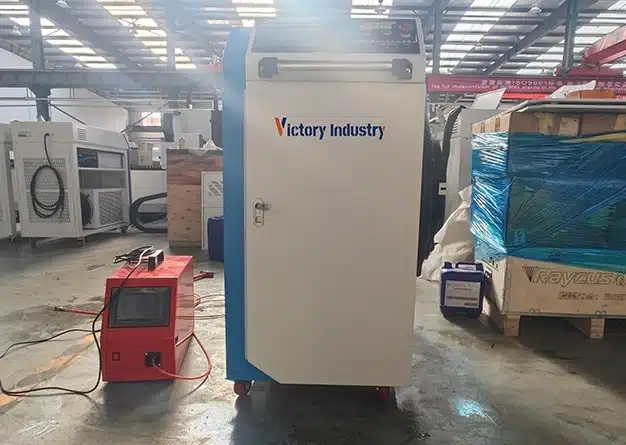
img.VIW-S Laser Welding Machine.webp
Boosting Global Productivity by Reducing Post-Processing Labor
Workforce costs represent your primary outlay. When employees dedicate equal time to welding and surface refinement, profitability suffers. Laser welding reverses this balance. The resulting seams appear so tidy that, in most cases, you proceed directly to coating or distribution.
High-Velocity Processing Speeds
Speeds reach up to a few meters per minute, varying by substance and depth. This surpasses manual torch capabilities by multiple factors. Beyond mere quickness, it sustains the accurate aesthetic during the entire procedure.
Economic Benefits of High Efficiency
Fiber lasers exhibit strong energy conversion rates, ensuring that a larger portion of your electrical input translates into effective material fusion. Combining reduced utility expenses with accelerated output shortens the payback period considerably.
Eliminating the Grinding Phase
With negligible splashing and an even seam surface, extensive smoothing becomes unnecessary. Your workspace remains less noisy and tidier, while overall output rises due to the removal of a key production obstacle.
Victory Industry Your Global Partner in Intelligent Laser Solutions
When selecting machinery, you desire a collaborator deeply familiar with the sector. Originating in China with a focus on international outreach, Victory Industry has dedicated years to broadening its offerings from fundamental laser tools to sophisticated robotic integrations. Victory Industry provide more than mere hardware; they deliver comprehensive strategies encompassing spatial planning and operational verification.
Quality Assurance and Global Support
Each unit receives thorough functional evaluations and security inspections prior to shipment. This practice is essential, since in laser applications, exactness depends directly on the equipment’s construction integrity. Given that 34.11% of sector purchasers reside in Europe alongside notable expansion in areas like North America.
Comprehensive Customization for Your Shop
Every production site differs uniquely. You may require a particular energy output, defined operational space, or specialized protective housing. Victory Industry prioritizes “application-oriented provision,” suggesting attachments and connection methods tailored to achieve your efficiency goals. Explore their full product range to observe how they adapt equipment to specific manufacturing requirements.
Precision Engineering Showcased in Victory’s VIW Series
Choosing the appropriate device ought not to resemble speculation. The VIW series accommodates varying production volumes while upholding the fundamental commitment to superior accuracy. Whether engaging in robust framework tasks or fine medical components, a suitable variant exists.
| Model | Power Range | Application | Key Advantage |
| VIW-S | 1–3 kW | Thin sheet, precision parts | Flexible, portable, high accuracy |
| VIW-D | 3–6 kW+ | Thick materials, industrial lines | Deep penetration, high stability |
The Powerhouse VIW-D Laser Welding Machine
For scenarios demanding heavier substances or profound fusion in production environments, the VIW-D Laser Welding Machine stands as an elite selection. It emphasizes durability and extended functionality, guaranteeing uninterrupted assembly line performance.
The Versatile VIW-S Laser Welding Machine
For operations featuring diverse tasks and needing adaptable arrangements, the VIW-S Laser Welding Machine suits ideally. It excels in detailed work where mobility and exactness take precedence.
Technological Features for Modern Shops
These devices extend beyond the laser itself. They incorporate security locks, liquid cooling for reliable function, and intuitive controls. Additionally, they facilitate linkage with robotic setups should you choose to implement automation subsequently.
Future-Proofing Production Through Automation and Safety Standards
The industrial landscape advances toward “Intelligent Facilities.” If manual processes dominate your operations, progress lags. Incorporating a laser beam welder into an automated setup offers one of the swiftest paths to elevate your OEE (Overall Equipment Effectiveness).
Scaling to Robotic Welding Systems
A six-axis industrial robot can maneuver a laser applicator to execute repeated fusions with precision of ±0.03 mm. This eliminates inconsistencies from operator weariness, ensuring the thousandth item matches the quality of the first.
Prioritizing Safety in the Laser Environment
Operating a laser demands enclosed spaces. Essential precautions include shielded barriers, suitable protective lenses for the laser’s spectrum, and vapor removal units. A thoughtfully engineered setup integrates these elements to safeguard personnel throughout activities.
Total Production Traceability
Linking your welding station to management or enterprise software enables monitoring of each fusion. Such capabilities increasingly form standard expectations in sectors like automotive and aerospace. For further guidance on facility enhancements, consider reviewing the Victory Industry blog which covers recent sector developments and practical advice.
FAQ
Q1: Is a laser beam welder suitable for welding aluminum alloys?
A: Yes, it performs exceptionally well on aluminum provided that correct settings, protective gas, and frequently an oscillating head or filler wire are utilized to stabilize the molten area.
Q2: Does laser welding completely replace traditional TIG or MIG welding?
A: In numerous instances involving thin to moderate depths, it enhances speed substantially and diminishes warping, yet TIG or MIG may remain preferable for substantial thicknesses or particular connection types.
Q3: What kind of maintenance does a fiber laser welder require?
A: Fiber lasers typically involve limited upkeep owing to their sealed light path without adjustable reflectors; primary tasks include maintaining clean lenses and verifying cooling system reliability.
Q4: Can a laser welding machine be integrated into an automated production line?
A: Certainly. These units are engineered to interface with programmable logic controllers and can attach to six-axis robots or overhead structures for large-scale, recurring output.
Q5: What safety equipment is necessary for operating a laser welder?
A: Essential items encompass a secure enclosure or shielding drapes, wavelength-specific protective glasses, and a particle capture system for managing fumes.