
The U.S. laser cleaning market grew from USD 0.29 billion in 2023 to a projected USD 0.39 billion by 2032 (CAGR 2.97%), with steady adoption in manufacturing due to sustainability goals.
If you face persistent oxidation on metal surfaces, the laborious effort of sandblasting or the disorder from chemical treatments often appears as a persistent challenge. By 2026, the manufacturing sector has solidly turned to laser cleaning technology as the primary method for surface readying. Whether you operate a sturdy fabrication workshop or an exact maintenance site, identifying the leading laser cleaning machines for rust removal in 2026 requires matching output with exactness. You require devices that go beyond simply removing rust and truly guard your assets. Victory Industry has invested years in perfecting these setups, so they blend seamlessly into your processes without the typical difficulties of sophisticated tools.
Why is Laser Cleaning the Future of Rust Removal
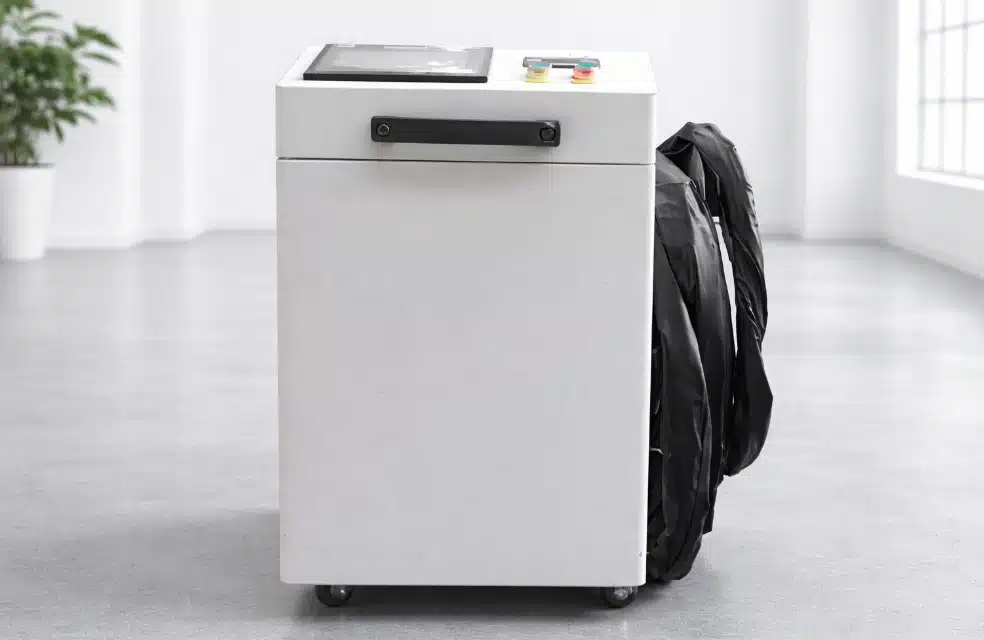
Shifting from conventional techniques involves more than adopting a fad. It centers on maintaining a neat work area and stable expenses. Traditional ways demand ongoing supplies of rough materials or pricey management of poisonous residue. In comparison, laser rust removal provides a dry and precise procedure. This approach targets only the soiled level, sparing the base metal from harm. The market shows this transition clearly. Facility tours and requests for these setups have increased notably. More folks now see that a tidier method brings stronger financial results.
Eco-Friendly and Chemical-Free Surface Preparation
At last, you can cease fretting over the ecological mark of your rust removal methods. These units apply light to turn impurities into vapor. Consequently, no risky chemical fluids are used, and scant additional refuse needs handling. In 2024, Airbus reported an 85% reduction in volatile organic compound (VOC) emissions after switching to laser cleaning for composite-tool maintenance in its manufacturing facilities, aligning with stricter EU regulations on solvent discharges.This brings substantial ease to operations striving to follow firmer eco standards in 2026.
Non-Contact Protection for Sensitive Substrates
Among the key laser cleaning machine features stands the beam’s touch-free quality. Since the light engages solely with the rust or oxide coating, you sidestep the physical damage commonly tied to brushing with wires or rubbing with abrasives. Such an attribute fits ideally for tasks on costly components where retaining initial sizes proves vital.
Significant Long-Term Cost Savings and Efficiency
Even if the starting cost for industrial laser cleaning looks steep, it yields vast reductions in supply costs eventually. You skip buying sacks of grit or restocking fluid containers. Laser cleaning in automotive manufacturing reduces cycle times by 25 seconds per vehicle body and increases weld seam strength by 40% compared to solvent-based methods, leading to millions in annual savings for high-volume production lines. Moreover, the slight upkeep demands allow your unit to remain active in use instead of waiting for fixes.
How do Laser Cleaning Machines Work for Rust Removal?
Observing a light ray convert heavy orange corrosion into powder might seem like a tale from fantasy. Yet, the underlying principles remain simple enough. The device releases intense laser bursts that contact the area at swift paces. The corrosion takes in this power and turns to gas nearly at once. At the same time, the metal beneath sends back the light and holds a steady coolness. The entire operation hinges on the “ablation” outcome. In essence, you employ a cutting-edge light tool that specifically removes soil and decay.
Principles of Controlled Laser Ablation Technology
The key action unfolds via bursts directed at the impurity coating. Selecting suitable rate and strength levels lets you strip away corrosion layers without reaching the solid metal under it. This resembles a careful cut for your corroded elements.
Role of Specialized Laser Cleaning Machine Features
A suitable device must deliver adaptability, which traces back to the lens system. Current models permit changes to the treatment span, often spanning 10 mm to 200 mm. Therefore, you manage a thin conduit or a broad iron slab using one instrument. This versatility marks these as highly regarded laser cleaning machines for rust and paint stripping.
Importance of Precise Parameter Mapping and Calibration
Each assignment differs, making a single universal adjustment impractical. Solid devices include guides for settings that aid in picking the proper sweep range and rate for given substances. Hence, this avoids unintended excess treatment on fragile items or residual tough patches.
Which Victory Industry Machines are Best for Industrial Use?
Should you search for a trustworthy ally in this area, Victory Industry products present various answers tested in harsh conditions. They offer more than mere hardware. Their adaptable structure eases maintenance and quick fixes. If you seek a fixed base for a work station or a movable piece for yard sites, they supply matching options.
To help you decide which configuration fits your facility, the following table outlines the typical technical specifications for Victory Industry’s cleaning solutions:
Technical Specifications: Victory Industry Laser Cleaning Systems
| Parameter | Typical Range / Specification | Notes & Applications |
| Laser Power | 50 – 2000 W | Higher power for thicker rust/contamination |
| Cleaning Width | 10 – 200 mm | Adjustable via optics and scan settings |
| Working Mode | Handheld or Automation | Project-dependent (Manual vs. Robotic) |
| Cooling Method | Air or Water Cooling | Selection depends on laser power output |
| Safety Features | Interlocks & Fume Interface | Recommended for industrial safety compliance |
| Applications | Rust, Paint, & Oxide Removal | Ideal for pre-weld and mold cleaning |
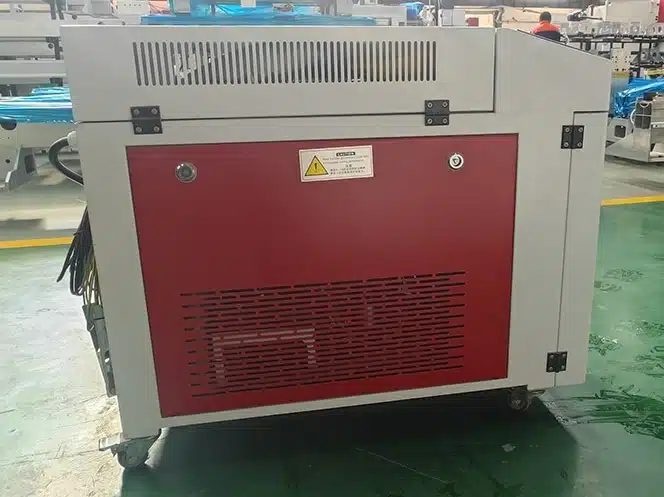
High-Performance VIQ Laser Cleaning Machine for Heavy-Duty Rust Removal
For major tasks, the VIQ Laser Cleaning Machine acts as your main force. It suits vast steel frames and elements needing rapid clearing of profound decay. This serves as the steady performer for lines that run without pause.
Portable VIQ-P Laser Cleaning Machine for Flexible Field Operations
When you require mobility, the VIQ-P Laser Cleaning Machine offers a superior match. As a hand-held model, it performs well in treating intricate forms or accessing confined zones during field efforts. Basically, it stands as an advanced implement that tracks corrosion to any location.
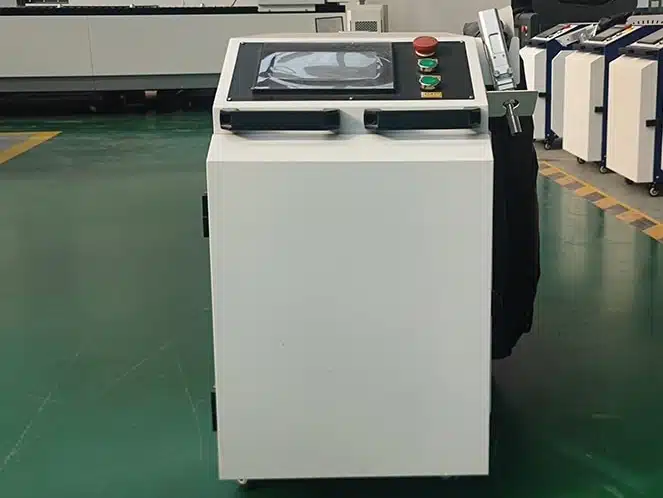
Custom Solutions for Automated Production Line Integration
Occasionally, a manual holder proves insufficient, calling for growth. You may link these laser arrangements with mechanical limbs or rail systems for steady, large-scale efforts.
Laser Cleaning vs Chemical Rust Removal Methods?
Assessing laser cleaning against chemical rust removal methods shows the superior choice varies by your exact demands. Still, lasers commonly prevail in up-to-date workshops. Chemical agents move slowly, emit odors, and necessitate heavy safety equipment merely to approach them. Laser cleaning occurs in moments. You engage the control, corrosion fades, and the piece stands ready for further stages like joining or covering right away. No delays for drying pieces or treating acid traces occur.
Superior Precision and Selectivity of Laser Systems
Lasers permit fine control. If targeting a mere 2-inch ring on a big sheet, the system achieves that alone. Chemical dips generally force full immersion of the object, leading to excess use and potential harm to desired coverings.
Elimination of Secondary Waste and Environmental Impact
Handling acids leads to eventual need for disposing toxin barrels. A laser setup simply calls for an effective fume extraction system to gather powder and bits. It forms a far neater approach to managing operations.
Faster Cycle Times and Reduced Post-Processing Requirements
Efficiency drives profit, and lasers provide quick action. As a dry technique, it removes various workflow phases. Rinsing skips, drying avoids, and fears of quick re-corrosion post-chemical use vanish completely.
How to Choose the Best Laser Cleaning Machine for Rust Removal?
Acquiring an improper unit marks an avoidable error. Examine the corrosion depth you combat and the underlying metal kind. A 50 W laser suits fine antique fixes nicely. However, for robust factory decay, seek models from 1000 W to 2000 W. Bypass merely the lowest cost.
Evaluation of Material Type and Contamination Depth
Ahead of purchase, reflect on the target cleanup. Does it concern slight outer tarnish or dense, rough layers from extended open-air keeping? Greater buildup needs stronger laser force to finish tasks smoothly.In 2025, German automotive suppliers reported a 22% year-over-year increase in robotic laser cleaning installations, driven by labor shortages and the need for precise, scalable solutions in manufacturing environments.
Assessment of Operational Environment and Safety Requirements
Safety holds as essential. Seek units with safety mechanisms and pairings for eye protection and screens. In narrow inside zones, an embedded link for debris removal guards breathing health effectively.
Analysis of Scalability and Automation Compatibility
Ponder your enterprise’s position in coming years. A hand-held start might work now. Yet, will it join automated cells afterward? Picking a maker like Victory Industry secures growth routes as output demands expand.
Why is Laser Cleaning Machine Maintenance Important?
Although these units demand less care than a standard cutting tool, neglect proves unwise. The typical glitch stems from a soiled sight piece alone. Dust on lenses lowers beam force, possibly harming the whole setup. Brief daily attention stretches far in sustaining your corrosion tool at peak. It chiefly involves neatness and filter reviews.
Routine Cleaning of Laser Protective Lenses and Optics
The guard lens forms the initial barrier. Review it routinely and wipe using proper items to maintain beam clarity and vigor. This brief step averts prolonged annoyance.
Management of Fume Extraction and Filtration Systems
Corrosion becoming powder requires redirection. Your pull system employs sieves needing change upon blocking. Sustaining air movement aids the unit and personnel alike.
Implementation of Standard Operating Procedures for Safety
Setting guidelines for staff offers prime accident prevention. Apply SOP outlines to ensure all grasp secure launch, halt, and wipe methods. Steady handling yields steady outputs. Upon hitting obstacles, you may readily contact Victory Industry for aid, parts, or support to sustain flow.
FAQ
Q1: Will laser cleaning damage my metal part?
A: No, as long as you use the correct parameters for your specific material, the process is selective and will not harm the substrate.
Q2: Can I use these machines to remove paint as well as rust?
A: Yes, laser cleaning is very effective for paint stripping, though you might need multiple passes depending on the thickness of the coating.
Q3: Is it difficult to learn how to operate a handheld laser cleaner?
A: Most people get the hang of it quickly; companies usually provide training materials and SOPs to help operators ramp up in no time.
Q4: Do I need a special room to use a laser cleaning machine?
A: You need a laser-safe area with proper curtains or an enclosure, along with fume extraction to keep the air clean.
Q5: Is laser cleaning better than sandblasting?
A: It is much cleaner and more precise without the mess of sand, but for extremely large, low-value surfaces, sandblasting might still be faster depending on your budget.